Compare Hojicha vs Matcha: Caffeine, Flavor, and Price
Last updated: April 2026
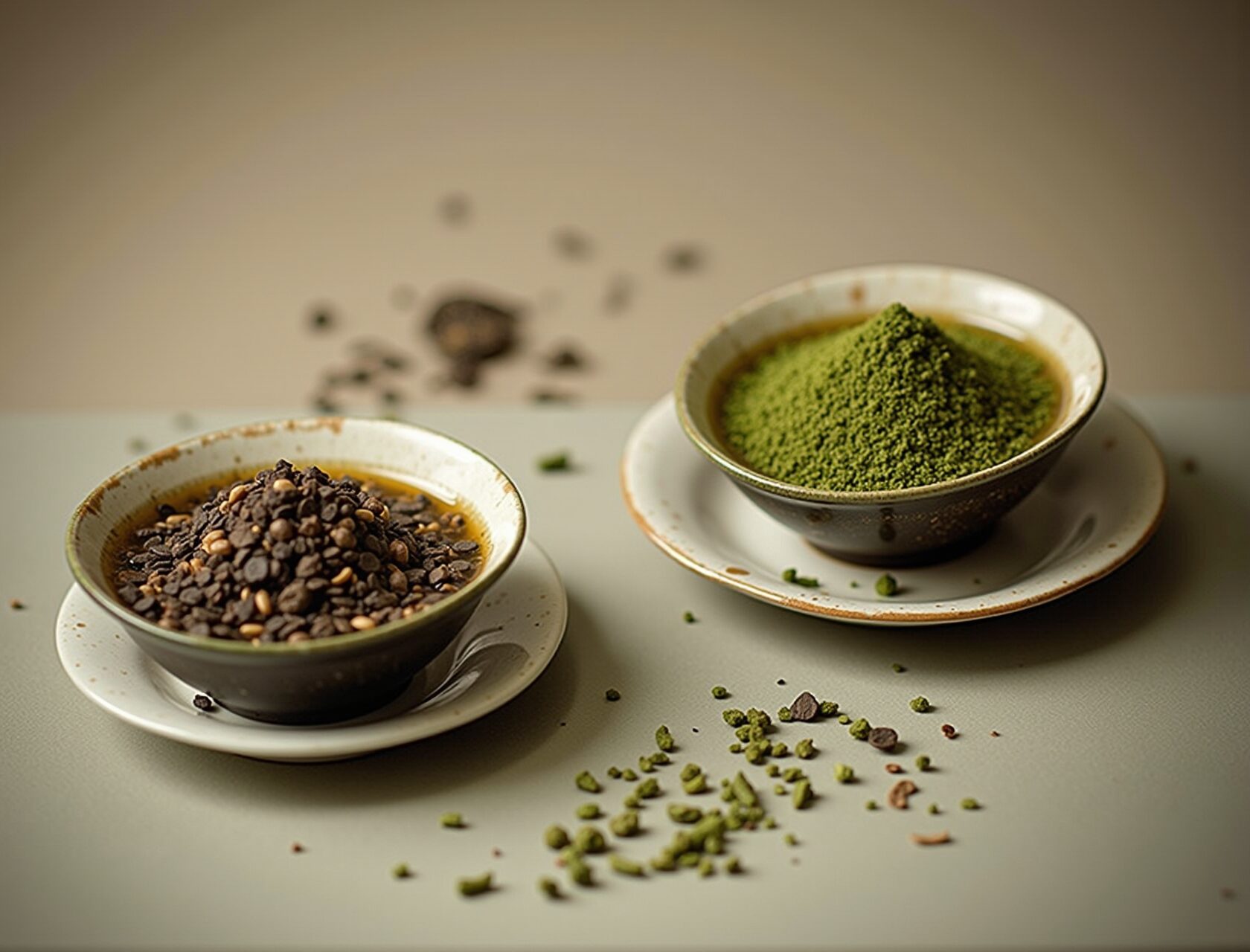
Both hojicha and matcha are Japanese teas made from Camellia sinensis (the plant species from which all true teas derive) and sold as powder — but the similarities stop there. Matcha is shade-grown, stone-ground without roasting: vivid green, grassy-umami, and roughly 60–70mg of caffeine per cup. Hojicha is roasted after harvest, turning amber-brown with a toasty, nutty character and just 7–10mg of caffeine per cup. Same plant, radically different processing, radically different experience.
🍵 Torn between the two? Take our 60-second quiz: Find Your Perfect Japanese Tea
Get a personalized recommendation — plus a discount code for your first order.
Key Takeaways
- The caffeine gap is dramatic: Hojicha contains 7–10mg of caffeine per cup versus matcha‘s 60–70mg — a 6–9× difference that makes them suited to entirely different times of day.
- Processing defines everything: Matcha is shade-grown and stone-ground raw; hojicha is roasted at 200°C+, destroying chlorophyll, catechins, and most caffeine while generating toasty Maillard flavor compounds.
- Matcha leads on antioxidants; hojicha leads on digestive gentleness: Shade-growing concentrates EGCG and L-theanine in matcha; roasting reduces tannins in hojicha, making it kinder to sensitive stomachs and ideal for evening use.
- Price parity at everyday tiers: Both cost roughly $0.40/cup at $20/100g — the perception that matcha is always pricier reflects its ceremonial-grade ceiling ($50–$130/100g), not its entry level.
- They're complementary, not competing: Many drinkers use matcha in the morning for focused energy and hojicha in the evening for warming, low-caffeine comfort.
How Is Each Tea Made?
Matcha and hojicha follow opposite production paths — one optimized to preserve and concentrate raw tea compounds, the other to transform them through heat. Understanding this difference explains virtually everything about how they taste, feel, and behave in the cup.
Matcha: Shade-Grown and Stone-Ground
Matcha production begins three to four weeks before harvest when farmers cover the tea plants with shade cloth — blocking 70–90% of direct sunlight. According to Ashihara (2015, Natural Product Communications), shading suppresses the plant's photosynthetic conversion of L-theanine to catechins, causing theanine to accumulate; gyokuro and matcha-grade teas typically contain 2–3× more theanine than unshaded sencha. This stress response also spikes chlorophyll production (the plant reaches toward available light) and increases caffeine concentration. The resulting leaves are a deep, saturated green and chemically unlike anything harvested in full sun.
After harvest, the leaves are steamed to halt oxidation, then dried. Stems and veins are removed, leaving what's called tencha — the partially processed, de-stemmed leaf that serves as the raw material for matcha. The tencha is then stone-ground into a fine powder at low speed to prevent heat from degrading the delicate compounds. Good ceremonial matcha takes around one hour to grind just 30 grams.
The result: an intensely green powder that dissolves into water and delivers the full spectrum of tea compounds — catechins, L-theanine (an amino acid associated with relaxed alertness), chlorophyll, and caffeine — in one drink.
Hojicha: Harvested and Roasted
Hojicha starts from a fundamentally different leaf. Most hojicha uses bancha — the late-season harvest of larger, more mature leaves — or kukicha (tea produced primarily from stems and twigs rather than leaves). If you're curious about how regional differences influence hojicha's flavor and character, you can understand regional hojicha in greater depth.
The harvested bancha is then roasted at temperatures above 200°C in a drum or on a flat pan. This triggers the Maillard reaction — the same browning chemistry that happens when you roast coffee beans or sear meat. Sugars and amino acids react under heat to produce hundreds of new aromatic compounds, including pyrazines (aromatic heterocyclic compounds that contribute the characteristic roasted, nutty aroma), furans, and other volatile compounds. The leaves turn brown. The grassy, astringent compounds in the raw green tea — catechins, chlorophyll — are partially or fully degraded. According to established tea chemistry research, caffeine's sublimation point is approximately 178°C; hojicha roasted at 160–220°C loses an estimated 60–70% of its caffeine via sublimation during the roasting process — not decomposition — meaning the caffeine converts directly from solid to vapor and escapes (Tea chemistry consensus, 2024). This is the second caffeine reduction.
The roasted leaves are then ground into hojicha powder. Unlike the slow stone-grinding of matcha, hojicha powder is produced by conventional grinding — which is one reason it's significantly less expensive per gram than high-end matcha. We cover our hojicha vs genmaicha comparison in detail in a separate guide.
Side-by-Side Production Comparison
| Matcha | Hojicha | |
|---|---|---|
| Leaf used | Tencha (shade-grown first flush) | Bancha (late harvest) or kukicha (stems/twigs) |
| Growing method | Shade-covered 3–4 weeks pre-harvest | Full sun, standard tea cultivation |
| Processing | Steamed → dried → de-stemmed → stone-ground | Harvested → roasted at 200°C+ → ground |
| Color | Vivid green (high chlorophyll) | Amber-brown (chlorophyll destroyed by heat) |
| Flavor profile | Grassy, umami, vegetal, slight bitterness | Toasty, nutty, caramel, mild sweetness |
| Best for | Morning energy, focus, antioxidant intake, green-colored recipes | Evening drinking, caffeine-sensitive individuals, digestive comfort, chocolate-adjacent recipes |
How Much Caffeine Does Hojicha Have Compared to Matcha?
Hojicha has approximately 7–10mg of caffeine per 8-ounce cup (prepared with 1 teaspoon of powder); matcha has approximately 60–70mg — a 6–9× difference. That's not a marginal variation but a fundamentally different caffeine experience. For context, a standard cup of coffee is around 95mg, and black tea is 40–50mg. Hojicha sits closer to decaf coffee (2–5mg) than to any other tea category.
| Drink | Typical Caffeine per 8oz Cup | Notes |
|---|---|---|
| Hojicha powder (1 tsp) | 7–10mg | Low due to bancha base + roasting caffeine sublimation |
| Matcha (1 tsp) | 60–70mg | Concentrated by shade-growing and tencha base |
| Coffee (brewed) | ~95mg | Robusta blends can hit 150mg+ |
| Black tea | 40–50mg | Varies significantly by steep time and leaf grade |
| Green tea (loose leaf) | 25–35mg | Standard sencha or bancha |
| Decaf coffee | 2–5mg | Not zero — caffeine removal is never complete |
| Hojicha powder (2 tsp) | 14–20mg | Concentration scales linearly with dose |
Two factors combine to make hojicha exceptionally low in caffeine. First, the base leaf: bancha and kukicha are harvested later in the season from more mature leaves and stems. Mature tea leaves naturally contain less caffeine than the tender young leaves used for matcha‘s tencha base. Caffeine in tea is concentrated in new growth — it functions as the plant's natural pesticide against insects — so older leaves have less to begin with.
Second, the roasting itself: sustained heat above 200°C causes caffeine to sublimate — converting directly from solid to vapor and escaping the leaf. According to established tea chemistry research, hojicha roasted at 160–220°C loses an estimated 60–70% of its caffeine this way (Tea chemistry consensus, 2024). The combination of a naturally lower-caffeine starting material plus roasting-induced sublimation produces a powder with a fraction of matcha‘s caffeine load.
One caveat worth noting: hojicha powder caffeine content is dose-dependent. The 7–10mg figure assumes standard preparation (1 tsp per cup). Some recipes call for 2 teaspoons in lattes — that doubles the caffeine. It's still low relative to matcha or coffee, but worth knowing if you're specifically managing caffeine intake.
Why Do Hojicha and Matcha Feel So Different to Drink?
Caffeine numbers alone don't fully explain why matcha and hojicha feel different to drink. Two additional compounds matter significantly: L-theanine and pyrazines — and each tea has a very different relationship with both.
Matcha: The Calm-Focus Effect of L-Theanine
Matcha‘s distinctive mental state — often described as “alert calm” or what monks historically called a meditative focus — comes from the interaction between caffeine and L-theanine, an amino acid that promotes alpha brain wave activity (associated with relaxed alertness) and modulates caffeine's stimulatory effects by slowing its absorption and blunting sharp peaks and crashes. According to Ashihara (2015, Natural Product Communications), shade-growing concentrates L-theanine in the leaf because the amino acid accumulates when the plant cannot convert it to catechins via photosynthesis — a process that requires sunlight. High-quality ceremonial matcha can have L-theanine:caffeine ratios that stack well — roughly 1:1 to 2:1 by weight — which is why matcha drinkers report sustained focus without the jitteriness that comes from caffeine alone.
From a pharmacist's perspective: this is genuine pharmacokinetic synergy, not marketing language. The combination performs differently than either compound in isolation.
Hojicha: Low Stimulation, Mild Warmth, and Pyrazines
Hojicha has less L-theanine than matcha — roasting degrades some of it — and far less caffeine. The overall effect is gentle and warming rather than focusing or energizing. Many drinkers describe it as digestive benefits and a soothing experience, especially in the evening or for those with sensitive systems.
What hojicha has that matcha lacks almost entirely: pyrazines. Pyrazines are aromatic heterocyclic compounds formed during the Maillard reaction — the same class of compounds responsible for the characteristic smell of roasted coffee, toasted bread, and cooked meat. In hojicha specifically, research has suggested that certain pyrazines may cause mild vasodilation — a slight widening of blood vessels that improves peripheral circulation. This is the likely physiological explanation for the “warming” sensation many hojicha drinkers report, which feels different from the warmth of simply drinking a hot beverage.
To be precise about the pharmacology: the vasodilatory effect from pyrazines in hojicha is mild and not comparable to pharmaceutical vasodilators. But it's a real, measurable phenomenon in vitro and in some animal studies, and it's consistent with the subjective reports of many regular hojicha drinkers. I find it more honest to say “there's plausible mechanistic support for the warming sensation” than to either ignore the chemistry or overclaim dramatic circulatory benefits. Learn more in our detailed hojicha benefits guide.
Of the dozens of hojicha and comparison articles currently ranking for this topic, only one (Three Leaf Tea) mentions pyrazines at all — and without explaining the mechanism. That's a significant gap in the published content on this tea.
Which Tea Has Better Health Benefits: Hojicha or Matcha?
Matcha wins on antioxidant density; hojicha wins on digestive comfort and suitability for evening use and sensitive populations. Neither is universally “better” — the right choice depends entirely on what health outcome you're prioritizing. Here's an honest comparison by category:
Antioxidants (EGCG and Catechins)
Matcha wins clearly. Shade-growing concentrates catechins — particularly epigallocatechin gallate (EGCG), the most studied tea antioxidant — and because you're drinking the whole ground leaf, you consume the full catechin load rather than the portion that steeps out into tea. According to Cabrera, Artacho, and Gimenez (2006, Journal of the American College of Nutrition), catechin content in green tea varies significantly by processing method and variety, with processing having a substantial impact on final antioxidant levels. Hojicha loses a significant portion of its catechins during roasting — heat degrades them, especially the highly reactive EGCG. The result is a noticeably lower antioxidant density in hojicha relative to matcha gram-for-gram.
Digestive Comfort and Timing Flexibility
Hojicha wins clearly. The roasting process that degrades catechins also reduces tannin content. Tannins — the astringent polyphenols responsible for the dry, puckering sensation in green tea — can irritate the gastric lining in sensitive individuals, particularly on an empty stomach. Hojicha is regularly recommended by Japanese healthcare practitioners for elderly patients and children for exactly this reason: it's extremely gentle. You can drink it after dinner, on an empty stomach, or late at night without the digestive sensitivity or caffeine disruption that matcha can cause in some people.
Overall Assessment
The health comparison isn't “which tea is better” — it's “which tea is better for your specific goal.” Matcha wins on antioxidant density; hojicha wins on accessibility, digestive ease, and suitability for sensitive populations and evening use. Both are substantially better beverage options than sugary drinks, and both deliver L-theanine and tea's baseline benefits.
| Benefit Category | Matcha | Hojicha | Winner |
|---|---|---|---|
| Antioxidants (EGCG) | Very high — shade-grown, whole leaf | Moderate-low — heat-degraded | Matcha |
| Caffeine | 60–70mg/cup — meaningful stimulant | 7–10mg/cup — negligible | Hojicha (for low-caffeine goals) |
| L-theanine | High — shade-growing concentrates it | Moderate — partially roasted off | Matcha |
| Pyrazines | Absent — no roasting step | Present — Maillard reaction products | Hojicha (unique compound) |
| Sensitive stomach | Can irritate — higher tannins | Very gentle — tannins reduced by roasting | Hojicha |
| Evening use | Not ideal — 60–70mg caffeine | Excellent — low caffeine, warming | Hojicha |
How Does Hojicha Taste Compared to Matcha?
Hojicha and matcha taste nothing alike — matcha is grassy, vegetal, and umami-forward with a clean bitterness; hojicha is toasty, nutty, and lightly sweet with almost no bitterness. If someone handed you a cup of each without telling you what they were, the only things connecting them would be their slightly powdery texture and the knowledge that both came from tea plants.
Matcha
Matcha‘s flavor is grassy, vegetal, and umami-forward, with a clean bitterness that hits the back of the palate. High-quality ceremonial matcha from Uji or Nishio has a sweet, complex finish that lingers. Lower-grade culinary matcha is more aggressively bitter and less complex. The aroma is distinctly green — marine and grassy, almost seaweed-adjacent, which is part of the same L-theanine and chlorophyll chemistry that makes it visually striking.
In milk, matcha‘s flavor is present but softened. A matcha latte made with good ceremonial grade retains the umami character; a culinary grade latte is mainly about bitterness balanced by sweetness. The vivid green color holds in milk — this is part of matcha‘s visual appeal and why it dominates social media.
Hojicha
Hojicha‘s flavor profile is the opposite: toasty, nutty, with gentle caramel sweetness and almost no bitterness. It has more in common with roasted barley tea (mugicha) than with green tea. Some people describe it as coffee without the bitterness, or as a Japanese equivalent of roasted grain coffee. The aroma — particularly from the powder — is genuinely evocative: warm, slightly smoky, comforting in the same way that the smell of toast or roasted nuts is comforting.
In milk, hojicha produces a warm amber-beige latte with a subtler visual presence than matcha but a flavor that many coffee drinkers find more immediately approachable. The roasted notes don't disappear into milk; they deepen slightly. If you're introducing someone to tea lattes who isn't already a tea drinker, hojicha is almost universally the easier starting point.
The practical flavor bridge for Western palates: if you love coffee but want less caffeine, hojicha powder is your closest tea equivalent. If you want the distinctive green tea identity — the umami, the grassiness, the vivid color, the functional focus — matcha is the answer. They're not competing for the same drinker.
How Do Hojicha and Matcha Prices Compare?
At comparable everyday quality tiers, hojicha and matcha cost roughly the same per cup — approximately $0.40 at $20/100g. The widespread perception that matcha is always more expensive reflects its premium ceremonial tier ($50–$130/100g), which hojicha has no real equivalent for. Understanding the grade system for each tea explains why the price ranges look so different at first glance.
Current Market Prices
| Product | Price per 100g | Best Use |
|---|---|---|
| Culinary matcha (Jade Leaf, Encha, etc.) | $15–$30 | Best for: lattes, baking, high-volume everyday use |
| Ceremonial matcha (Ippodo, Marukyu Koyamaen) | $50–$130 | Best for: traditional whisked preparation and straight drinking — complexity deserves an unmasked cup |
| Standard hojicha powder (Jade Leaf Barista, etc.) | $12–$25 | Best for: everyday lattes, baking, budget-conscious daily use |
| Premium hojicha powder (Senbird Homura, Matchaful) | $30–$92 | Best for: straight drinking and high-end lattes where tencha-base smoothness matters |
| Ippodo hojicha powder (Hojicha Co. Uji) | $18–$35 | Best for: all-purpose use — strong value at the mid-tier |
Per-cup cost at comparable quality levels is roughly similar: a $20/100g powder prepared at 2g per cup (standard 1 tsp) works out to approximately $0.40 per cup for either tea. The perception that hojicha is cheaper comes from the absence of a ceremonial-grade tier commanding $50–$130/100g — the top end of hojicha maxes out around $90/100g for tencha-base premium powders, while top matcha easily exceeds $100/100g.
The key insight for latte drinkers: you do not need ceremonial-grade matcha for lattes, and neither tea requires you to spend at the premium tier for an excellent daily cup. Culinary matcha and standard hojicha powder both perform well in milk-based preparations. The premium tier for both teas is designed for drinking straight — where every nuance of flavor is accessible without the masking effect of milk and sweetener.
What Do Hojicha and Matcha Grade Labels Actually Mean?
Grade labeling is inconsistently applied across the market for both teas — which creates real confusion for buyers and frequently leads to either overpaying or dismissing a tea based on a poor-quality first experience. Here's what the labels actually reflect.
Matcha Grades
Ceremonial grade means the matcha is made from the highest quality tencha — first-flush, youngest leaves, finest stone-grinding — and is intended to be drunk whisked with hot water only, without milk or sweetener. The flavor is complex enough to stand alone. Ippodo's Kan no Shiro (Best for: traditional whisked preparation, purists seeking the benchmark), Marukyu Koyamaen's Eiju (Best for: competition-level ceremonial drinking), and O-Cha's Manten (Best for: accessible everyday ceremonial drinking) are benchmarks in this tier.
Culinary grade means lower quality tencha — later harvests, coarser grinding, sometimes a blend of origins. It's slightly more bitter, slightly less complex, but engineered to hold up against milk, sugar, and heat in recipes. For a matcha latte, a good culinary grade ($15–$25/100g) is all you need. Paying $80/100g ceremonial grade for a sweetened oat milk latte is a waste of the tea's complexity.
A note on “premium culinary” tiers now appearing from brands like Encha (Best for: flavor-forward lattes where you want more complexity than entry-level culinary without ceremonial pricing) and Do Matcha: these split the difference and work well for lattes where you want better flavor without ceremonial pricing.
Hojicha Grades (Almost Nobody Explains This)
Hojicha grading is less standardized in the market, and the labeling is less consistent — which creates buying confusion. Here's what actually matters:
Standard/culinary hojicha powder: Made from roasted bancha or kukicha (lower-grade leaves and stems), ground for powder preparation. Perfectly good for lattes and baking. Examples include most entry-level hojicha powders from Jade Leaf (Best for: everyday lattes and baking), The Matcha Reserve, and similar mass-market brands.
Barista grade: Finer grind, often better sourcing, designed specifically for dissolving smoothly in hot and cold milk. Jade Leaf's Barista Edition hojicha (Best for: café-quality lattes at home, especially in cold milk applications) is a good example — better performance in lattes than standard ground, still accessible in price.
Premium/tencha-base hojicha: This is the tier that surprises people. Some premium hojicha powders — including Senbird's Homura (Best for: hojicha purists and specialty tea enthusiasts seeking maximum smoothness and complexity) and select offerings from Matchaful (Best for: premium hojicha drinking straight or in high-end lattes) — are made from tencha (the same high-grade leaf used for matcha) that is then roasted rather than stone-ground raw. The result is significantly smoother and creamier than bancha-base hojicha, with more complexity and less of the rougher, woodier notes from stem-heavy base materials.
Here's the grade insight that nobody else in the market seems to say clearly: a premium tencha-base hojicha powder often outperforms a standard culinary matcha in latte applications. The roasting adds complexity that masks the roughness that culinary-grade matcha grinding sometimes introduces, and the resulting flavor is more versatile against different milk types. If you've tried culinary matcha lattes and found them too bitter or rough, tencha-base hojicha is worth trying before giving up on tea lattes entirely.
Which Should You Choose? Decision Guide
The honest answer: there's no wrong choice, because they serve different purposes. Here's a scenario-by-scenario breakdown:
| Your Goal or Situation | Choose | Why |
|---|---|---|
| Morning focus and sustained energy | Matcha | 60–70mg caffeine + L-theanine synergy = clean alertness |
| Afternoon or evening tea | Hojicha | 7–10mg caffeine won't disrupt sleep; warming effect |
| Sensitive stomach or acid reflux | Hojicha | Significantly lower tannins post-roasting |
| Antioxidant density priority | Matcha | 3–5x more EGCG; whole-leaf, concentrated catechins |
| Caffeine sensitivity or anxiety | Hojicha | Near-negligible caffeine; no jitters for most people |
| Lattes (flavor preference) | Try both | Matcha = grassy-umami; hojicha = toasty-nutty. Different palates will prefer different results. |
| Baking green-colored desserts | Matcha | Hojicha won't give green color; matcha‘s chlorophyll is stable enough for baking |
| Baking chocolate-adjacent or warm-spiced desserts | Hojicha | Roasted notes complement chocolate, cinnamon, and autumn flavors beautifully |
| Daily budget-conscious use | Either | At quality tier, cost parity is roughly equivalent; ~$0.40/cup at $20/100g |
| Gift for someone new to Japanese tea | Hojicha | Lower barrier to entry; familiar flavor territory for coffee drinkers |
| Meditative or ceremonial preparation | Matcha | Chasen whisking ritual and flavor complexity are part of the experience |
Many regular drinkers keep both: matcha for morning use and hojicha for evenings or occasions when they want tea without the caffeine commitment. The two teas are genuinely complementary rather than substitutes for each other.
Can You Substitute Hojicha for Matcha in Recipes?
Yes — but hojicha is not a neutral matcha substitute; it's a different ingredient that happens to share a powdered format. The flavor changes from grassy-umami to toasty-nutty, the color changes from vivid green to amber-brown, and the intensity per gram is lower. Here's how the substitution works in practice:
What Changes When You Substitute
Flavor: Hojicha‘s roasted, nutty profile replaces matcha‘s grassy umami. This is sometimes a straight improvement (in chocolate desserts, where the roasted notes complement cocoa), sometimes neutral (in cookies and shortbread, where both work), and sometimes a problem (in recipes where the green, vegetal matcha flavor is the intended taste profile).
Color: Matcha gives that iconic vivid green — stable through baking, mixing, and freezing because chlorophyll is reasonably heat-stable in powder form. Hojicha powder is amber-brown and will produce tan, brown, or warm-beige results. If green color is part of the presentation (matcha layer cake, green pancakes, green ice cream), hojicha is not an adequate substitute. If color is secondary to flavor, hojicha often works fine or better.
Intensity and quantity: Hojicha powder is generally milder in flavor intensity than matcha gram-for-gram. In most baking applications, a 1.5x substitution ratio works well — if a recipe calls for 2 tablespoons of matcha, use 3 tablespoons of hojicha powder for comparable flavor presence. Taste as you go; the right amount depends on the specific powder's intensity and your preference.
Where Hojicha Works Better Than Matcha
- Chocolate-based desserts: Hojicha chocolate brownies, hojicha chocolate chip cookies, hojicha ganache. The roasted notes of hojicha bridge naturally with cocoa in a way that matcha‘s grassiness doesn't always achieve.
- Ice cream and no-churn frozen desserts: Hojicha ice cream is approachable and familiar to people who find matcha ice cream too vegetal. The caramel notes in hojicha work particularly well in a cream base.
- Paired with milk chocolate or white chocolate: Matcha and white chocolate is a known combination, but hojicha and white chocolate is equally excellent — the contrast between sweet white chocolate and roasted hojicha is compelling.
- Fall-spiced baked goods: Hojicha paired with cinnamon, ginger, or cardamom works seamlessly. Matcha rarely pairs as naturally with warm spices.
Where Matcha Works Better
- Visually green desserts: Anything where the green color is the presentation — matcha layer cake, matcha mochi, green crepes, green smoothie bowls. Hojicha cannot replicate this.
- Dishes where umami depth matters: Matcha in savory applications (matcha soba, matcha salt) or dishes where the grassy, umami flavor is the intended note. Hojicha would produce a roasted flavor that may be out of place.
- Classic Japanese confectionery: Wagashi, matcha daifuku, traditional matcha sweets. The flavor pairing is culturally intentional and difficult to replicate with hojicha‘s different character.
Frequently Asked Questions
Which is healthier, hojicha or matcha?
It depends on what you mean by healthy. Matcha wins on antioxidant density — it contains significantly more EGCG (epigallocatechin gallate) and catechins because shade-growing concentrates these compounds and roasting hasn't degraded them. If antioxidant intake is your primary goal, matcha is the better choice. Hojicha wins for different health goals: it's lower in caffeine, gentler on the stomach due to lower tannin content, and suitable for evening consumption without disrupting sleep. For sensitive populations — those with caffeine sensitivity, anxiety, digestive issues, or anyone drinking tea after 3pm — hojicha is often the more practical and comfortable choice. Neither tea is a health treatment; both are substantially better beverage options than sugary drinks.
Is hojicha good for sleep?
Hojicha is suitable for evening and nighttime consumption in a way that matcha is not, primarily due to its very low caffeine content (7–10mg per cup versus matcha‘s 60–70mg). For most people, 7–10mg of caffeine late in the evening has negligible effect on sleep onset or quality. Hojicha is also warm and comforting to drink, which can be part of a relaxing evening routine. The pyrazines in hojicha have mild vasodilatory properties that some drinkers associate with a warming, relaxing physical sensation. Hojicha is not a sleep aid or sedative — it doesn't contain compounds with sedative activity — but it won't disrupt sleep for most people the way caffeinated teas and coffee do. If you're highly caffeine sensitive, even 7–10mg may be worth monitoring.
Does hojicha taste like matcha?
No — the flavors are dramatically different. Matcha tastes grassy, umami-forward, and vegetal, with a clean bitterness. Hojicha tastes toasty, nutty, and lightly sweet with caramel notes and almost no bitterness. They share a botanical origin (both are Camellia sinensis) but roasting transforms hojicha‘s flavor profile so completely that the two teas have essentially nothing in common on the palate. This is actually one of the most practical things to understand before buying: don't purchase hojicha expecting it to taste like a milder matcha, and don't dismiss matcha because you tried hojicha and found it too roasted. They're different flavor experiences, useful in different contexts.
Can I substitute hojicha for matcha in recipes?
Yes, with adjustments — but it's not a neutral swap. The flavor difference is significant: hojicha is toasty and nutty where matcha is grassy and umami. The color difference is also complete: matcha produces vivid green results, hojicha produces amber-to-tan results. For quantity, use approximately 1.5x the amount of hojicha powder to achieve comparable flavor intensity (e.g., 3 tbsp hojicha instead of 2 tbsp matcha). Hojicha often works better than matcha in chocolate-based desserts, fall-spiced baked goods, and ice cream. Matcha is irreplaceable in recipes where green color is part of the presentation, or where the grassy umami flavor is specifically intended. Don't expect the same result — expect a different, often equally delicious one.
What is the difference between hojicha and matcha powder?
Both are Japanese teas made from Camellia sinensis and both are consumed as a fine powder mixed into water or milk — but the production process creates fundamentally different products. Matcha powder comes from tencha, which is shade-grown for 3–4 weeks before harvest to concentrate chlorophyll, L-theanine, and caffeine, then stone-ground without roasting. Hojicha powder comes from bancha or kukicha — later-harvest, lower-grade leaves and stems — that are first roasted at 200°C+, then ground. The roasting eliminates the green color, degrades most catechins and much of the caffeine, and generates Maillard reaction compounds (including pyrazines) that produce the characteristic toasty, nutty flavor. The result is two products with the same plant origin, the same powdered format, and almost nothing else in common.
Is hojicha powder good for lattes?
Yes — hojicha powder is excellent for lattes, and many people who struggle with matcha lattes find hojicha lattes more immediately approachable. The toasty, nutty flavor of hojicha pairs naturally with steamed milk in a way that is familiar to coffee drinkers. To prepare: first dissolve 1–2 teaspoons of hojicha powder in a small amount (2–3 tablespoons) of hot water (about 80–85°C) to form a smooth paste, then add steamed or frothed milk. This prevents clumping and ensures even flavor distribution. A small amount of sweetener is optional — hojicha has natural sweetness from the roasting process and doesn't require sweetening the way some matcha preparations do. For milk alternatives, oat milk pairs particularly well with hojicha‘s roasted flavor profile.