Genmaicha Caffeine Content: Lower Than You Think
Last updated: April 2026
Genmaicha (玄米茶, literally “brown rice tea”) — a Japanese green tea blended with roasted brown rice — is one of Japan's most popular everyday teas, and its caffeine content is one of the main reasons for that. Many people assume it's about the same as regular green tea. It's not — and understanding why makes genmaicha much more practical as a daily drink.
- Genmaicha contains just 7–15mg of caffeine per cup — roughly one-quarter of a typical sencha, and far below drip coffee.
- Its low caffeine comes from two compounding factors: a bancha base (mature, naturally low-caffeine leaves) plus a ~50% roasted brown rice blend that contains zero caffeine.
- Matcha-iri genmaicha (with added matcha powder) contains more caffeine — approximately 20–30mg per cup — but still far less than standard sencha.
- Among low-caffeine Japanese teas, genmaicha and hojicha are the two most widely available options at specialty tea shops.
- Genmaicha is generally considered suitable for all-day drinking, including afternoon and evening, for most adults.
How Much Caffeine Is in Genmaicha?
Genmaicha typically contains 7–15mg of caffeine per 8oz (240ml) cup — putting it at the very low end of the Japanese green tea spectrum. According to the U.S. Department of Agriculture (USDA, 2024, FoodData Central), brewed green tea averages approximately 29mg of caffeine per 237ml serving; genmaicha's 7–15mg range is notably below even that baseline, comparable to stem-grade hojicha and significantly lower than standard sencha.
For a full comparison:
| Tea / Drink | Caffeine per Cup | Flavor Profile | Best For |
|---|---|---|---|
| Drip Coffee | 80–100mg | Roasty, bitter | Strong morning boost |
| Gyokuro | 60–80mg | Umami-rich, sweet | Savoring premium Japanese green tea |
| Black Tea | 40–70mg | Malty, bold | Morning tea drinkers wanting a strong cup |
| Sencha | 30–50mg | Grassy, vegetal | Classic everyday Japanese green tea |
| Kukicha | 10–15mg | Light, slightly creamy | Ultra-light caffeine with subtle green tea character |
| Bancha | 10–20mg | Mild, slightly earthy | Budget-friendly, high-volume daily drinking |
| Genmaicha | 7–15mg | Nutty, toasty, mild green tea | All-day low-caffeine drinking; pairing with food |
| Hojicha (stem) | 7–15mg | Deeply roasty, caramel-forward | Evening drinking; warm roasty flavor without high caffeine |
Genmaicha and hojicha are the two most commonly available low-caffeine Japanese teas at specialty tea shops.
Why Is Genmaicha Lower in Caffeine Than Other Green Teas?
Genmaicha is lower in caffeine because it combines a naturally low-caffeine bancha base with roasted brown rice — an ingredient that contains zero caffeine. Two factors work together to produce the blend's notably low caffeine level:
The Base Tea (Bancha)
Most genmaicha uses bancha (番茶) — a Japanese green tea made from mature, late-season leaves harvested after the prized spring flush — as its green tea component. These mature leaves naturally contain less caffeine than the young spring leaves used for sencha and gyokuro. A standard bancha contains about 10–20mg of caffeine per cup — already roughly half of sencha before the rice is added.
Dilution by Brown Rice
Genmaicha blends green tea with roasted brown rice, typically in roughly equal proportions by volume (though exact ratios vary by producer). According to Heiss & Heiss (2007, The Story of Tea), genmaicha originated as a practical way to stretch expensive tea leaves with roasted brown rice — a method that incidentally creates a tea with dramatically reduced caffeine. The rice contains no caffeine. By blending approximately 50% rice with 50% tea, the caffeine per cup drops proportionally: if the bancha base is already low at 15mg, a 50/50 blend brings it closer to 7–10mg per cup.
This is why genmaicha with a higher rice ratio tastes milder and has even less caffeine, while genmaicha with more tea has more green tea character and slightly more caffeine.
Matcha-Iri Genmaicha (With Added Matcha)
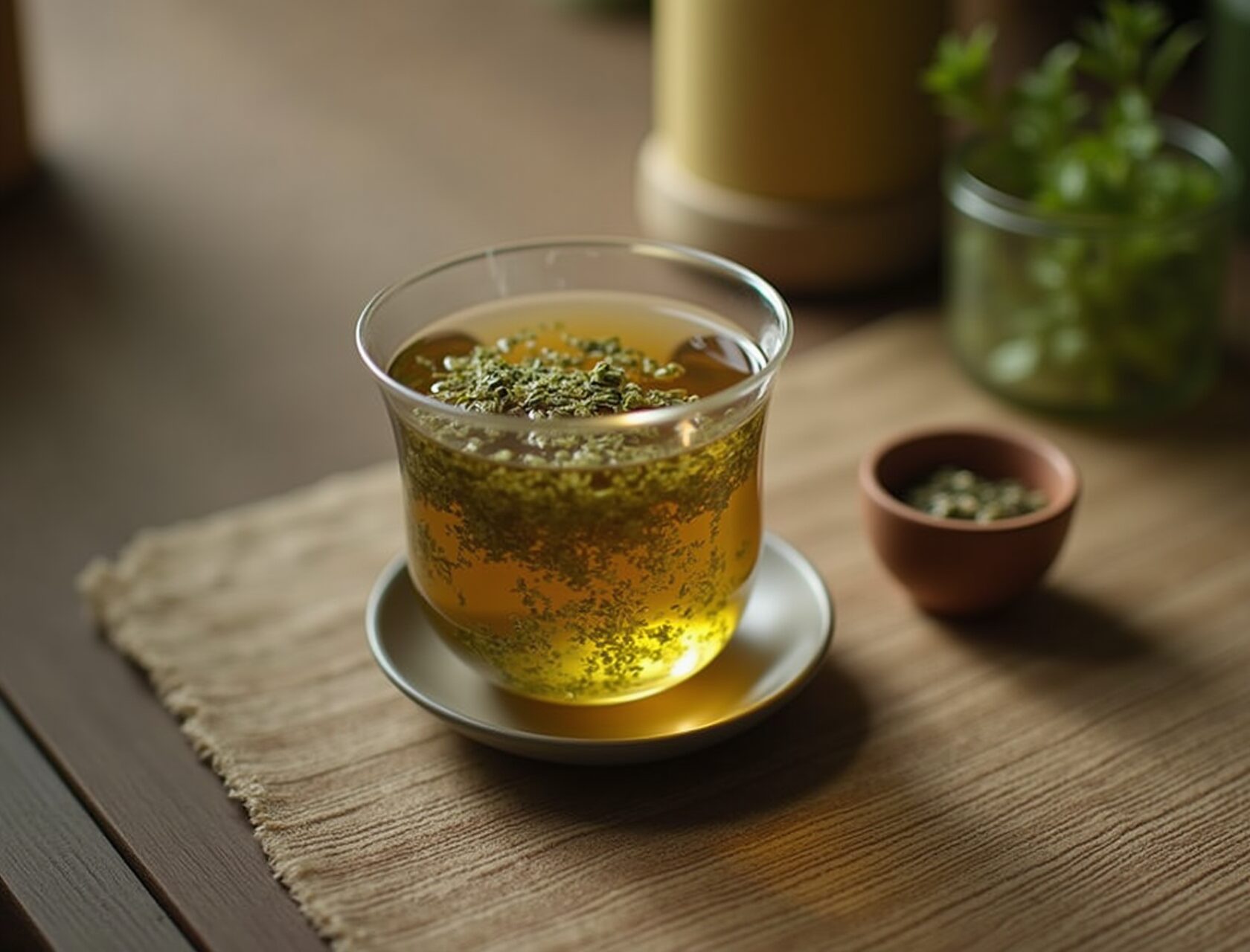
Some genmaicha has a sprinkle of matcha powder added, giving the blend a bright green hue and a more complex, vegetal flavor. This style — called matcha-iri genmaicha (matcha-iri = “with matcha added”) — has slightly more caffeine than standard genmaicha because matcha is a concentrated whole-leaf powder. Best for: drinkers who want more vegetal depth and slightly more complexity while still staying well below sencha in caffeine.
The amount of matcha added is typically small (less than 5% of the blend), so the caffeine increase is modest — perhaps 20–30mg per cup rather than 7–15mg. It's still much lower than straight sencha, but worth knowing if you're specifically managing caffeine.
Is Genmaicha Safe to Drink in the Evening?
For most people, yes — at just 7–15mg of caffeine per cup, genmaicha is one of the most practical choices for afternoon and evening drinking among all genuine teas (as opposed to herbal tisanes, which contain no caffeine at all).
To put the numbers in context: a small piece of dark chocolate contains about 12mg of caffeine. If eating chocolate after dinner doesn't affect your sleep, a cup of genmaicha at 8pm almost certainly won't either.
The exception is people with extreme caffeine sensitivity who notice effects from even very small amounts. For those cases, completely caffeine-free options like mugicha (roasted barley tea) or herbal teas are better choices.
Other Genmaicha Benefits Beyond Low Caffeine
The low caffeine isn't the only reason genmaicha is practical as an everyday tea:
- Gentle on the stomach: The bancha base has lower tannins than premium spring teas, and the roasted rice adds a warming quality that soothes rather than irritates. As noted in a review of green tea composition (Cabrera, Artacho & Gimenez, 2006, Journal of the American College of Nutrition), catechin content varies significantly by processing method — bancha's mature-leaf processing results in a lower-tannin cup than first-flush sencha or gyokuro.
- Good with food: The toasty-nutty character pairs naturally with Japanese rice dishes, soups, and light snacks without competing with food flavors
- Antioxidants: Still contains meaningful levels of green tea catechins from the bancha component
- Naturally sweet: The roasted rice adds a slight natural sweetness that reduces or eliminates the need for added sweetener
If you want to try a traditional genmaicha — best for: all-day everyday drinking, meal pairing, and easing away from higher-caffeine beverages — our loose-leaf genmaicha is sourced from Japan and uses a classic bancha-rice blend.
Genmaicha vs Hojicha for Low Caffeine
Both are excellent low-caffeine choices but have very different flavor profiles:
- Genmaicha: Nutty-toasty with green tea character underneath; earthy and approachable. Best for: those who still want recognizable green tea flavor with significantly reduced caffeine.
- Hojicha: More intensely roasty, caramel-forward, with almost no green tea character remaining. Best for: those wanting a warm, deeply roasty cup closest in feel to coffee, without the high caffeine.
If you enjoy the flavor of green tea but want less caffeine, genmaicha keeps more of that green tea character. If you want something completely different from green tea that's warm and deeply roasty, consider comparing low-caffeine teas to find your perfect match.
Frequently Asked Questions
Does genmaicha have less caffeine than regular green tea?
Yes, significantly. Genmaicha uses a bancha base (already lower in caffeine than sencha) blended with roasted brown rice that contains no caffeine. The resulting blend has roughly 7–15mg of caffeine per cup, compared to 30–50mg in a typical cup of sencha.
Can you drink genmaicha every day?
Absolutely. Genmaicha is one of Japan's most commonly consumed daily teas. Its low caffeine, gentle flavor, and food-friendly character make it well-suited for repeated daily consumption. Many Japanese families drink genmaicha with every meal throughout the day.
Is the caffeine in genmaicha enough to wake you up?
Probably not in the way coffee does. At 7–15mg, genmaicha will provide a very gentle lift but nothing like the alerting effect of coffee or high-caffeine teas. For people reducing caffeine intake who want to maintain a warm morning ritual, it can be a satisfying transitional drink. For those who need strong caffeine stimulation, it won't substitute for coffee or higher-caffeine options.
Is genmaicha suitable for children?
Genmaicha is one of the teas Japanese parents traditionally offer to children, alongside bancha. Its low caffeine and mild, nutty flavor are well-suited to young drinkers. A diluted cup of genmaicha is a much better choice for children than higher-caffeine teas or sweetened beverages.
What is the difference between genmaicha and matcha-iri genmaicha?
Standard genmaicha is a blend of bancha and roasted brown rice, with approximately 7–15mg of caffeine per cup and a mild, nutty flavor. Matcha-iri genmaicha adds a small amount of matcha powder (typically less than 5% of the blend), resulting in a brighter green color, more vegetal flavor, and approximately 20–30mg of caffeine per cup. Both remain significantly lower in caffeine than standard sencha.