Japanese Green Tea Sampler: How to Build Your Own Tasting Kit
Japanese green tea spans an enormous flavor range — from the light, clean simplicity of bancha to the intensely sweet, umami-laden depth of gyokuro. Building a tasting kit that covers this range systematically is one of the fastest ways to develop your palate and identify which teas you'll want to drink every day. This guide shows you how to construct an effective sampler and how to taste through it with intention.
Why a Structured Sampler Works Better Than Random Buying
Most people discover Japanese tea by buying what's available at a local store — usually sencha or hojicha — and then wondering if they're missing something. A structured sampler solves this by covering the full spectrum in a single deliberate exploration. Within a few tasting sessions, you'll know whether you prefer shade-grown sweetness or roasted warmth, whether high-caffeine teas or low-caffeine ones fit your lifestyle, and which specific varieties are worth investing in going forward.
The Essential 6-Tea Sampler
This selection covers the full range of Japanese green tea in six distinct steps:
1. Bancha — The Baseline (20-25g)
Start here: light, clean, minimal complexity. Bancha is the everyday reference point that everything else is measured against. It's what Japanese people drink when they want hydration rather than experience. Understanding bancha first gives you a baseline from which every other tea is a departure.
Shop: shop.alldayieat.com/product/bancha/
2. Sencha — Japan's Standard (25-30g)
The national tea. More complex than bancha: brighter, grassier, more umami. The flavor most people think of as “Japanese green tea.” Try it brewed correctly (75-80°C, 45 seconds) and then over-brewed (90°C, 2 minutes) to understand how sensitive it is to temperature. The contrast is educational.
Shop: shop.alldayieat.com/product/sencha/
3. Hojicha — The Roasted Alternative (25-30g)
The departure from green: roasted, nutty, amber in the cup. After tasting bancha and sencha's grassy green character, hojicha is a revelation of how different the same tea plant can taste after roasting. The very low caffeine is a practical plus.
Shop: shop.alldayieat.com/product/hojicha/
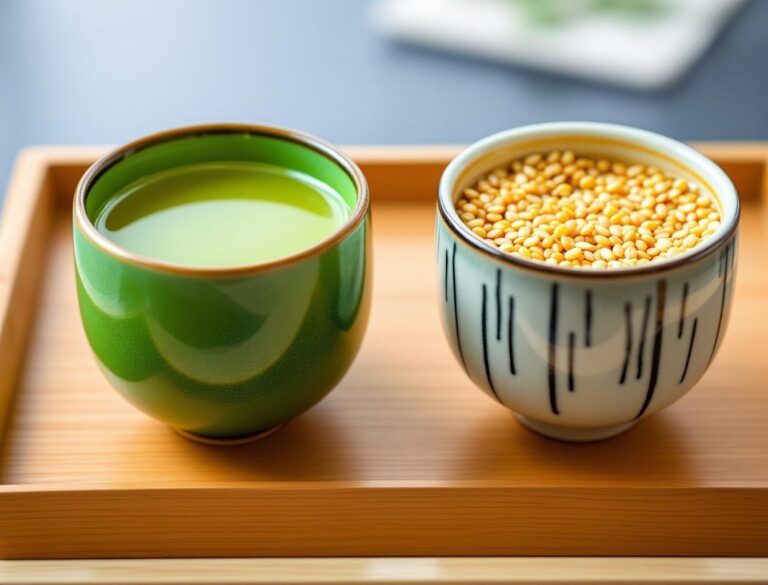
4. Genmaicha — The Grain Blend (25-30g)
Introduces a second dimension: the toasted rice mixed with green tea creates a savory-grassy hybrid that tastes like neither ingredient alone. Understand this as Japan's food-pairing tea — how it changes when you drink it with versus without food.
Shop: shop.alldayieat.com/product/genmaicha/
5. Kabusecha — Shade-Grown Everyday (15-20g)
The step up from sencha. The partial shading increases theanine and reduces catechins, producing a notably sweeter, smoother, more umami-forward tea. The “aha moment” for many tasters: this is when they understand what tea people mean when they talk about sweetness in green tea without sugar.
Shop: shop.alldayieat.com/product/kabusecha/
6. Gyokuro — The Prestige End (10-15g)
Save the most expensive and most demanding for last. Brew at 55°C in a small vessel. The result should be intensely sweet, thick, with deep umami — a completely different experience from everything else in the sampler. Understanding gyokuro reframes the entire tasting: every other tea in the sampler now makes more sense in relation to this extreme end of the spectrum.
Shop: shop.alldayieat.com/product/gyokuro/
How to Taste Systematically
One tea per session: Tasting multiple teas in the same session can be done but requires palate-clearing (room temperature water and plain rice crackers between teas). Single-tea sessions are simpler and more focused.
Brew at the recommended parameters first: Taste each tea at its ideal temperature and time before experimenting. Understanding what the tea tastes like at its best is essential before exploring variations.
Multiple steeps: The first and second steeps of Japanese green tea often taste significantly different. The first steep extracts primary character; the second often tastes sweeter and lighter. Taste both and note the difference.
Note three things per tea: Aroma, primary flavor, finish (how it tastes 30 seconds after swallowing). This simple framework produces useful tasting notes without requiring formal vocabulary.
Optional Additions to the Core Sampler
If you want to extend beyond the core six:
- Shincha (first flush sencha): Seasonal — if available, taste against a standard sencha from the same region for a clear before/after comparison.
- Kukicha: Stem tea — the mild, slightly creamy flavor is a curiosity that expands the picture of what Japanese tea can be.
- Fukamushi sencha: Deep-steamed sencha, richer and cloudier than standard sencha. A useful sencha variation comparison.
Browse our complete tea collection: shop.alldayieat.com/product/japanese-tea/
Frequently Asked Questions
- How much tea do I need for a tasting session?
- For a single tea session, 5-8 grams is plenty for 2-3 steeps in a standard kyusu (200ml). For a six-tea sampler, 20-30g per tea comfortably covers multiple tasting sessions plus enough left over to keep drinking the ones you enjoy. That's roughly 120-180g total for the core sampler.
- Can I taste Japanese teas without a special teapot?
- Yes. A glass pitcher with a fine-mesh strainer works for all the teas in this sampler. A gooseneck kettle with temperature control is the more important piece of equipment — getting the water temperature right matters more than the vessel for assessment tasting.
- What order should I taste in?
- Light to intense, not bold to delicate. Tasting gyokuro first would overwhelm your palate for everything lighter. Start with bancha, progress through sencha, hojicha, genmaicha, kabusecha, and finish with gyokuro. Save roasted (hojicha) for the middle so the contrast with both the plain greens before and the premium greens after is clear.
- Is this sampler good as a gift?
- Excellent gift for tea-curious people. The six-tea format tells a complete story — the recipient understands Japanese tea as a tradition with range, not just a single product. Package with a simple tasting guide card and the gift becomes educational as well as practical.