Sencha Tea: Japan Everyday Green Tea Guide
What is Sencha?
Last updated: April 2026
Sencha (煎茶, literally “steeped tea”) is Japan's most popular green tea — a steamed, unshaded whole-leaf tea that accounts for about 80% of all tea produced in Japan. It is the daily staple for many and serves as the foundation for understanding Japanese green tea through the sencha tea overview.
- KEY TAKEAWAYS
- Sencha accounts for ~80% of Japan's total tea production; Shizuoka prefecture supplies ~40% of that output (Japan Tea Central Association, 2024).
- Brewed sencha contains approximately 29mg of caffeine per 237ml cup — moderate and well-suited to daily drinking (USDA FoodData Central, 2024).
- First flush (Shincha), harvested April–May, contains the highest theanine levels and is the most prized harvest of the year (Yamamoto et al., 1997, CRC Press).
- Brewing at 70–80°C minimizes astringency and preserves sencha's characteristic sweet, grassy flavor.
- Sencha can be steeped 2–3 times, with each infusion revealing a distinct flavor profile.
Unlike rarer teas reserved for ceremonies, Sencha represents accessible excellence. It offers remarkable complexity within reach of every tea lover.
Why Does Sencha Matter?
Sencha matters because it uniquely bridges the gap between everyday convenience and genuine tea craftsmanship — delivering complex flavor, cultural depth, and versatility at every price point. It delivers:
- Complex flavor – grassy, sweet, slightly astringent
- Accessible price – quality at every budget
- Versatility – hot, cold, with meals, alone
- Antioxidant compounds – researched catechins including EGCG (epigallocatechin gallate)
What Are the Types of Sencha?
The visual below illustrates Japan's main sencha varieties, classified by steaming level and harvest timing.
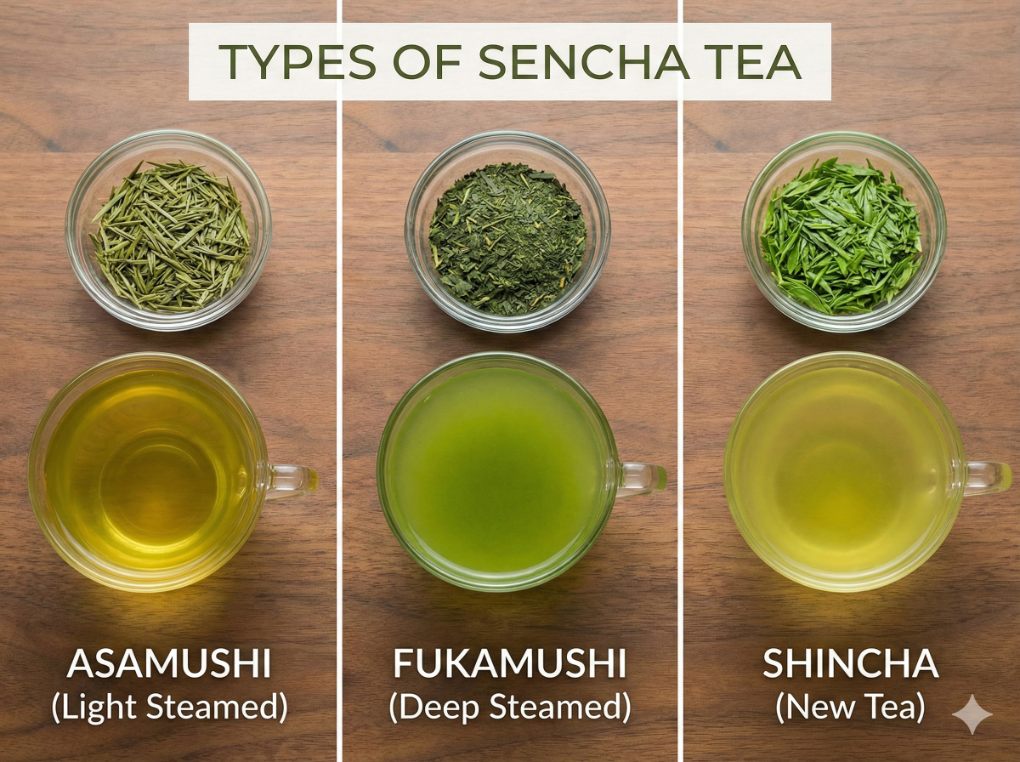
Sencha is classified by two main criteria: harvest timing and steaming level. Each combination produces a distinct flavor profile suited to different preferences and occasions.
By Harvest Time
- First Flush (Shincha, 新茶) — the earliest spring harvest (April–May), delivering the brightest flavor and highest theanine content; considered the most prized sencha of the year. Best for: tea enthusiasts seeking peak seasonal flavor.
- Second Flush – most common, balanced flavor. Best for: everyday drinking and newcomers to Japanese green tea.
- Third Flush – stronger, more robust, better value. Best for: those who prefer a bolder cup or use sencha in cooking and cold brewing.
By Processing (Steaming Level)
- Asamushi (浅蒸し) — lightly steamed (~30 seconds), producing a lighter, sweeter, more delicate liquor. Best for: those who enjoy subtle, clear-flavored teas.
- Chumushi (中蒸し) — medium steamed (30–60 seconds), the most common style with a balanced character. Best for: reliable everyday drinking; a dependable all-rounder.
- Fukamushi (深蒸し) — deeply steamed (60+ seconds), darker, more mellow, and full-bodied. Best for: those who prefer a rounder, less astringent sencha.
How Does Sencha Compare to Other Japanese Teas?
Sencha is unshaded and steamed, giving it a grassy, vegetal character that clearly distinguishes it from shaded teas like gyokuro and matcha, and from roasted teas like hojicha. For those seeking a rare alternative to sencha, there are unique options that offer different flavor profiles and health benefits.
| Tea | Shade | Taste | Caffeine | Best for |
|---|---|---|---|---|
| Sencha | No | Grassy, sweet, vegetal | Medium (~29mg/237ml) | Daily drinking; beginners to Japanese green tea |
| Gyokuro | Yes (3+ weeks) | Sweet umami | High | Special occasions; umami seekers; experienced tea drinkers |
| Matcha | Yes | Rich, bold | Very High | Ceremonies; lattes; baking and culinary use |
| Bancha | No | Mild, earthy | Low | Budget-friendly everyday tea; lower caffeine preference |
Caffeine values per 237ml brewed cup. Source: USDA FoodData Central (2024).
What Are the Key Compounds in Sencha?
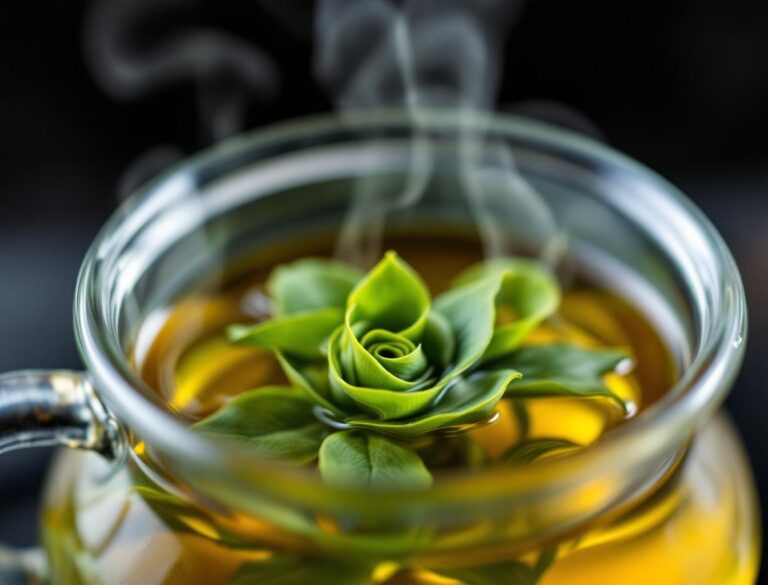
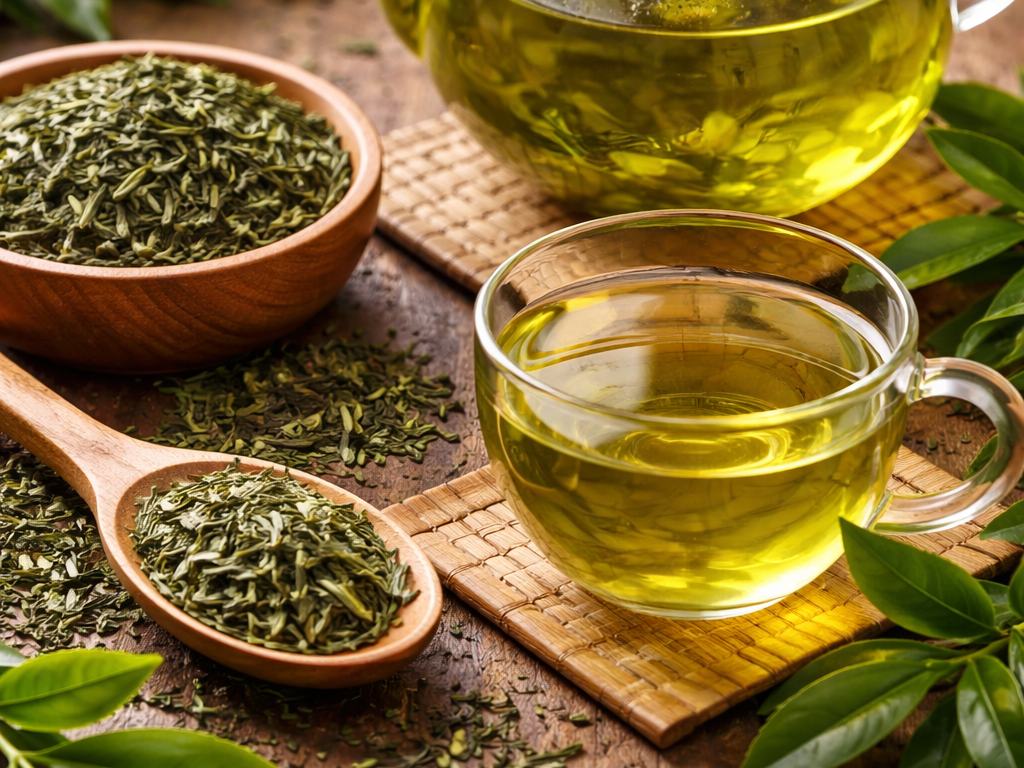
As shown in the following image, sencha's vivid green color and whole-leaf structure reflect its catechin-rich, minimally processed nature.
Rich in Antioxidants
Sencha contains catechins — plant-based antioxidant polyphenols — with EGCG (epigallocatechin gallate) as the primary compound. According to Cabrera, Artacho, and Gimenez (2006, Journal of the American College of Nutrition), catechin content in green tea varies by processing method and variety. Research links these compounds to:
- Reduced inflammation
- Heart health support
- Metabolism boost
- Cellular protection
L-Theanine for Focus
The unique combination of caffeine and L-theanine (an amino acid naturally concentrated in tea leaves) provides calm alertness – energy without anxiety.
Vitamin C
Sencha is one of the best natural sources of vitamin C, especially when freshly brewed. If you're new to Japanese green tea, our beginner-friendly guide offers helpful tips to enhance your experience.
Dental Health
Catechins in Sencha may fight bacteria that cause cavities and bad breath.
How Do You Brew Perfect Sencha?
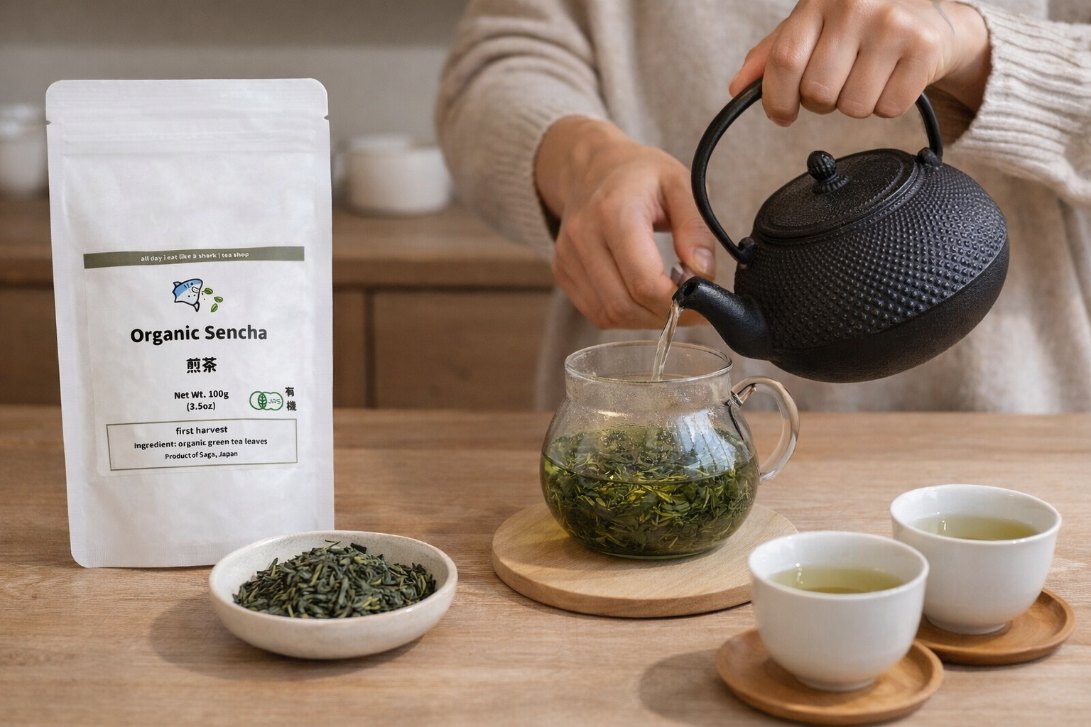
The brewing setup pictured here demonstrates the correct leaf-to-water ratio and equipment for a balanced, low-astringency sencha cup.
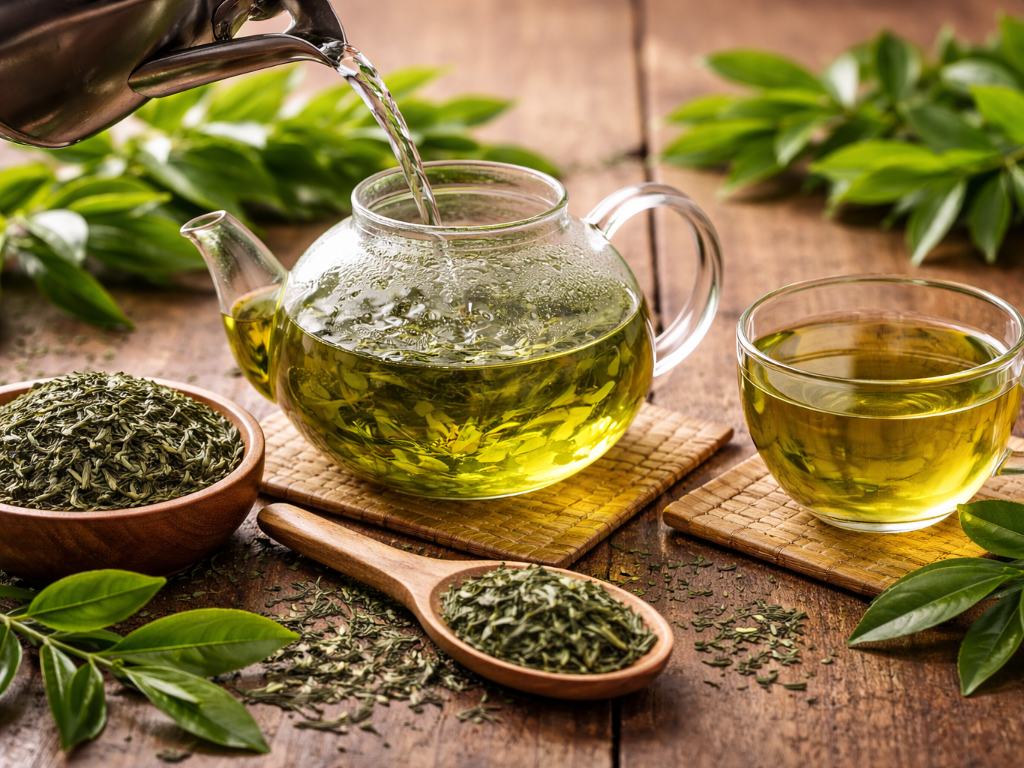
Brew sencha at 70–80°C (158–176°F) for one minute using 5g of leaves per 100ml of water — this temperature range preserves the tea's sweet, grassy character while minimizing astringency. Higher temperatures increase catechin and tannin extraction, producing a more bitter cup.
| Element | Recommendation |
|---|---|
| Temperature | 70-80°C (158-176°F) |
| Tea Amount | 5g per 100ml |
| Steep Time | 1 minute first steep |
| Infusions | 2-3 times |
Brewing Steps
- Warm teapot – rinse with hot water
- Add leaves – approximately 5g
- Add water at correct temperature
- Steep 1 minute – don't over-steep
- Pour completely – serve immediately
Second and Third Steeps
Sencha rewards multiple infusions. Second steep: shorter (30 seconds), brighter. Third steep: even shorter, different flavor notes emerge.
What Should You Look for When Buying Sencha?
When buying sencha, prioritize harvest date and origin — fresher tea from established regions like Shizuoka or Uji consistently delivers the best flavor and aroma. Look for these key quality indicators:
- Harvest date – fresher is better; look for the most recent season
- Origin – Uji (Kyoto) and Shizuoka are Japan's most recognized sencha-producing regions
- Processing – steaming level (asamushi, chumushi, fukamushi) affects taste
- Leaf appearance – should be uniformly green, not brown or fragmented
How Much Does Sencha Cost?
Sencha is available at every price point, making it one of the most accessible premium teas in the world. From affordable everyday bags to single-origin specialty leaves, there is a sencha for every budget.
- Everyday: $5–15 per 100g — Best for: daily high-volume brewing
- Good: $15–30 per 100g — Best for: step-up quality without a specialty price tag
- Premium: $30–60 per 100g — Best for: gifts, special occasions, and exploring regional variety
- Specialty: $60+ per 100g — Best for: single-origin, first-flush, or award-winning lots
How Should You Store Sencha?
Store sencha in an airtight container in a cool, dark place — or refrigerate for longer preservation. Exposure to heat, light, moisture, and oxygen are the four main causes of flavor degradation.
- Airtight container – essential; resealable foil bags or ceramic caddies work well
- Cool, dark place – or refrigerate for longer shelf life
- Use within months – freshness fades; best within 3–6 months of opening
- Avoid heat/light – degrades color, aroma, and flavor
Our Sencha Collection
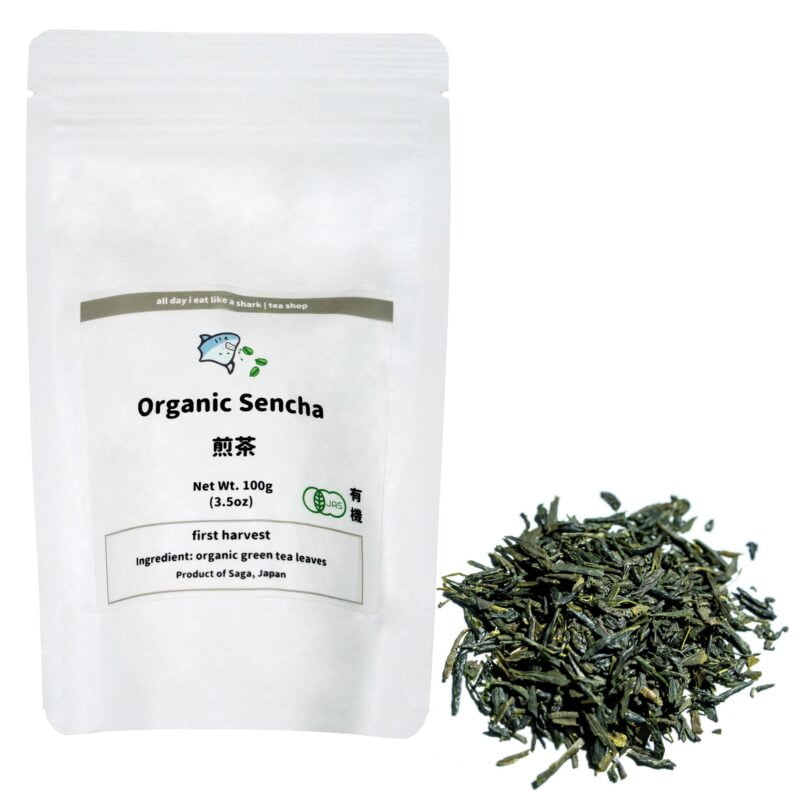
We source Sencha from trusted farms across Japan's prime tea regions. Browse our selection to find your perfect daily cup.
Frequently Asked Questions About Sencha
What is the difference between sencha and gyokuro?
Sencha is grown in full sunlight, producing a grassy, vegetal flavor with medium caffeine. Gyokuro is shade-grown for three or more weeks before harvest, which suppresses catechin development and concentrates theanine — resulting in a sweeter, umami-rich flavor with higher caffeine content. Gyokuro is significantly more expensive and is typically reserved for special occasions, while sencha is Japan's everyday tea.
How much caffeine is in a cup of sencha?
According to USDA FoodData Central (2024), brewed green tea contains approximately 29mg of caffeine per 237ml (8oz) cup. This is moderate — roughly one-third the caffeine of a standard cup of coffee — making sencha suitable for regular daily consumption including multiple cups per day.
What is the best water temperature for brewing sencha?
70–80°C (158–176°F) is the recommended range for sencha. Higher temperatures increase extraction of tannins and catechins, producing a more astringent, bitter taste. Cooler water preserves the tea's natural sweetness and grassy aroma. Avoid using boiling water directly on sencha leaves.
What is Shincha?
Shincha (新茶, literally “new tea”) is the first flush of sencha, harvested in April and May each year. It contains the highest concentration of theanine — the amino acid responsible for the tea's smooth, sweet character — and is considered the most prized sencha of the annual harvest cycle. According to Yamamoto et al. (1997, CRC Press), first-flush leaves are progressively higher in amino acids than later harvests.
How many times can you steep sencha leaves?
Sencha leaves can typically be steeped 2–3 times. The first steep (1 minute at 70–80°C) delivers the fullest flavor. The second steep should be shorter — around 30 seconds — and will taste brighter and lighter. The third steep is shorter still and reveals different, often more subtle, flavor notes. Each infusion extracts different compounds from the leaf.
Which Japanese Tea Are You? Take the 60-second quiz
“`