First Time Trying Japanese Green Tea? Start Here
Start your journey with Sencha, Japan's most consumed tea, to experience its classic vegetal notes of butter lettuce and seaweed. If you're after a rich, savory sweetness, try Gyokuro, where shaded leaves create a full-bodied umami taste and creamy mouthfeel. When selecting quality leaves, look for the nutrient-rich Spring Shincha high-altitude first flush. Mastering the nuances of these distinct growing regions helps you discover the ultimate cup.
Begin With Sencha for Classic Japanese Green Tea Flavor
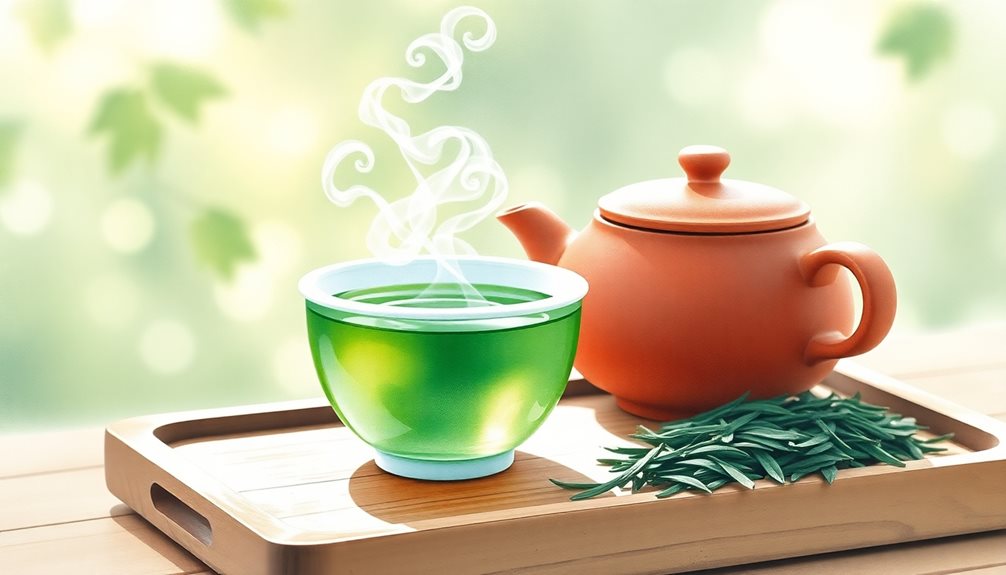
If you're seeking the quintessential taste of Japan, you must start your exploration of green tea with Sencha. Commanding 80% of domestic consumption, this variety defines the standard. The product is Japanese Sencha sourced from the Shizuoka region.
Producers steam the upper leaves for 15 to 20 seconds, halting oxidation to lock in color and create the characteristic “kill-green” effect. Innovative production methods taught by Nagatani Soen in 1738 made this style accessible to the public. You'll recognize high-quality Sencha by its rolled, needle-like shape. Unlike pan-fired alternatives, this steaming yields a distinct vegetal profile.
You’ll extract balanced notes of butter lettuce, fresh hay, and seaweed. This brew is distinguished by a soft, smooth, and velvety mouthfeel that carries a gentle sweetness. Control your experience by selecting specific grades from regions like Shizuoka or Uji. Opt for Asamushi if you prefer a lighter, translucent brew, or select Fukamushi for a deep-steamed, richer umami intensity that clouds the cup.
Harness the essential power of catechins and Vitamin C to optimize your health. Regular consumption also improves oral hygiene by killing bacteria and reducing bad breath. You can expect to ingest approximately 20 to 30 mg of caffeine with every standard cup. Navigate this “steeped tea” correctly, and you secure the foundational knowledge required to fully appreciate Japan's complex tea traditions.
Try Gyokuro and Kukicha for Sweeter Taste Profiles
While Sencha dominates common consumption, you should turn to Gyokuro when you crave a sophisticated, savory sweetness. You master this flavor profile by selecting leaves shaded for twenty to thirty days before processing. This deliberate light deprivation halts photosynthesis, preserving high L-theanine levels while effectively curbing catechins. This tea is similar to matcha, though it differs in post-harvest processing. Much of this production occurs in Shizuoka Prefecture, where the climate and soil contribute to the flavor profile.
Consequently, you eliminate unwanted astringency and bitterness from your cup. Instead, you reveal a full-bodied umami experience with a creamy, thick mouthfeel often compared to a matcha latte. Growers manipulate the plant’s chemistry using black curtains, straw, or bamboo, forcing a surge in chlorophyll that turns the leaves a vibrant, deep green. The name translates to jewel dew, indicating the tea's premium quality.
After skilled craftsmen steam and roll these delicate needles, the result is a complex depth rivaling savory foods like miso soup. By prioritizing this premium shaded variety, you command a unique tea experience rich in antioxidants and devoid of harshness, securing the highest standard of sweet, vegetal satisfaction available. To preserve these delicate flavors, you must steep the leaves at 160°F for thirty to forty-five seconds.
Identify Quality via Growing Region and Harvest Timing
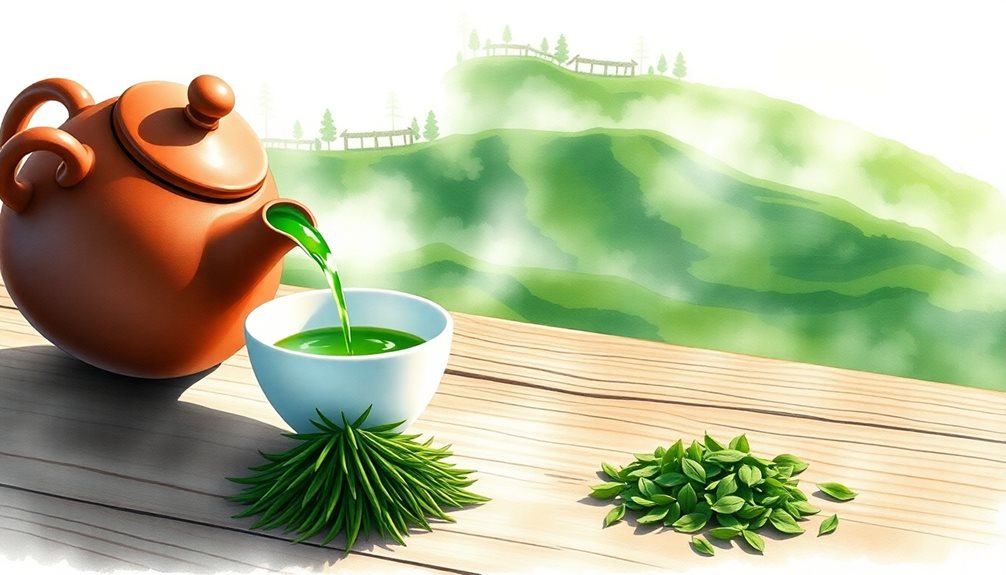
Pinpointing superior flavor depends on recognizing how distinct terroirs and harvest dates shape the leaf. You must scrutinize the origin to command your experience. For instance, Saitama features Sayama tea with thicker leaves that allow the plant to survive freezing conditions.
Shizuoka’s mountainous terrain creates slower-growing plants that develop richer ingredients for high-quality Sencha. Conversely, Kagoshima’s volcanic ash soil and subtropical climate accelerate growth for early April harvests. Round out your regional exploration with Mie, acknowledged as the third largest region and celebrated for distinct Kabusecha.
If you demand the absolute highest premium, target Kyoto’s Uji district. While Uji represents only 3% of production, its misty river valleys naturally shade bushes, creating the ideal amino acid profiles for superior Matcha and Gyokuro. You should also seek out the protected Yame Traditional Hon Gyokuro from Fukuoka, which guarantees specific shading and hand-picking.
Monitor the calendar and elevation closely. High-altitude regions yield naturally sweeter profiles because the mild winters and late springs foster dense nutrient accumulation. These conditions also ensure that the harvested leaves are rich in antioxidants and health-promoting polyphenols.
You’ll find the best profiles in the Spring Shincha first flush, ranging from early April in southern regions to late May in the north. Leverage this knowledge to bypass inferior secondary harvests and secure the sweet, full-bodied cup. A master tea blender often processes these harvests, knowing that blending is essential to celebrate the strengths of each region while creating unique harmonies.
Frequently Asked Questions
Do All Japanese Green Tea Varieties Come From the Same Plant?
Yes, you derive every variety from the single Camellia sinensis species. You differentiate them through cultivation methods and processing techniques, not distinct plants. You’re effectively manipulating one botanical foundation to achieve diverse, specific flavor outcomes.
What Distinguishes Roasted Hojicha From Standard Steamed Teas?
You’ll identify Hojicha by the high-temperature roasting that turns leaves brown. This process creates toasty, nutty flavors instead of vegetal notes. You’ll extract peak taste using boiling water, enjoying a low-caffeine brew that resists oversteeping.
Which Tea Cultivar Accounts for Most Japanese Green Tea Production?
Like a green titan rooted in dominance, Yabukita commands over seventy-five percent of the nation's yield. You'll seize the definitive Japanese taste profile through this frost-resistant powerhouse, ensuring you maintain the control others merely chase.
How Does Pan-Firing Affect the Bitterness of the Tea?
Pan-firing removes distinct bitterness, giving you a smooth, nutty warmth. It replaces grassy notes with roasted nuances by altering the leaf’s chemistry. You’ll detect a mellower flavor profile that lacks the crispness of steamed tea.
What Chemical Components Determine the Sweetness and Bitterness Levels?
It’s a chemical tug-of-war you command. Catechins and caffeine force the bitterness, while theanine and glutamate deliver savory sweetness. You’ll balance these opposing forces to dictate the cup’s profile, seizing the exact flavor you require.