

Organic Hojicha Roasted Green Tea from Oita Prefecture, Japan (100g)
Original price was: $24.99.$19.99Current price is: $19.99. — or subscribe to save up to 15%
May 2026 arrival.
Presale: Order your bag today and get 20% off with free shipping (no code required!)
Free shipping on orders over $50!
- Satisfaction Guaranteed
- No Hassle Refunds
- Secure Payments
Description
What Is Oita Hojicha?
Oita hojicha is a Japanese roasted green tea produced in Oita Prefecture on the northeastern coast of Kyushu. Unlike mass-produced hojicha blends, Oita hojicha comes from small-batch producers who roast locally grown bancha and sencha leaves at controlled temperatures — typically between 180°C and 200°C — to develop a deep caramel sweetness with almost no astringency. The volcanic soil of Oita's interior highlands, shaped by centuries of activity from nearby Mount Aso, imparts a distinctive mineral quality to the tea leaves before roasting. The result is a hojicha with a rounder, more complex flavor profile than the lighter roasts common in Kyoto or the heavier roasts of Yame. Oita hojicha is naturally very low in caffeine, making it suitable for drinking throughout the day and into the evening. It brews a warm reddish-amber liquor with aromas of toasted grain, caramel, and a faint woodsmoke note that lingers on the finish.
Origin: Oita Prefecture's Roasting Tradition
Oita Prefecture sits on the northeastern edge of Kyushu, bordered by the Seto Inland Sea to the north and the mountainous volcanic interior to the south and west. The region is better known internationally for its hot springs — Beppu and Yufuin draw millions of visitors — but its tea-growing tradition runs deep, quietly sustained by small family farms in the highland areas of Kitsuki, Usuki, and the foothills of the Kuju Mountains.
What makes Oita's terroir distinctive for tea starts underground. The soil across Oita's tea-growing areas is heavily influenced by volcanic ash deposits from Mount Aso, one of the world's largest active calderas located in neighboring Kumamoto Prefecture. This volcanic substrate — rich in iron, manganese, and trace minerals — creates mildly acidic, well-drained growing conditions that tea plants thrive in. The mineral content of the soil is absorbed by the roots and influences the leaf chemistry, producing tea with a subtle mineral backbone that carries through even after roasting.
The mountains matter too. Oita's tea farms sit at elevations between 200 and 500 meters, where significant day-to-night temperature swings stress the plants in a productive way. Cool mountain nights slow leaf growth, concentrating flavor compounds and amino acids. Morning mists rolling off the Kuju range provide natural shade, softening catechin development and reducing bitterness in the raw leaf — which translates directly into a smoother, sweeter hojicha after roasting.
How Oita Hojicha Differs from Yame and Kyoto Hojicha
Most hojicha sold internationally comes from one of two regions: Yame (Fukuoka Prefecture) or Uji/Kyoto. Each produces excellent tea, but the flavor profiles are noticeably different from Oita's.
- Yame hojicha tends toward a heavier, darker roast. Yame's fertile valley terrain and mist cover produce leaves with high amino acid content, and roasters there often push the temperature higher to develop bold, smoky flavors. The result is a robust, almost coffee-like cup. See our Yame Hojicha for a direct comparison.
- Kyoto (Uji) hojicha is typically lighter in roast, often made from high-grade sencha or even gyokuro stems (called kukihojicha). The flavor leans elegant and mild — more toasty grain than caramel, with a thinner body.
- Oita hojicha occupies a middle ground: deeper than Kyoto's light roast but without Yame's heavy char. The volcanic mineral quality gives it a distinctive roundness in the cup that neither Yame nor Kyoto fully replicate. Small-batch roasting — often done in traditional ceramic-lined drum roasters rather than industrial belt roasters — allows Oita producers to fine-tune the roast curve to each batch.
How Oita Hojicha Is Made
Hojicha production starts with a base tea — most commonly bancha (mature leaf tea harvested in late summer or autumn) or sometimes sencha (first or second flush). In Oita, the base tea is typically a late-harvest bancha grown on volcanic highland farms, which gives the starting material its mineral character.
The leaves are first steamed immediately after harvest to halt oxidation, then dried and sorted. Up to this point, the process is identical to any Japanese green tea. The transformation happens in the roasting step.
The Roasting Process
Roasting converts a green, vegetal tea into something entirely different. The Maillard reaction — the same chemistry that browns bread crust and gives coffee its aroma — breaks down amino acids and sugars in the leaf at high heat, creating hundreds of new volatile flavor compounds. For hojicha, this means the grassy, marine quality of green tea gives way to caramel, toasted grain, and woodsmoke notes.
Oita's small-batch producers typically roast at 180°C to 200°C for 3 to 5 minutes, depending on the desired roast level and the specific batch. Lower temperatures preserve more of the tea's natural sweetness; higher temperatures develop deeper smoky notes. The key is control — large industrial roasters process tonnes at a time with less batch-level precision, while Oita's smaller operations can adjust temperature and timing in real time as the roaster monitors color, aroma, and crackle sounds from the leaves.
This roasting process also dramatically reduces caffeine content. Heat volatilizes caffeine molecules out of the leaf, which is why hojicha contains significantly less caffeine than the same leaf would as unroasted green tea. For a deeper look at the science behind roasting and how it transforms tea chemistry, see our guide on the chemistry of roasting.
Flavor Profile & Tasting Notes
Oita hojicha brews a warm reddish-amber cup — deeper than Kyoto's pale gold, lighter than Yame's dark brown. The aroma hits first: toasted rice, caramel, and a whisper of woodsmoke rising from the cup before you take the first sip.
In the mouth, expect deep caramel sweetness as the dominant note, layered with toasted grain and a clean nutty quality reminiscent of roasted chestnuts. The volcanic soil influence shows up as a subtle mineral undertone — not sharp or metallic, but a grounding earthiness that gives the tea weight and structure. Astringency is nearly absent. The finish is clean and warm, with the caramel note lingering for several seconds.
Compared to the bright, grassy punch of unroasted Japanese green teas, hojicha occupies a completely different flavor register — closer to the comfort-drink end of the spectrum. People who find sencha too vegetal or gyokuro too marine often discover hojicha is their gateway into Japanese tea.
Tasting Comparison by Steep
- First steep: Strongest caramel and toast character. Full body, rich aroma, warm finish.
- Second steep: Slightly lighter, sweeter. The mineral undertone becomes more prominent as the roast character softens.
- Third steep: Delicate, grain-forward, still pleasant but noticeably thinner. Some drinkers prefer to increase water temperature here to extract the remaining depth.
How to Brew Oita Hojicha
Hojicha is one of the most forgiving Japanese teas to brew. Unlike gyokuro or high-grade sencha, which punish you with bitterness at the wrong temperature, hojicha tolerates a wide range of brewing parameters and still delivers a satisfying cup. That said, dialing in the details brings out the best of Oita's terroir character.
| Parameter | Recommended |
|---|---|
| Tea leaves | 5g (about 2 tablespoons — hojicha is light and voluminous) |
| Water volume | 200ml |
| Water temperature | 90–95°C (194–203°F) |
| First steep time | 30–45 seconds |
| Second steep | 15–20 seconds at 95°C |
| Third steep | 30–45 seconds at 95–100°C |
| Vessel | Kyusu teapot, gaiwan, or any heat-resistant pot with strainer |
| Re-steeps | 2–3 (flavor diminishes gradually) |
A few notes on the parameters above. Hojicha uses hotter water than most Japanese green teas — 90°C or above, compared to the 60–75°C range for sencha and gyokuro. The roasting process has already broken down the catechins that cause bitterness at high temperatures, so there's no penalty for using near-boiling water. In fact, hotter water brings out more of the roast aroma and caramel sweetness. For more on how temperature affects extraction across different Japanese teas, see our water temperature guide.
The leaf-to-water ratio is also different from green tea. Roasted hojicha leaves are significantly lighter and more voluminous than tightly rolled sencha — 5 grams of hojicha fills about two tablespoons, while 5 grams of sencha is roughly one heaped teaspoon. Measure by weight if you have a scale; by volume if you don't, use a generous two tablespoons.
Cold Brew Hojicha
Cold brewing hojicha produces a surprisingly sweet, smooth drink — all caramel and grain, zero bitterness. Use 8–10g of leaves per 500ml of cold water and steep in the refrigerator for 4–6 hours. The result is a golden-amber iced tea that works beautifully on its own or as a base for hojicha lattes.
Hojicha Comparison
Not all hojicha is created equal. Region, roast level, and base tea material all shape the final cup. Here's how the major hojicha styles compare side by side:
| Attribute | Oita Hojicha | Yame Hojicha | Kyoto (Uji) Hojicha | Generic Hojicha |
|---|---|---|---|---|
| Origin | Oita Prefecture, Kyushu | Yame, Fukuoka Prefecture | Uji, Kyoto Prefecture | Blended / unspecified |
| Roast level | Medium — controlled small-batch | Medium-dark to dark | Light to medium | Varies widely |
| Base tea | Highland bancha / sencha | Bancha, sometimes sencha | Sencha, gyokuro stems (kukihojicha) | Commodity bancha |
| Flavor | Caramel, toasted grain, mineral undertone | Bold, smoky, coffee-like | Mild, elegant, toasty grain | Flat, one-dimensional roast |
| Astringency | Very low | Low | Very low | Low to medium |
| Best for | All-day drinking, evening tea, terroir exploration | Coffee replacement, bold-flavor seekers | Gentle introduction, delicate palates | Budget daily drinking |
| Price range | Mid-premium | Mid to premium | Mid to premium | Budget |
If you're exploring the differences between hojicha and other Japanese teas, our hojicha vs genmaicha comparison covers how roasted tea stacks up against Japan's other comfort-tea classic.
Health & Wellness
Hojicha's roasting process changes more than flavor — it also shifts the tea's biochemical profile in ways that matter for everyday wellness.
Low Caffeine
Hojicha is one of the lowest-caffeine Japanese teas available. The high-temperature roasting volatilizes a significant portion of the caffeine present in the raw leaf. A typical cup of hojicha brewed at 90°C contains roughly 7–15mg of caffeine per 200ml cup — compared to 30–50mg for sencha and 120–170mg for gyokuro brewed at their respective temperatures. This makes hojicha a practical choice for evening drinking, for those who are sensitive to caffeine, or as a warm beverage for the whole family. For a detailed comparison of caffeine levels across Japanese green teas, see our green tea caffeine guide.
L-Theanine
Despite the roasting, hojicha retains meaningful levels of L-theanine — the amino acid responsible for the calm, focused feeling associated with Japanese green tea. L-theanine promotes alpha brain wave activity, which is associated with a state of relaxed alertness. The combination of low caffeine and retained L-theanine gives hojicha a uniquely gentle energy profile: warming and calming without making you drowsy.
Antioxidants
Roasting does reduce some heat-sensitive catechins (notably EGCG), but hojicha still contains a meaningful antioxidant profile. The roasting process also creates new compounds — including certain melanoidins formed during the Maillard reaction — that have demonstrated antioxidant activity in laboratory studies. Hojicha's antioxidant value is lower than unroasted sencha, but it's far from negligible. For a deeper dive into how roasting affects these compounds, our hojicha biochemistry guide covers the full picture.
Storage & Freshness
Hojicha is more shelf-stable than unroasted green teas — the roasting process reduces the moisture content and breaks down the volatile compounds most susceptible to oxidation. That said, proper storage still matters for preserving the roast character and aroma.
- Airtight container: Transfer hojicha from the original packaging into an opaque, airtight tin or canister. Roasted tea absorbs ambient odors readily — keep it away from spices, coffee, and strong-smelling foods.
- Cool and dark: Store in a cool, dark cabinet away from direct sunlight and heat sources. Room temperature is fine — refrigeration is unnecessary for hojicha and can introduce condensation issues.
- Shelf life: Properly stored, hojicha maintains its peak roast character for 6–8 months after opening. It won't go bad after that, but the toasty aroma will gradually flatten. Unopened, vacuum-sealed packages can last 12+ months.
- Buy in quantities you'll use: Unlike aged pu-erh, hojicha doesn't improve with time. Buy 100–200g at a time and restock fresh.
Frequently Asked Questions
What makes Oita hojicha different from regular hojicha?
Oita hojicha is produced from tea grown in volcanic soil in Oita Prefecture, Kyushu, and roasted in small batches by local producers. The volcanic mineral content gives the tea a distinctive rounded sweetness and subtle earthy undertone that generic, industrially roasted hojicha lacks. The terroir difference is similar to how wine from different regions tastes different even when made from the same grape — same tea plant, different soil, climate, and craftsmanship.
Is hojicha caffeine-free?
No — hojicha contains caffeine, but significantly less than other Japanese green teas. A typical cup contains 7–15mg of caffeine, compared to 30–50mg for sencha and 120–170mg for a concentrated gyokuro. The high-temperature roasting process drives off a substantial portion of the caffeine. Most people find hojicha mild enough to drink in the evening without affecting sleep, but it is not caffeine-free.
Can I use hojicha as a coffee replacement?
Many people do. Hojicha's roasted, caramel-forward flavor profile has more in common with coffee than with typical green tea, which makes the transition feel natural. The caffeine is much lower — roughly one-tenth of a cup of coffee — so you won't get the same stimulant effect, but the warm, toasty character satisfies the ritual and flavor craving. A hojicha latte made with hojicha powder is the most popular coffee-adjacent preparation.
How many times can I re-steep Oita hojicha?
Two to three steeps is standard. The first steep delivers the fullest roast character; the second is lighter and sweeter; the third is gentle but still worthwhile. Beyond three, the flavor becomes too thin. Increase water temperature slightly with each successive steep and keep steep times short — 15 to 30 seconds for the second, 30 to 45 seconds for the third.
Does hojicha taste like green tea?
Not in the way most people expect. The roasting process transforms the grassy, vegetal character of green tea into something warm, toasty, and caramel-sweet. If you've tried sencha or matcha and found them too “green” or too bitter, hojicha tastes fundamentally different. It's still technically a green tea — made from the same Camellia sinensis plant, processed the same way up to the roasting step — but the flavor has more in common with roasted barley tea or light-roast coffee than with a typical green tea.
Only logged in customers who have purchased this product may leave a review.
Related products
-
Subscribe & Save up to 15%
Sale!

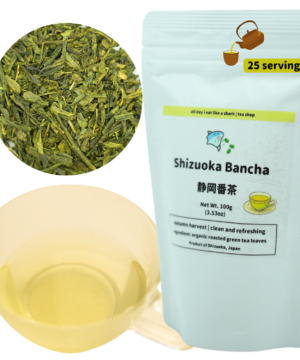
Shizuoka Organic Bancha Roasted Green Tea Leaves – Single Origin (100g)
Price range: $6.99 through $19.99 — or subscribe to save up to 15%Select options This product has multiple variants. The options may be chosen on the product page -
Subscribe & Save up to 15%
Sale!
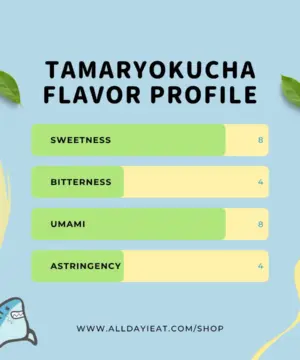
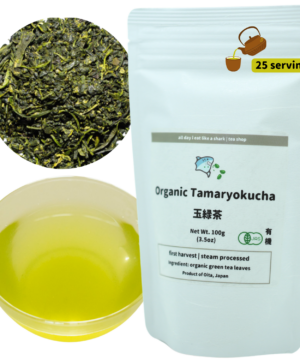
Organic Tamaryokucha Curly Green Tea – Single Origin Japan (100g)
Original price was: $31.99.$24.99Current price is: $24.99. — or subscribe to save up to 15% -
Subscribe & Save up to 15%
Sale!
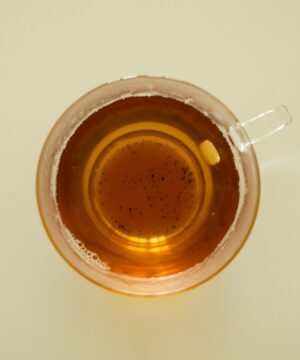
Shizuoka Organic Hojicha Loose Leaf Tea – Roasted Japanese Green Tea (100g)
Original price was: $29.99.$20.99Current price is: $20.99. — or subscribe to save up to 15%

 Kagoshima Organic Cooking Matcha Powder - Single Origin Japan (100g)
Reviews
There are no reviews yet.