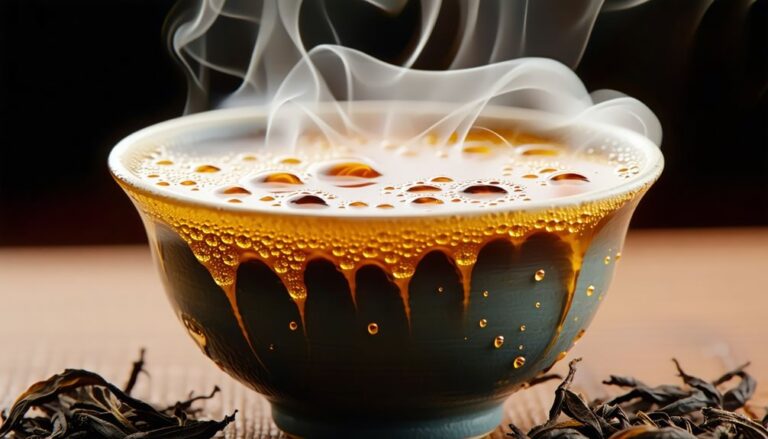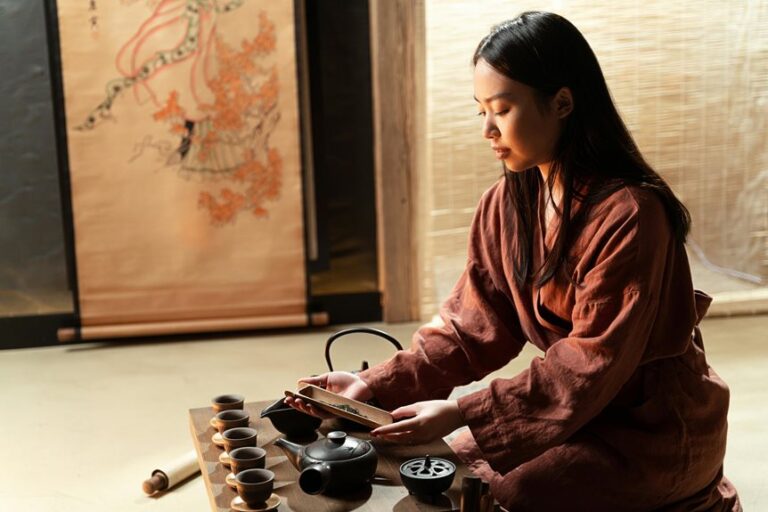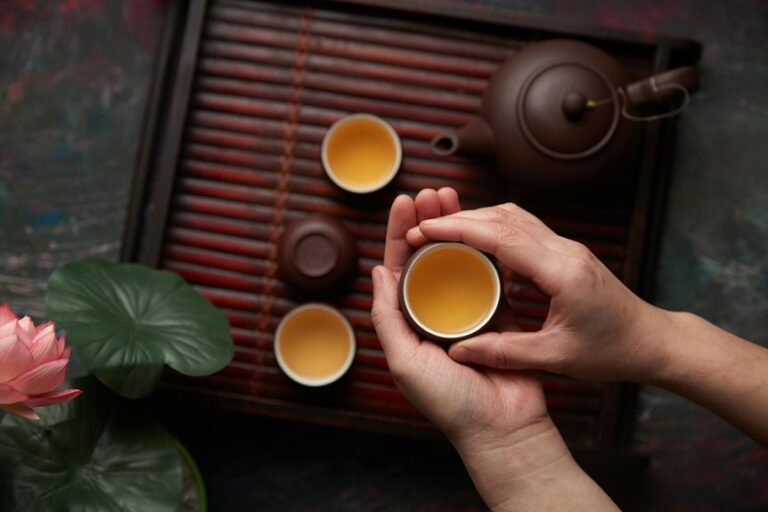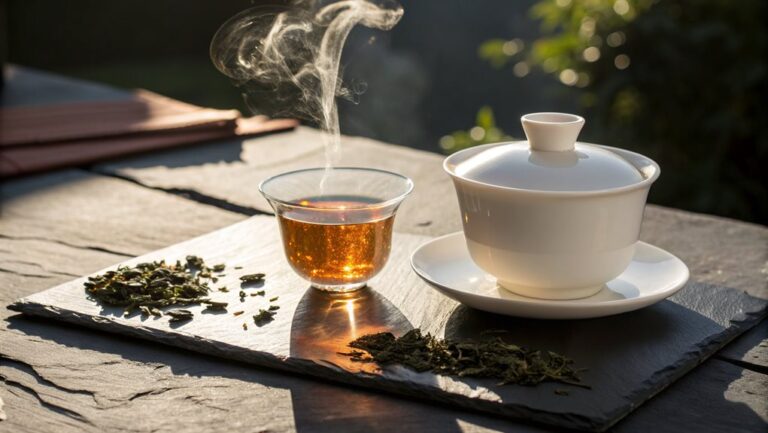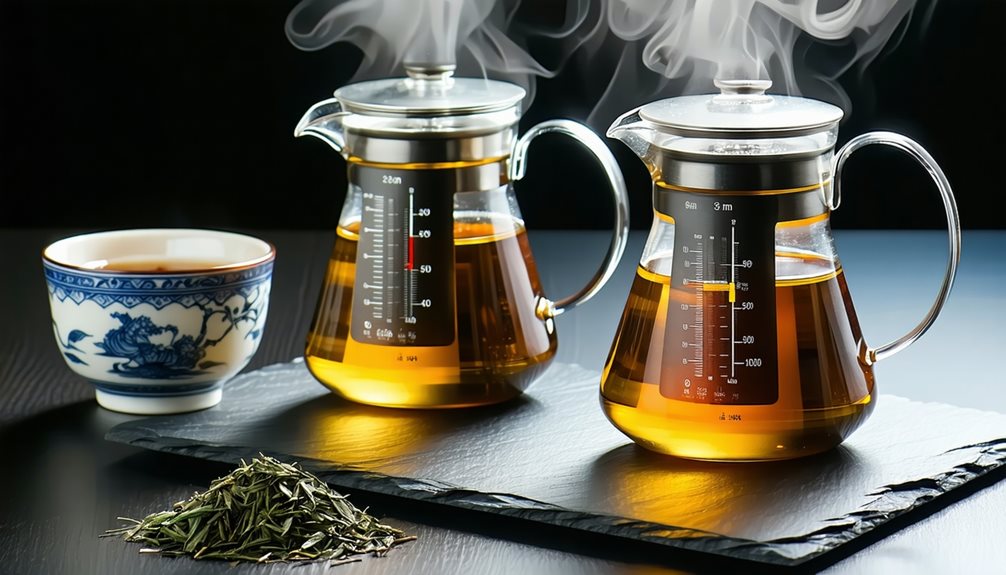
The Perfect Brew: 100°C or 80°C? Science-Based Brewing Temperatures for Roasted Green Tea
If you're brewing roasted green tea at 100°C, you’re scorching leaves, degrading EGCG antioxidants in seconds, and masking delicate flavors with bitterness. Use 80°C instead—it preserves vibrant color, extracts ideal catechins, and balances umami and sweetness. For nuanced roasted varieties, adjust temps 3–5°C lower to enhance aroma and prevent over-extraction. Discover why this science-backed method reveal’s every sip’s full potential.
Why Boiling Water Harms Green Tea: A Common Brewing Mistake
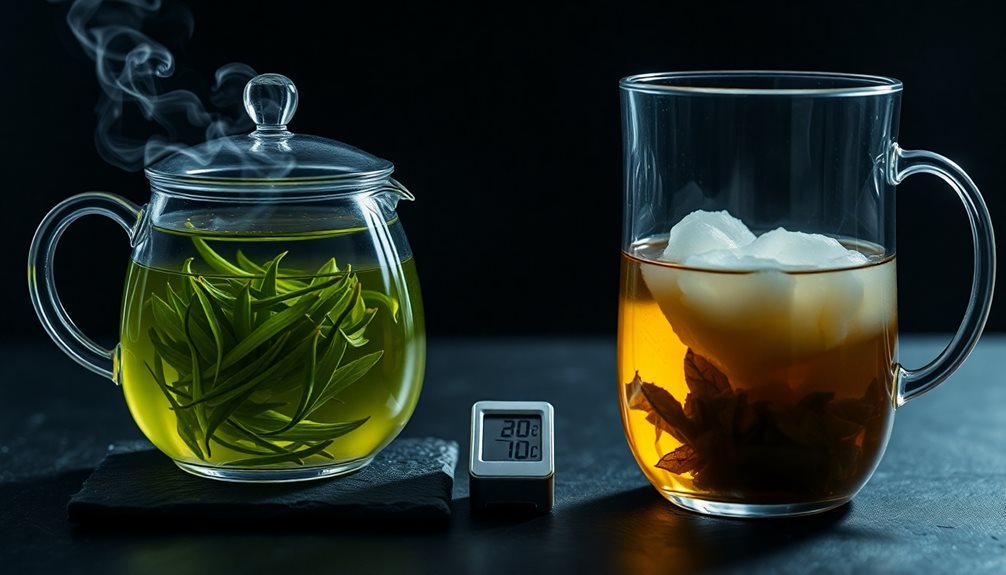
Though boiling water seems like a natural choice for brewing, it actually scalds green tea leaves, compromising their delicate structure. You’re risking scorching unoxidized leaves, which lack the heat resilience of black tea, leaving you with a muted, bitter cup.
Boiling water at 100°C destroys EGCG, the antioxidant powerhouse in green tea, reducing its health benefits by over 30% in seconds. Worse, it floods your brew with tannins, turning your tea sour and astringent—no matter how short the steep.
High temps also warp catechins and amino acids, stripping the fresh, umami notes you crave. Your control over flavor and nutrition slips away when you prioritize speed over precision.
Brewing at 80°C isn’t just gentler—it’s essential. You’re not just avoiding a mistake; you’re unlocking clarity, balancing caffeine, and preserving bioavailable compounds. For roasted green teas specifically, pan-fired Chinese varieties like Longjing or Bi Luo Chun benefit from precise temperature control (75–85°C) to enhance their nutty, toasted profiles while safeguarding polyphenol integrity.
Let heat work for you, not against you.
How to Brew Green Tea at 80°C for Flavor, Nutrition, and Clarity
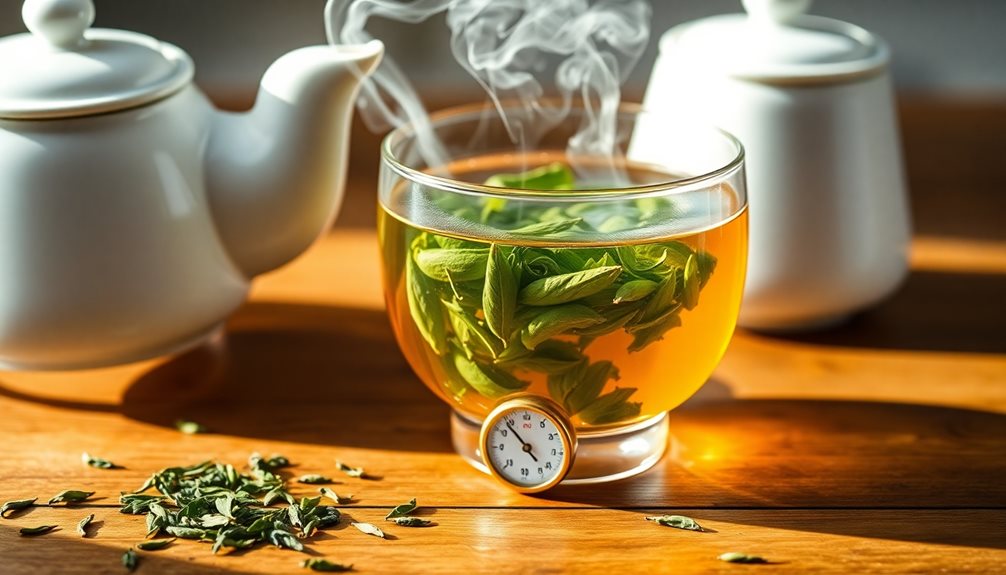
Why does 80°C matter when brewing green tea? It’s the sweet spot where flavor, nutrients, and clarity align. Brew at 80°C, and you extract peak antioxidants like EGCG without bitterness. Studies show this temperature preserves delicate umami flavors in sencha and balances mild astringency in Chinese varieties.
You’re optimizing sensory scores: brighter color, smoother aroma, and rounded taste. Need control? Steep 3–5 minutes to harness maximum catechin content without over-extraction. Water above 80°C spikes caffeine and bitterness; below it, you under-extract nutrients.
At 80°C, you’re in the zone—moderate caffeine, no harsh astringency. Time matters, too: 20 minutes extracts best, but 3–5 suffices for clarity. In brewing experiments, the optimal temperature of 85°C paired with a 3-minute steep maximizes EGCG (50.69 mg/100 ml) and total catechins (97.71 mg/100 ml). Avoid oversteeping; studies confirm 45-minute brews don’t boost catechins further.
For roasted green teas, precision pays off: 80°C release clarity, letting you savor every sip without cloudiness or overpowering stimulants. Master this, and your cup’s a science-driven masterpiece.
The Science of Catechin, Amino Acid, and Caffeine Extraction at 80°C
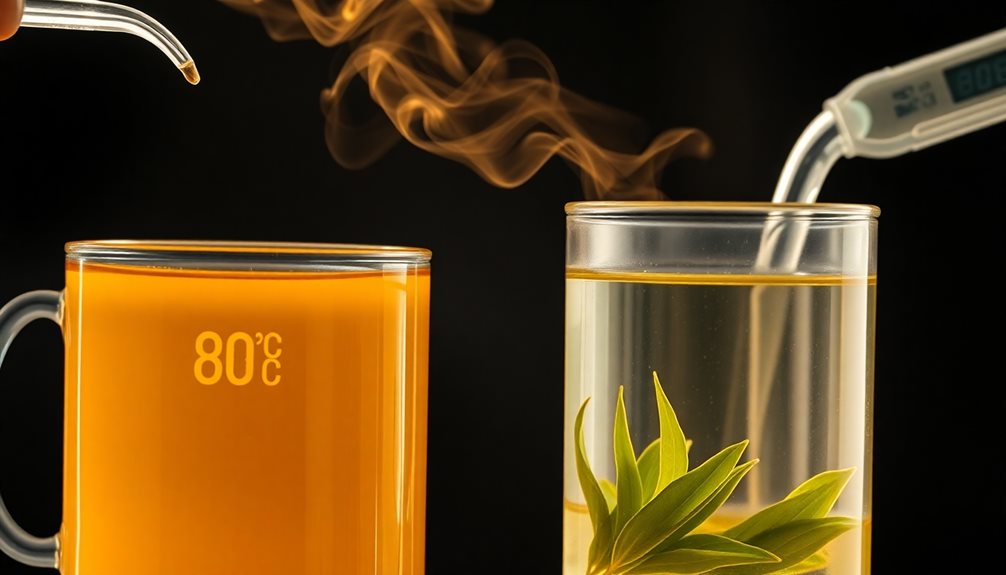
At 80°C, brewing green tea strikes a balance between extracting maximum catechins, preserving amino acids like EGCG, and regulating caffeine levels. You’ll see 15.8–17.4% catechin yields at this temp, a 3.5x boost over 50°C, while EGCG stays stable without degrading into inactive forms.
A 30-minute steep hits peak extraction without thermal breakdown, though extending past 90 minutes adds just 0.3% more catechins. Caffeine levels rise steadily but stay manageable, ideal for tailored alertness.
You’ll avoid high-temperature pitfalls like GCG epimerization and extract impurities at 100°C. Neutral solvents and a 50:1 water-to-leaf ratio ensure clean results—opt for 1–45 minutes at 85°C for clarity.
Optimal tea leaf particle size of 1 mm further enhances catechin extraction efficiency (as determined in the study Vuong et al., 2011).
Adjust particle size to 1 mm, pH below 6, and use ultrasonic or microwave-assisted methods at 60–80°C to accelerate extraction. You control quality: 80°C maintains polyphenol potency, minimizes bitterness, and keeps your brew bioavailable.
Stick to 20–30 minutes for maximum efficiency without oversteeping.
Tailoring Brew Temperatures to Your Green Tea Variety (Sencha, Gyokuro, Etc.)
Understanding the ideal brewing temperature for each green tea variety is key to optimizing extraction and flavor. You’ll refine your technique by matching temperatures to specific profiles.
Sencha thrives at 70°C (158°F), with a 65–75°C range to avoid bitterness while preserving its earthy notes. Temperatures above 175°F can lead to bitterness (over 175°F/77°C) as a key concern.
Gyokuro, a premium grade, demands precision at 60°C (140°F) to safeguard delicate umami compounds.
Chinese Longjing, with its unique oxidation, benefits from 80°C (176°F), tolerating slightly higher temps for aromatic balance.
Matcha, whisked into 79–82°C (175–180°F) water, allows powdered tea to handle warmth without scalding.
Japanese and Chinese varieties diverge in heat tolerance—adjust 5°F increments (3°C) to adapt.
Delicate leaves, like Gyokuro, sit lower on the 70–80°C (158–176°F) scale; bolder ones, upper.
Steep 1–3 minutes: cooler temps retain antioxidants.
You’re not guessing—you’re engineering each cup. Control your brew; your tea responds to your precision.
80°C vs. Boiling: Key Differences in Taste, Color, and Health Benefits
When brewing roasted green tea at 80°C vs. boiling water (100°C), the temperature choice shapes more than just timing—it defines taste, color, and nutritional outcome.
At 80°C, you extract smoother flavors and preserve delicate amino acids like L-theanine, balancing sweetness and umami. Boiling water risks bitterness by over-extracting tannins, turning your brew astringent and harsh.
Color-wise, 80°C yields a clearer, more vibrant infusion, while 100°C can dull hues and deepen the brew’s tone.
Nutritionally, lower temps retain heat-sensitive antioxidants, whereas boiling may degrade some compounds.
In traditional East Asian tea preparation, this temperature corresponds to the “crab eyes” stage (where tiny bubbles form at the bottom of the kettle crab eyes (~80°C)).
However, these trends are drawn from general green tea research; roasted green tea’s specific profile remains underexplored.
If you want control, start with 80°C, adjust to taste, and note that 100°C might overpower nuanced roasty notes.
Proceed with purpose, and adapt based on your cup’s feedback.
Brew Green Tea at 80°C Without Special Equipment: Quick Tips
By using these quick, equipment-free methods, you’ll master 80°C green tea brewing in minutes. Wait 10 minutes after your kettle boils—open the lid during cooling to speed up the drop. Tiny, champagne-like bubbles at the bottom signal you’re near 80°C. Alternatively, pour boiling water into a 500ml glass or ceramic cup and wait 4 minutes to hit ~85°C. Adjust to 80°C by adding a splash of cold. Use 5g of leaves per 100ml, preheating your teaware first. For steeping: 1.5–2 minutes for Western style, or 10–20 seconds for Chinese-style short infusions. Watch leaves sink mid-steep—it’s done. Brewing at 80°C ensures balanced aroma and flavor extraction for high-quality green teas, preventing over-extraction and preserving delicate notes. This method preserves vibrant color, bright notes, and antioxidants without bitterness, giving you full control over your tea’s precision and flavor.
Fix Common Errors: Why Your Tea Feels Bitter and How to Fix It
If your green tea tastes bitter, the culprit is likely brewing mistakes, not low-quality leaves—high temps, oversteeping, or bad water all trigger tannins and polyphenols to overpower its sweetness.
Boiling water (212°F) scalds leaves, releasing excessive bitterness like overcooked spinach. Stick to 80°C (175°F) for delicate varieties; black tea, which is oxidized, handles hotter temps.
Oversteeping? Cut time to 1–3 minutes. Japanese greens need just 1 minute. Remove the infuser after steeping to avoid extra extraction.
Tap water’s chemicals clash with tea; use filtered or spring water, not distilled. Prioritize first-spring harvests for sweeter, tender leaves—teabags often hold older, bitter leaves.
Catechins and caffeine boost bitterness at high temps, but balanced sugar and amino acids in fresh leaves counter this.
Choosing low-bitterness cultivars like Saemidori or Asatsuyu can further minimize bitterness by leveraging naturally sweeter tea compounds.
Control brew temp, timing, and water quality to master the flavor, not the other way around.
Frequently Asked Questions
Does Using a Lower Temperature Affect Caffeine Content?
Yes, using lower temps reduces caffeine content. Brewing roasted green tea at 80°C extracts about 35mg caf/8oz vs 67mg at 100°C. Control your buzz by adjusting temps—lower heats mean milder, less stimulating brews. Got it?
How to Brew 80°C Green Tea With a Regular Kettle?
Want better green tea? Boil water, pour into a cup, let sit 2-3 minutes to hit 80°C. Use a thermometer for precision—your taste buds will thank you. Can’t you control the wait?
Can High-Altitude Teas Tolerate Higher Temps Consistently?
Yes, high-altitude teas handle higher temps consistently. You'll find they're structurally resilient, tolerating 175–180°F without bitterness. Their natural strength lets you brew hotter while keeping flavors intact, giving you precise control over extraction.
What Water Types Enhance 80°C Brewing Precision?
Use soft, low-mineral water (70ppm) like purified or spring for 80°C brewing. It gives precise extraction, bright clarity, and locks in umami without over-extraction. You're in control—avoid hard water’s cloudiness.
Does 80°C Extraction Vary by Tea Aging Duration?
Yes, 80°C extraction varies with tea aging duration—older leaves release 20% fewer catechins at this temp. You’ll need to tweak temps for aged tea to hit that bold, balanced brew you crave.