From Green to Brown: The Chemistry of Tea Leaf Roasting Explained
Roasting tea transforms green leaves into complex brown brews by heating 80–160°C, triggering Maillard reactions that create nutty aromas and caramel sweetness. Heat degrades chlorophyll, bitter tannins, and antioxidants, swapping grassy notes for earthy depth. Temperature shifts balance sweetness, bitterness, and savory tones, while reducing moisture to preserve freshness. Longer roasts intensify bold, roasted flavors but sacrifice delicate compounds. Want to master the steps behind this alchemy? The full science reveals how heat sculpts every sip.
Mastering Heat: Roasting Temperatures & Leaf Transformation
When roasting tea leaves, precise temperature control transforms their chemical composition, shaping the final flavor profile. You hold the power to direct this metamorphosis: light roasts (80–85°C/176–185°F) preserve delicate terpenes, revealing floral and creamy notes with 2–3 minute steeps. This lower temperature also preserves polyphenols, enhancing antioxidant potential while allowing for a smoother, more nuanced infusion.
Medium roasts (85–90°C/185–194°F) demand 4–7 minutes to coax balanced complexity—floral, fruity, and creamy—while dark roasts (90–96°C/194–205°F) require near-boiling heat and 4–5 minutes to extract earthy, robust tannins.
Each scale degree shifts compound release, dictating sweetness, bitterness, or depth. Light roasts thrive at low temps to retain volatility; dark roasts need intensity to unlock bold character.
You adjust variables deliberately: raise temps, extend steeps to amplify depth, or dial back to preserve nuance. Loose-leaf methods let you fine-tune heat application, ensuring mastery over extraction.
With this control, you transform raw leaves into structured, intentional flavors, crafting teas that match your vision—no guesswork, just chemistry under your command.
The Maillard Reaction in Tea Roasting: Crafting Nutty Flavors
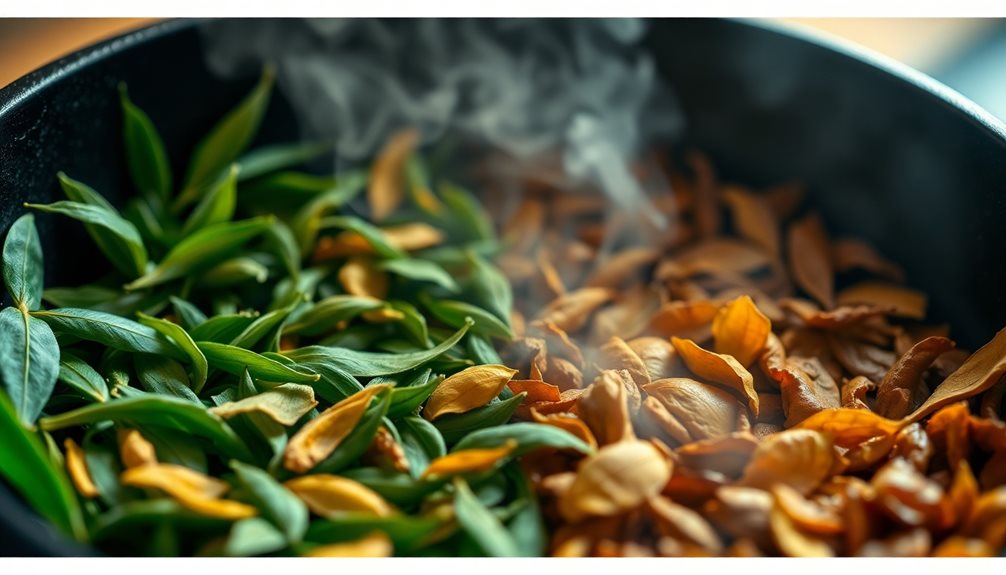
Precision in heat management releases the Maillard Reaction, where amino acids and sugars in tea leaves collide under sustained warmth to forge bold, toasty flavors. You’ll unlock this chemistry by hitting 118°C (244°F), initiating a cascade of non-enzymatic browning that transforms green notes into caramel, nutty richness. This process generates key flavor compounds like melanoidins, which contribute to the tea’s richness and structural complexity. Each degree above that threshold amplifies the reaction—extended heating deepens flavor, generating over 700 metabolites and 101 roasting-specific compounds like alapyridaine. Skilled tea roasters balance time and heat: rotate leaves every 30 minutes during long charcoal roasts, or dial precise temps with electric roasters to avoid burning. The result? A spectrum from Hojicha’s toasted walnuts to oolong’s caramel sweetness. You control the outcome: lighter roasts (85-90°C brews) retain delicacy, while dark roasts (100°C) demand boldness. Master the Maillard window, and you own the roast.
From Bitter to Savory: How Roasting Changes Tea Composition
Roasting reshapes tea’s identity by breaking down bitterness and awakening savory depth through precise chemical shifts. You’ll notice catechins degrade under heat—reducing astringency and bitterness as epimerization and thermal breakdown create theaflavins and thearubigins. These polyphenolic conversions amplify earthy, roasted notes, while sugars from carbohydrate metabolism add a subtle sweetness, balancing the flavor profile.
Meanwhile, heavy roasting significantly diminishes flavonol glycosides, contributing to a more pronounced savory and earthy character in the tea's final profile.
However, amino acids like L-theanine decline, sacrificing umami for savory sharpness. As you adjust roasting temperatures (80–160°C), you control the rate of these transformations. Higher temperatures accelerate catechin loss, sugar formation, and aromatic compound generation (aldehydes, furans), while preserving some antioxidants.
Your mastery over this process determines whether the final tea leans toward bold, malty richness or a refined, nuanced character. By manipulating heat intensity and duration, you directly influence the interplay of bitterness, sweetness, and savory depth. Understanding these shifts gives you command over the tea’s final flavor narrative.
Why Roasting Prolongs Tea Shelf Life
How much moisture needs to leave tea leaves to keep them fresh? You need to reduce it to 4-6% to create stability. Roasting strips excess water, crushing the mold’s chance to thrive—above 8.8%, decay kicks in.
You control microbial risk by locking out humidity, preserving leaves without additives. Heat also halts oxidation, which turns tea bitter and rancid. You slow those reactions, keeping off-flavors at bay.
Roasting upgrades amino acids and sugars into stable aromas via Maillard reactions, so volatile compounds don’t vanish during storage. Roasted oolongs, like that prized 2008 Taiwan Wuyi, stay vibrant for years when sealed, while green varieties max out at two years under vacuum. You gain precision: sealed roasted blends outlast unroasted, giving you power over shelf life. Master the roast, and you command freshness.
Notably, roasting suppresses retort odorants such as theaspirane (which disappears entirely) and linalool (reduced by 31.30%), as revealed by SPME and GC–MS analyses, directly addressing flavor instability during storage.
How Tea Roasting Reduces Antioxidants & Astringency
While roasting transforms tea’s flavor and shelf life, it quietly dims the antioxidant armor its leaves carry. Heat degrades polyphenols—the compounds behind tea’s health perks—with black tea’s higher roasting temperatures stripping up to 50% fewer polyphenols than green tea’s lighter touch.
You get complex theaflavins as oxidation ramps, but baseline antioxidant power fades. The Maillard reaction adds some antioxidant flair, yet won’t save you from polyphenol losses.
Cold-steeping flips the script: room-temperature extraction preserves heat-sensitive compounds best, hitting peak antioxidant yield at 12 hours. Prolonged hot steeping? It stresses what’s left.
Your move: prioritize green or lightly roasted teas if max antioxidants matter. Master the roast, and you command the brew.
Hot water extraction unlocks higher antioxidant capacity in burdock root tea compared to methanol-based methods, likely due to enhanced bioactive compound release.
Stopping Oxidation: The Heat-Driven Flavor Seal
After weighing antioxidant trade-offs in tea roasting, you’ll need to master how heat stops oxidation by deactivating enzymes. High temps above 85°C denature oxidative enzymes, halting the chemical reactions that brown leaves or rot a bruised apple. Precision matters: too much heat ruins flavor; too little lets oxidation run.
Adjust temps based on leaf tenderness—90–100°C for tender, 85–90°C for thick—while reducing water to 4–6% to lock in stability. Use charcoal ash (white-hot for 12 hrs) and bamboo baskets to distribute residual heat evenly, flipping every 30 mins for up to 12 hrs.
Roasting converts amino acids and sugars, scrubbing raw grassiness and crafting a mellower, sweeter profile. Monitor duration: 4–6 hrs at 80–85°C, followed by 2–3 hrs at 75–80°C, seals flavor without bitterness.
Your control over time, temp, and technique turns volatile greens into stable browns, sealing freshness while elevating complexity.
Frequently Asked Questions
How Does Roasting Affect Caffeine Content Beyond Water Reduction?
Roasting might reduce caffeine via volatilization, but the effects are minimal. Choose lighter roasts for more caffeine; heavier roasting may cut the content. Brew by weight, not volume, for control.
Can Roasting Revive Low-Quality Tea Leaves' Flavor Profiles?
Yes, roasting can revive low-quality tea’s flavor by converting amino acids and sugars into aromatic compounds, masking flaws. But overdoing it burns freshness—*you must balance temps* to avoid ruining delicate notes while lifting dullness.
What Specific Compounds Cause Roasted Tea’s Aromatic Depth?
You’ll find roasted tea’s aromatic depth stems from pyrazines (roasty), phenolics (smoky), aldehydes (floral), and amino derivatives (nutty). They’re shaped by roasting intensity, blending smokiness with sweetness through Maillard reactions.
How Does Roasting Time Impact Leaf Color Transformation?
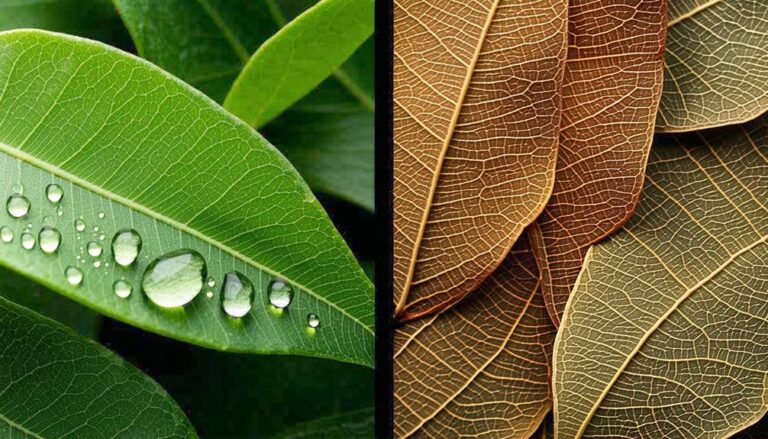
Longer roasting time boosts oxidation, converting green chlorophyll to brown pheophytins and ramping theaflavins and thearubigins. Too long? Over-darkens. You’re balancing time/heat to control color from beige to rich copper without sacrificing quality.
Do Traditional vs. Modern Roasting Methods Yield Distinct Chemical Profiles?
Yes, traditional and modern tea roasting yield distinct chemical profiles. Electric boosts catechins and preserves floral notes; charcoal enhances complex, roasty aromas via extended, low-heat. Your choice affects astringency, aroma depth, and antioxidant levels based on heat and fuel.