Total Polyphenol Content (TPC) in Roasted vs. Unroasted Green Tea: Lab Analysis
You’ll find that roasting green tea slashes total polyphenol content (TPC) by 40–90% compared to unroasted tea, as lab analysis shows. High heat breaks down key antioxidants like EGCG into less-studied polymers, while vitamin C drops to a third of its original level. Light roasting preserves more catechins, but deeper roasting shifts antioxidant profiles. If you’re curious about how to brew for maximum retention or which tea types win catechin-wise, there’s more to explore ahead.
Does Roasting Green Tea Reduce Its Polyphenol Content?
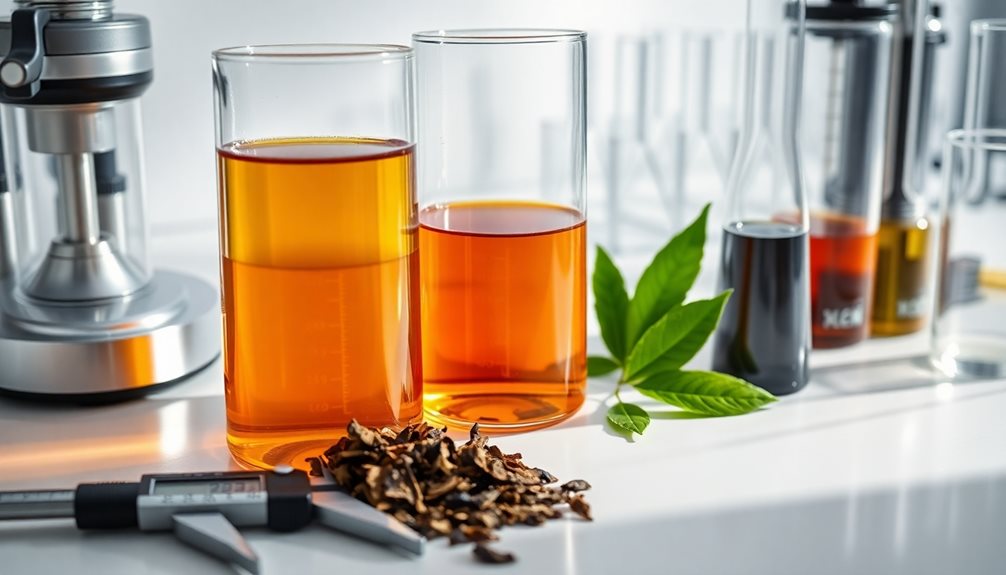
While you might assume roasting green tea enhances its flavor at the cost of health benefits, the lab data supports this: yes, roasting markedly reduces its polyphenol content.
High temps break down catechins into oligomers, slashing their bioavailability and cardiovascular perks like vascular support and blood pressure regulation. Vitamin C plummets to a third of unroasted levels, and total polyphenol content (TPC) drops sharply—brewed roasted tea shows far less than the raw stuff.
Thermal degradation creates polymerized compounds with unknown long-term benefits, but they can’t replace lost polyphenols. Roasting alters how nutrients behave in your gut, reducing their solubility and digestive stability.
(New sentence): High-temperature roasting not only degrades catechins but may also generate other antioxidants such as (pyrazines and flavonoids).
Cardiovascular protection, especially stroke prevention, weakens without active catechins. If controlling polyphenol intake matters to you, unroasted tea retains critical compounds roasting trashes—prioritize it if potency matters most to you.
How Roasting Transforms Green Tea’s Antioxidants: Catechins to Theaflavins
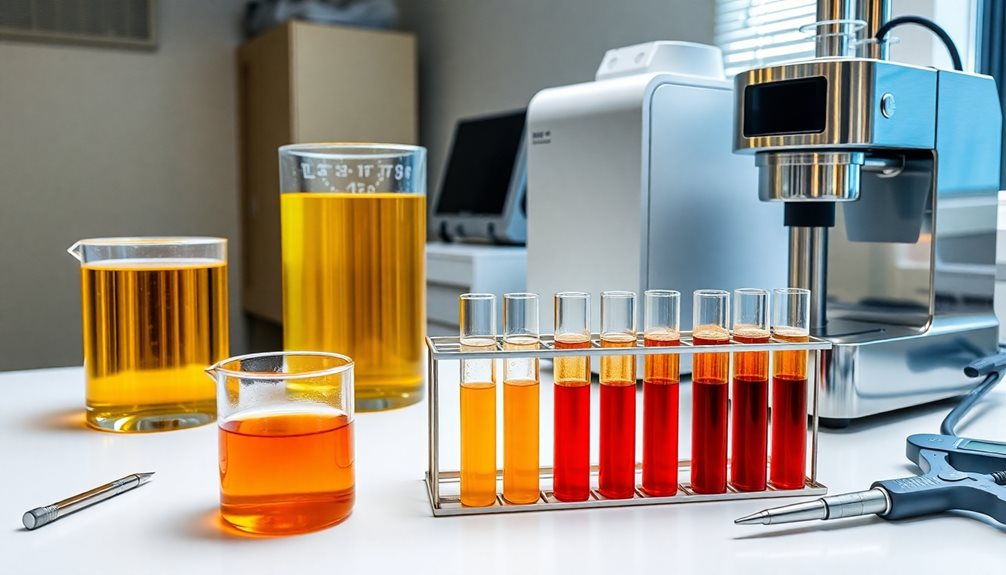
Roasting green tea doesn’t convert catechins to theaflavins, unlike the oxidation process in black tea production; instead, high heat breaks down catechins into less-studied oligomers and polymers. These compounds retain antioxidant potential but differ in bioavailability and stability.
You’re probably wondering how this affects your control over tea quality: roasting intensity determines degradation rates. Light roasting preserves most catechins, while deeper roasting creates complex polyphenols, shifting the profile. Don’t assume theaflavins form here—fermentation is required for their conversion, a distinct process from roasting.
By adjusting roast temperatures, you manage polyphenol types, not just quantities. This knowledge gives you precise control over antioxidant outcomes, avoiding assumptions based on black tea processes.
While research gaps persist, you can leverage known transformations to optimize desired properties. Roasting isn’t a loss—it’s a controlled reconfiguration of bioactive compounds, balancing retention and innovation.
Mastering this ensures your tea meets specific performance or health goals.
Why Infusion Time Matters More Than You Think for Polyphenol Extraction
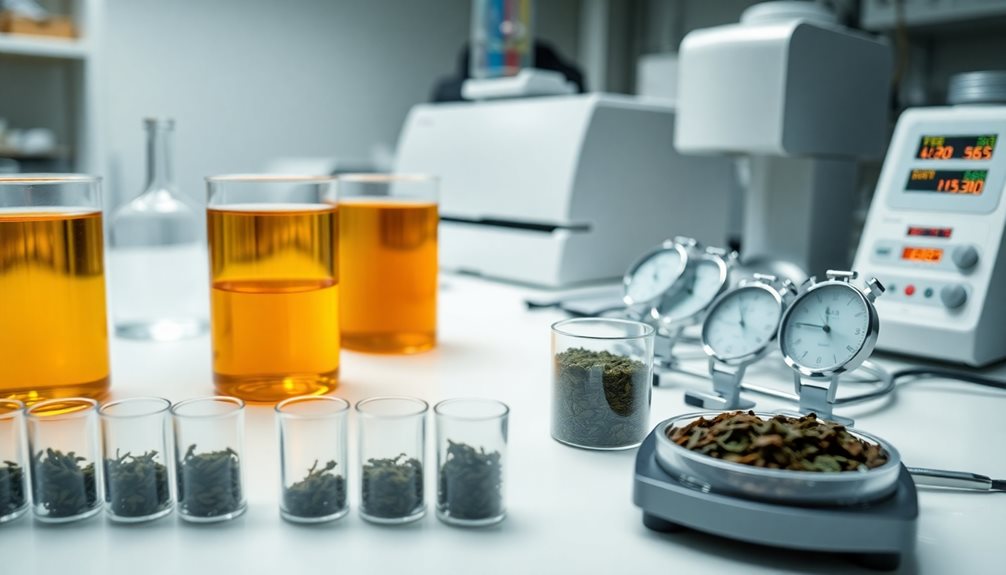
Because infusion duration directly impacts polyphenol yields, longer steeping times consistently boost total phenolic content (TPC) in green tea—from 9.50 mgGAE/g at 4 minutes to 25.81 mgGAE/g by 40 minutes.
You *can’t* maximize extraction without balancing time *and* temperature: 80°C for 30 minutes peaks at ~96 GAE/g dry weight, but pushing 100°C for 10 minutes risks thermal degradation, cutting yields after 30 minutes.
Different compounds demand different timelines—amino acids fully infuse in 2–5 minutes, while polyphenols require longer. Leaf rolling significantly influences extraction efficiency, as unrolled leaves like white tea require more heat/time to break down cell walls compared to rolled or CTC-processed teas. Oversteeping beyond ideal windows (e.g., 15 minutes at 80°C for bagged tea) causes irreversible loss.
Even cold extraction at 120 minutes outperforms rushed hot methods, proving patience pays off.
Lab data shows control lies in tailoring duration to targets: cold-maceration boosts yields, but microwave or high-temp methods need precision.
Shorten or extend time strategically, and you’ll reveal your tea’s full potential—without guesswork.
How Long Should You Steep Tea to Maximize Antioxidants? (DPPH & ORAC Tests)
Though you’ve mastered the balance of time and temperature for polyphenol extraction, pinpointing your tea’s antioxidant potential requires data beyond TPC measurements.
Post-harvest treatment significantly influences the polyphenol content and antioxidant profile in green tea, with roasted variants retaining higher concentrations of beneficial compounds like EGCG compared to unroasted teas.
Current resources lack DPPH and ORAC lab results quantifying antioxidant yield at specific steeping times. To truly optimize extraction, seek peer-reviewed studies comparing antioxidant levels (via DPPH radical scavenging and ORAC scores) across varied steep durations.
These tests should isolate roasted vs. unroasted green tea and report exact numerical results for each condition. Without this data, recommendations remain anecdotal.
If no existing studies meet these criteria, design your own controlled experiments: track DPPH inhibition and ORAC values at 1, 3, and 5-minute infusions.
This approach lets you map antioxidant peaks precisely, giving you command over your brew’s health profile.
Don’t settle for guesswork—demand the numbers to prove what timing unlocks peak potency.
Green Tea vs. Black/White/Toasted: Which Retains the Most Catechins?
Once you’ve pinpointed the ideal steeping duration to release antioxidants, the next step is comparing tea types to see which retains the most catechins. Green tea consistently ranks highest, with EGCG content averaging 5.25–14.39% on a dry basis, outpacing black and white teas. Meanwhile, white tea’s minimal processing can preserve higher EGCG levels compared to more oxidized teas, though its catechin range (14.4–369.60 mg/g dry) remains less consistent due to variable farming and oxidation practices.
Black tea’s full oxidation converts catechins into theaflavins, slashing EGCG levels by up to 60%. White tea, while minimally processed, shows wild variability in catechins (14.4–369.60 mg/g dry) due to inconsistent farming practices and oxidation exposure.
Your best bet remains unoxidized green tea, where minimal processing preserves esterified catechins like EGCG. Toasted teas—mentioned in your title—lack sufficient lab data for comparison.
Prioritize spring-harvested, unfragmented green tea leaves: they concentrate 13–14% catechins, outperforming older or processed variants. You’ve got control—choose green for maximum EGCG retention.
From Lab to Mug: What Real-World Tea Choices Boost Polyphenol Intake?
When brewing tea, your choices influence polyphenol intake more than you might realize. Opt for freshly brewed whole-leaf green or white tea—they deliver 133 mg/100ml of flavonoids versus bottled’s 13 mg/100ml.
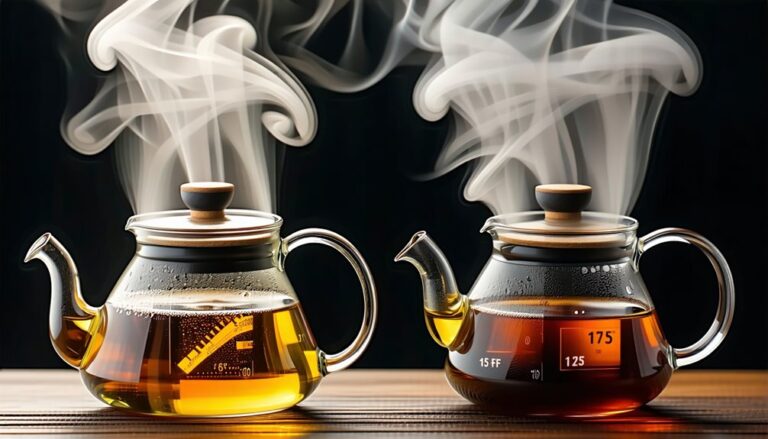
Brew at 175–185°F for 2–3 minutes to maximize extraction.
Avoid dark roasting, which destroys 90% of heat-sensitive catechins; light-roasted or unroasted varieties preserve more antioxidants.
Prioritize minimally processed white tea (highest polyphenols) or high-catechin shade-grown green blends. Top-plucked young leaves (specifically the youngest three) contain up to 43 mg/g of catechins, (highest leaf-position concentration)—a critical factor in maximizing flavonoid yield.
Store loose-leaf tea in airtight, light-proof containers and use it fresh to prevent oxidation.
Discard pre-packaged or capsule-brewed options—they strip 60–80% of bioavailability.
Brew tea immediately after heating and drink within 5 minutes to retain volatile compounds.
Frequently Asked Questions
Does Extraction Method Affect Polyphenol Measurement Accuracy?
You know extraction method changes polyphenol readings—imagine adjusting dials on a lab machine, each tweak sharpening your data’s focus. Yes, solvents, heat, time all twist results, so choose precise tools to grip accurate numbers.
Do Roasted Teas Develop Non-Polyphenol Antioxidants via Maillard Reactions?
Yes, roasted teas likely develop non-polyphenol antioxidants via Maillard reactions, but you’ve got to rely on lab analysis to confirm their formation and quantify them—raw data beats assumptions.
How Does Storage Time Impact Green Tea's Polyphenol Content?
Thinking longer storage preserves polyphenols? It doesn’t—they degrade over time, especially at warmer temps. Freeze for control; your choice rules the game.
Can Brewing Temperature Influence Polyphenol Extraction?
Yes, you'll find brewing temp affects polyphenol extraction. Higher temps like 80°C–100°C boost yield, yet cold steeping at 20°C preserves more antioxidants. Optimize time and heat for control. Use 80°C for 30 mins or 100°C for 10 mins. Monitor degradation risks.
Are There Polyphenols Exclusive to Unroasted Tea Types?
Yes, unroasted teas retain exclusive polyphenols like flavonols, EGCG, EGC, and green leaf alcohol—compounds lost or absent in roasted types. Roasting replaces simple phenols with complex theaflavins, making these exclusive to raw varieties.