
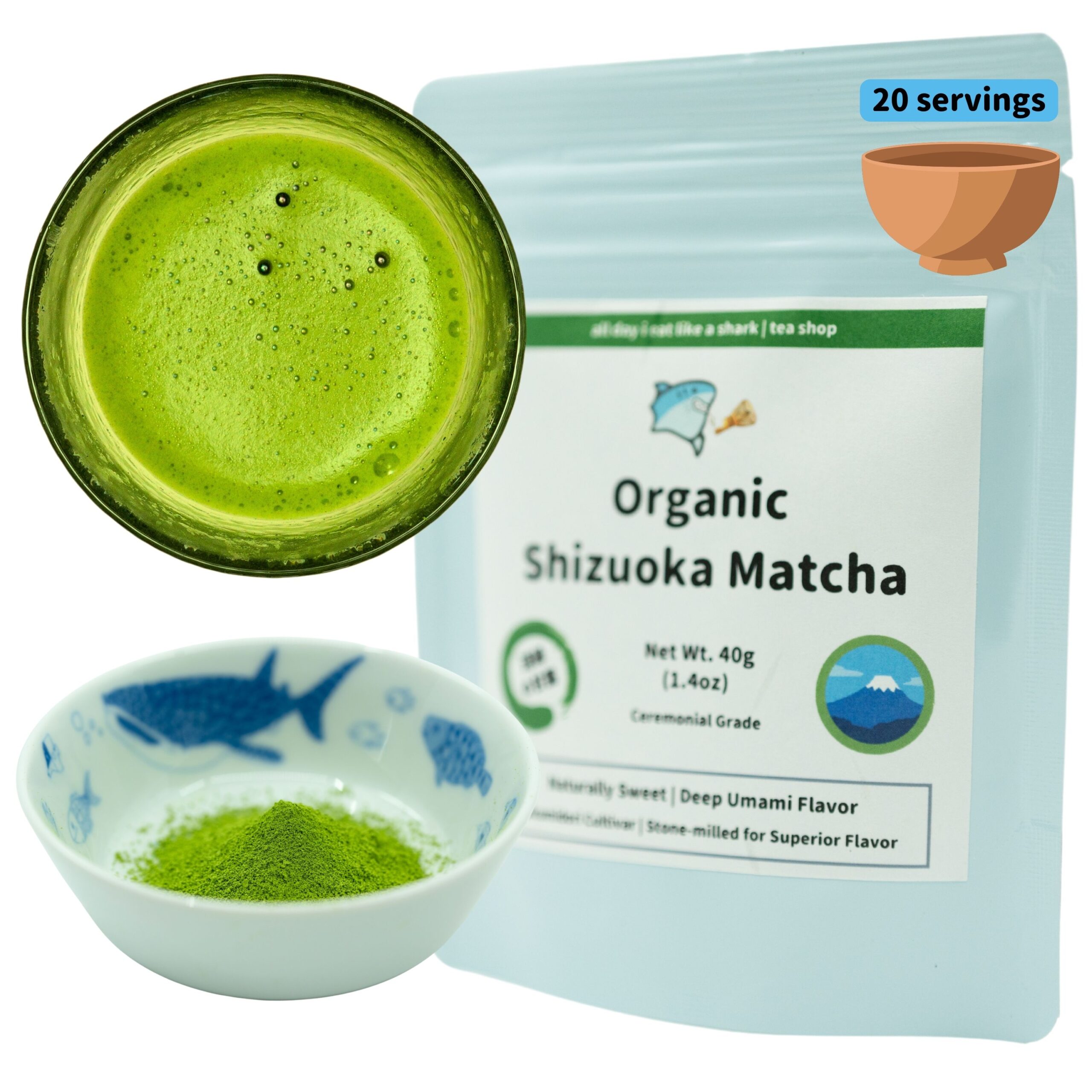
Organic Shizuoka Ceremonial Matcha – Okumidori Cultivar, Japan (40g)
Price range: $24.49 through $38.49
Single origin matcha from Shizuoka, Japan
Okumidori cultivar
40 grams makes 20 servings
JAS Organic Certified
Comes in a resealable aluminum lined bag to protect from heat, light, oxidation
Free shipping on orders over $50!
- Satisfaction Guaranteed
- No Hassle Refunds
- Secure Payments
Description
Last updated: April 2026
Okumidori is one of the workhorses of Japanese matcha cultivation — a cultivar known for its consistent, deep color and rich, slightly umami-forward flavor. When you source it organically from Shizuoka, where the tea industry runs deep and the mountain growing conditions produce clean, complex leaves, you end up with a ceremonial grade matcha that's both reliable and genuinely interesting. This is the kind of matcha that holds up to daily brewing without ever feeling boring.
- Key Takeaway: Okumidori is a shade-grown Japanese cultivar prized for deep color, structural complexity, and reliable ceremonial-grade quality — well-suited to both straight preparation and matcha lattes.
- Key Takeaway: This product is organically certified under Japan's JAS standard, sourced from Shizuoka Prefecture — Japan's largest tea-producing region, accounting for approximately 40% of total national output (Japan Tea Central Association, 2024).
- Key Takeaway: Matcha is stone-milled from tencha leaves shaded 3–4 weeks before harvest to maximize chlorophyll and theanine content; shading produces 2–3x more theanine than unshaded cultivation (Ashihara, 2015, Natural Product Communications).
- Key Takeaway: Organic JAS certification requires a minimum three-year chemical-free transition period plus mandatory annual third-party audits — a stricter standard than many other organic certifications.
- Key Takeaway: Japan's tea landscape extends well beyond Okumidori: the Yabukita cultivar alone covers ~77% of all Japanese tea cultivation area, while newer cultivars like Gokou and Sunrouge are expanding the premium and functional segments.
Product Details
- Origin: Shizuoka Prefecture, Japan
- Cultivar: Okumidori
- Grade: Ceremonial (Note: “Ceremonial Grade” is an industry marketing term and is not a regulated standard recognized by Japan's Ministry of Agriculture, Forestry and Fisheries — MAFF.)
- Certification: Organic (JAS)
- Net Weight: 40 grams
Why Choose This Matcha
Shizuoka produces more tea than any other prefecture in Japan — approximately 40% of the nation's total output according to the Japan Tea Central Association (2024) — which means the farmers there have refined their craft over generations. Okumidori is shade-grown like all ceremonial grade matcha, but it's especially prized for the depth it brings — it's not the sweetest cultivar, but it has a structural complexity that makes it satisfying in a way sweeter varieties sometimes aren't. The organic certification confirms no synthetic inputs in the growing process, which you can often taste in the cleaner finish.
Okumidori is one of the top matcha cultivars in Japan, alongside Saemidori and Tsuyuhikari (registered in 2003), all recognized by growers and producers for delivering premium color, flavor depth, and reliable yields under shade cultivation.
How to Use
Sift 2–3 grams into a warmed chawan and add 70–80ml of water at 70–75°C (160–165°F). Whisk briskly until a fine, consistent foam forms across the surface. This temperature range is optimal for balancing flavor compounds and minimizing astringency in green tea (Komes et al., 2010, Food Research International). Okumidori's slightly bold flavor profile also works well in matcha lattes — use this as a base where you want the tea to stand up against milk. Store sealed and refrigerated after opening, use within 6 weeks.
Best for: Daily matcha drinkers who want organic without sacrificing flavor, cultivar explorers building tasting knowledge, and matcha latte makers who want a ceremonial grade base that doesn't disappear in milk.
What Are the Main Types of Japanese Tea?
Japanese tea is broadly categorized by its cultivation method (shaded vs. unshaded), its processing style (steamed, rolled, roasted, or milled), and the specific leaf material used — with sencha, gyokuro, tencha, and matcha representing the core spectrum from everyday to ceremonial. Understanding these distinctions helps clarify where Okumidori matcha fits within Japan's broader tea landscape.
| Tea Type | Shading | Processing | Flavor Profile | Relative Caffeine | Best For |
|---|---|---|---|---|---|
| Sencha | None | Steamed, rolled, dried | Grassy, vegetal, mild umami | Moderate | Everyday Japanese green tea drinking |
| Gyokuro | ~20 days | Steamed, rolled, dried | Sweet, mellow, deep umami | High | Premium sipping; low-bitterness preference |
| Tencha | 3–4 weeks | Steamed, dried (not rolled) | Mild, flat, amino-rich | Moderate–High | Milling into matcha only; not brewed as-is |
| Matcha | 3–4 weeks (as tencha) | Stone-milled powder from tencha | Rich, velvety, savory umami, natural sweetness | High | Ceremonial preparation, lattes, cooking |
Sencha and Gyokuro
Sencha (煎茶) is Japan's most widely consumed green tea, cultivated in full sun without shading. It remains the most popular green tea consumed in Japan, accounting for approximately 78 percent of the nation's total tea production. Harvested typically in spring, it undergoes a steaming process that locks in its intense green color and characteristic umami flavor.
Gyokuro (玉露), meaning “jade dew,” represents the pinnacle of Japanese leaf green tea, comprising only about 0.3 percent of domestic production. It undergoes a rigorous shading process for approximately 20 days prior to harvest, which significantly increases chlorophyll and L-theanine (an amino acid associated with the cultivar's sweetness and mellow character) levels — with shaded teas like gyokuro containing 2–3x more theanine than unshaded sencha (Ashihara, 2015, Natural Product Communications). The result is a deep green liquor and an exceptionally sweet, mellow flavor.
Tencha and Matcha
Tencha (碾茶) is the essential raw leaf material grown specifically to be milled into matcha — it is not a finished tea for brewing on its own. Like gyokuro, tencha plants are shaded for three to four weeks using specialized black tarps that block up to 95 percent of sunlight. To survive, the plants overcompensate by producing massive amounts of chlorophyll and amino acids, turning the leaves an electric, neon green. Unlike other Japanese teas, tencha is steamed and dried but never rolled, keeping the leaf flat so the stems and veins can be easily stripped away before milling. Japan's modern tencha production is heavily localized. Kagoshima Prefecture currently leads the nation in tencha output, utilizing its expansive flat fields and mineral-rich volcanic ash soil. Additionally, Nishio City in Aichi Prefecture dedicates over 95 percent of its tea fields exclusively to matcha leaves, single-handedly accounting for roughly 20 percent of all domestic matcha production.
Matcha (抹茶) is the final, finely milled powder produced from high-grade tencha. True ceremonial matcha is processed using traditional granite stone mills, which grind the leaves slowly — yielding only 30 to 40 grams per hour. This precise milling achieves a microscopic particle size of 5 to 10 microns. This ultra-fine grind allows the powder to suspend perfectly in water rather than dissolve, creating a rich, velvety mouthfeel characterized by a savory umami broth and natural sweetness.
What Is the ‘Yabukita' Cultivar and Why Does It Dominate Japanese Tea Farming?
‘Yabukita' is Japan's most dominant tea cultivar, covering approximately 77 percent of the country's total tea cultivation area — a dominance unmatched by any other cultivar in Japanese agriculture. It was selected by Hikosaburo Sugiyama, a grower in Abe County, Shizuoka, in 1908. It has been incredibly popular and widely adaptable throughout Japan because it delivers high yields and exceptional brew quality. ‘Yabukita' is prized for its elegant aroma and strong umami taste. Its major disadvantages are its susceptibility to fungal diseases, specifically anthracnose and gray blight.
Currently, ‘Yabukita' is cultivated on approximately 90,400 acres, representing roughly 77 percent of the total tea cultivation area in Japan. The major ‘Yabukita' production regions and their respective percentages of dominance by this cultivar include Shizuoka (93%), Mie (84%), Fukuoka (77%), Saitama (72%), and Kyoto (62%).
Kagoshima Prefecture presents a unique agricultural landscape. As Japan's second-largest tea-growing region, Kagoshima has diversified its cultivar portfolio far beyond ‘Yabukita' to support extensive multiple-harvest systems. Benefiting from a warm, subtropical climate, efficient flat-field harvesting layouts, and mineral-rich volcanic ash soil, Kagoshima leverages this regional advantage to lead the nation in producing tencha (the precursor to matcha), utilizing high-yielding and specialized cultivars rather than relying entirely on a ‘Yabukita' monoculture.
How Is Organic JAS Certification Achieved for Japanese Tea?
Organic JAS (Japanese Agricultural Standards) certification is achieved through a rigorous, multi-year process that requires farms to eliminate all synthetic chemical inputs and pass comprehensive annual third-party audits — making it one of the stricter organic standards globally. The global demand for organically grown Japanese green tea has surged, particularly for premium export markets. Regions like Haruno-cho in Shizuoka have emerged as leading “organic tea villages,” successfully cultivating prized organic cultivars such as Okumidori and Tsuyuhikari (registered in 2003).
To successfully transition a tea farm to Organic JAS certification, growers must adhere to the following strict operational guidelines:
- Three-Year Chemical Ban: Farms must provide documented, verifiable evidence that absolutely no chemical fertilizers or synthetic pesticides have been applied to the soil or plants for a minimum of three years prior to certification.
- Prevention of Airborne Contamination: Growers are required to implement physical barriers and buffer zones to guarantee that the organic fields are completely protected from any airborne pesticide drift originating from neighboring conventional farms.
- Exclusive Processing Facilities: The farm's factory must strictly manage and maintain production records, utilizing processing lines and storage environments designed exclusively for organically grown tea to prevent cross-contamination.
- Pest Management by Hand: Without synthetic chemicals, summer pest infestations must be managed mechanically. Farmers actively prune and cut away infested shoots so the tea bush can recover and produce healthy sprouts the following season.
- Mandatory Annual Audits: To maintain active certification status, the farm and its processing facilities must undergo and pass a comprehensive yearly inspection conducted by an accredited third-party agency.
What Are Japan's Newly Registered and Highly Prized Tea Cultivars?
Japan's most notable newly registered cultivars include ‘Gokou,' reserved for top-tier ceremonial matcha and gyokuro, and ‘Sunrouge,' a modern cultivar bred for its distinctive chemical profile — reflecting the industry's shift beyond the near-total dominance of Yabukita toward more specialized, market-driven cultivation. As the Japanese tea industry continues to evolve, growers are expanding beyond legacy plants to meet specific market demands, from hyper-premium ceremonial use to specialized functional profiles.
‘Gokou' (Best for: top-tier ceremonial matcha and premium gyokuro)
‘Gokou' is a highly sought-after, premium tea cultivar cultivated primarily for the production of top-tier gyokuro and ceremonial matcha. It is celebrated for its incredibly smooth profile and an almost complete absence of astringent or bitter notes. The defining characteristic of ‘Gokou' is its intense, natural sweetness paired with a deeply alluring aroma that features distinct notes of rich cocoa and sweet, creamy milk. When shaded and processed into matcha, it produces a deep, vivid green powder that yields a flawlessly smooth, umami-dense liquor. Due to the precise care required to cultivate it, ‘Gokou' represents the pinnacle of artisanal tea farming and is reserved strictly for high-end ceremonial drinking.
‘Sunrouge' (Best for: cultivar diversity research and Japan's functional tea sector)
Registered in 2011, ‘Sunrouge' represents a major modern development in functional Japanese tea cultivars. Unlike traditional green varieties focused purely on the sensory experience, ‘Sunrouge' was bred specifically for its unique chemical profile, containing highly specialized active metabolites that set it apart from conventional green tea cultivars. It is a notable cultivar in Japan's health and wellness research sector, merging Japan's rich tea cultivation heritage with cutting-edge functional agriculture. As with all food-based research, individual results vary and this product does not constitute medical advice.
Frequently Asked Questions
What makes Okumidori different from other matcha cultivars?
Okumidori is valued for its structural complexity and consistently deep green color rather than outright sweetness. Compared to sweeter cultivars like Saemidori or Gokou, Okumidori has a slightly bolder, umami-forward profile with less fragility in the cup — making it particularly well-suited to daily ceremonial preparation and use in matcha lattes where flavor needs to hold up against milk.
What does Organic JAS certification actually mean?
Organic JAS (Japanese Agricultural Standards) certification is a government-regulated standard administered by Japan's Ministry of Agriculture, Forestry and Fisheries (MAFF). It requires farms to demonstrate a minimum three-year history of zero synthetic pesticide or fertilizer use, implement contamination-prevention buffers, use exclusively organic processing lines, and pass annual third-party inspections. It is distinct from, and generally stricter than, informal “natural farming” claims.
What is the difference between tencha and matcha?
Tencha is the shaded, dried, and de-stemmed whole leaf from which matcha is made — it is the raw material, not a finished beverage. Matcha is what results when high-grade tencha is slowly ground into a fine powder (5–10 microns) using traditional granite stone mills at a rate of only 30–40 grams per hour. You cannot simply brew tencha as a tea; its flavor and texture only fully emerge through the milling process.
Why does Shizuoka dominate Japanese tea production?
Shizuoka's dominance — approximately 40% of Japan's total tea output (Japan Tea Central Association, 2024) — comes from a combination of geographic and historical factors: its mountainous terrain creates natural temperature gradients ideal for slow, flavorful leaf development; its long cultivation history has produced deep agricultural expertise; and its Yabukita cultivar adoption rate (93%) reflects the prefecture's focus on consistent, high-quality production. The region's organic tea sector, centered in areas like Haruno-cho, has additionally become a significant export-focused hub.
How should I brew this ceremonial matcha for the best flavor?
Sift 2–3 grams of matcha into a warmed chawan (tea bowl), then add 70–80ml of water heated to 70–75°C (160–165°F). Higher temperatures increase extraction of bitter catechins and tannins, which can overpower Okumidori's natural umami (Komes et al., 2010, Food Research International). Whisk in a brisk W or M motion until a fine, stable foam covers the surface. For a matcha latte, use the same 2–3g base, whisk into a small amount of water first to form a paste, then add steamed milk. Consume promptly after preparation.
Additional information
| Size | 40g, 100g |
|---|
27 reviews for Organic Shizuoka Ceremonial Matcha – Okumidori Cultivar, Japan (40g)
Only logged in customers who have purchased this product may leave a review.
Related products
-
Sale!

Organic Kagoshima Ceremonial Matcha – Saemidori Cultivar, Japan (40g)
Price range: $24.49 through $38.49Select options This product has multiple variants. The options may be chosen on the product page -
Sale!

Uji Hikari Ceremonial Grade Matcha – Single Origin Kyoto, Japan (40g)
Price range: $29.99 through $59.99Select options This product has multiple variants. The options may be chosen on the product page -
Subscribe & Save up to 15%
Sale!
Kagoshima Organic Cooking Matcha Powder – Single Origin Japan (100g)
Original price was: $27.99.$19.59Current price is: $19.59. — or subscribe to save up to 15%
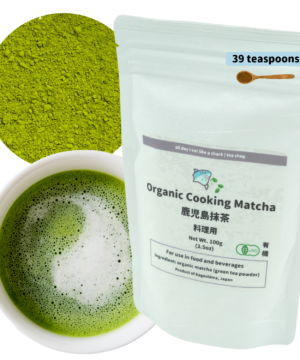
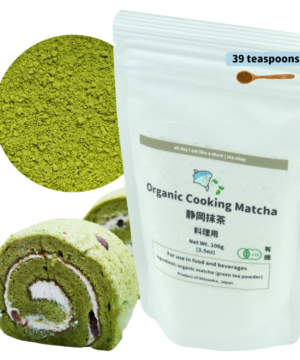 Shizuoka Organic Cooking Matcha Powder - Single Origin Japan (100g)
Emily –
This matcha boasts a really great color and is smooth. While I find I need to add sweetener for it to taste its best, it’s not bad overall and comes at a good value!
oldgoat –
The taste of this product is outstanding, but I’m puzzled by its clumpy nature, which makes it difficult to get into suspension.
Hank –
This matcha has a fresh smell and a nice green color. It blends well and doesn’t leave clumps. The taste is smooth with a slight grassy flavor and not too bitter. I used it for both tea and lattes, and it worked great for both. The small pouch is good for trying it out, though it can get messy when opening
Average Enjoyer –
I’ve learned I’m terrible at making matcha! I tried preparing two ceremonial matchas to compare, and both cups were basically inedible, though I’m certain it was entirely user-error on my part.
What I can tell you about this product is that the packaging is portable and easy. The matcha itself was a little less vibrant than the other brand I tried, and it smelled a little more grassy. There were no instructions included with this bag.
Ultimately, I believe I just picked the wrong product for my skill level, and that’s not the fault of the brand.
AC –
Having sampled dozens upon dozens of matcha varieties, this one currently ranks effortlessly within our top three. When prepared correctly, it delivers virtually no bitterness, instead offering the deep, rich umami taste characteristic of truly good matcha.
For the purists, we prepare our matcha pure and traditionally, without any additions like milk for lattes. The 10g pack serves as an ideal sampler size, providing five clean servings at an excellent value of just $1 per serving.
Asha –
I’m officially a convert to ceremonial grade matcha! Having tried it, there’s no going back. This dissolved so much cleaner in my milk than the non-ceremonial grade I’m used to, and the taste was noticeably smoother. My only wish is that it came with a small scooper. Looks like I’ll need to buy a bigger pack now!
reviewer –
The small travel-sized pouch offers a good sample for trying out this matcha. It boasts good quality and flavor, along with a pretty green color.
Healthnut –
Having lived in Japan for over fourteen years and drinking matcha daily, I can confidently say this is top-quality matcha. The color is a vibrant green, exactly what you’d expect from this level. It has a nice finish with a slight bite that I personally enjoy.
If you’re not accustomed to matcha, using a full teaspoon per cup of water might result in a bitter taste. I recommend dialing back the amount or adding milk for a latte. The powder itself is super fine and blends easily. The package size is also perfect if you’re just looking to try a top-quality matcha.
A Cus –
This matcha powder is as strong as my current one, and as expected, its flavor profile is distinct. It proved great for making matcha lattes and for incorporating into other matcha-flavored food items.
Stinky –
While the matcha itself is a fine powder, I experienced a messy start as it spilled all over my counter when I cut open the pouch. This happened because the powder had breached the resealable zipline; improving this packaging design would definitely make for a tidier experience.
Aside from that, I observed that this matcha is a darker green than the brand I typically drink. When made into a latte, the flavor was not very strong, a bit diluted. On its own in hot water as a tea, it was smooth and light, but too light for my personal taste.
Max –
While “All Day I Eat Like a Shark” is an unusual name for a store, they undeniably produce exceptionally good matcha.
Between their offerings, I found the Okumidori wasn’t quite as good as the Saemidori, lacking the same depth; therefore, I’d recommend the Saemidori instead. This Okumidori, being less sharp and pronounced than the Saemidori, might be better suited for someone desiring a lighter and less vegetal matcha. Despite this, it remains a remarkably delicious matcha.
The price point for this ceremonial grade matcha is also very reasonable. It’s important to note that this matcha is not really meant for turning into a latte, as its delicate flavors would be lost. This variety should be enjoyed as a standalone matcha.
Caroline –
Comparing this matcha to two others I have on hand—Matcharl Taro Matcha (40g for $22) and MatchAiA (40g for $14.75)—this one came in second best, a very close second to Matcharl.
The color wasn’t as rich as Matcharl, but it was by no means dull; it was simply brighter and lighter in hue (subtle in photos but noticeable in person). This matcha still has a naturally sweet finish, though I did detect a hint of bitterness. It wasn’t enough to make me dislike it, but it was ever so slightly more bitter than Matcharl. Overall, in my opinion, this is a solid matcha option!
Jose –
This matcha has a sweet umami smell. While the matcha itself is more on the bitter side, it transforms beautifully with a little milk and sugar, becoming creamy and good. It offers a light flavor with no bad aftertaste, and the color is vibrant and smooth, though getting a decent froth can take a bit of effort.
C –
I compared this matcha to my regular ceremonial grade organic matcha on Amazon’s Subscribe & Save. While this one isn’t as vibrantly green, its flavor is still very good. The sample bag provided just enough for one large cup of matcha. However, given that its price is more than double my usual matcha, I won’t be reordering it, despite its good quality.
Alex –
This matcha boasts a vibrant green color (a stark contrast to the muddy brown you find at the grocery store) and whisks up super smoothly without clumps. It tastes naturally sweet, completely lacking the bitter aftertaste I’ve experienced with cheaper brands. Highly recommend.
FranFran –
I ordered the travel size ceremonial grade matcha powder, which comes in a tiny, resealable bag. The 10 grams provided are enough for me to make about 3 matcha lattes. This is a very good quality matcha powder, boasting a vibrant green color and a smooth, rich flavor.
As a matcha latte enthusiast, I use this for my morning lattes, simply combining it with whole milk and honey. The only drawback is the bag itself, as it’s difficult to dispense the matcha powder without making a mess.
MIRCHE –
This matcha powder is fantastic for my smoothies! It has an intense, natural matcha taste and blends perfectly smooth and frothy in both almond milk and water. It’s energizing and tastes amazing. I highly recommend this brand of matcha powder.
A. CUS –
This Okumidori Matcha from Shizuoka, Japan, sounds like a truly high-quality ceremonial grade offering. Being JAS Certified Organic and stone-milled points to meticulous processing and a strong commitment to purity. The Okumidori cultivar itself is celebrated for its vibrant green color and a smooth, less bitter flavor, making it an excellent choice for traditional tea ceremonies or simply enjoying it straight. The 10-gram travel size bag is a convenient way to sample it or take your matcha on the go. For those who appreciate authentic, organic Japanese matcha, this product appears to be a very promising option.
NK –
This matcha is a very fine powder that blends well and tastes exceptionally fresh. I followed the instructional videos on the product page to prepare it as recommended, which I found very helpful.
For the hot version, the instructions call for 1 teaspoon of matcha powder to 1 cup of hot water, whisked until blended and frothy. This method really allowed me to taste the freshness and quality of the matcha, though it resulted in the most bitter and strongest flavor.
The second video demonstrated an iced version, prepared in a blender with ice cubes, 1 teaspoon of raw sugar (or preferred sugar), 1 tablespoon of matcha powder, and 1 cup of your preferred milk. Despite using more matcha powder, this version was not stronger in flavor; the ice and sugar mellowed it considerably. I personally preferred this iced preparation.
Overall, this matcha is very fresh, easy to make, and delicious. I would definitely order it again.
Ashley –
This matcha from Japan is a nice vibrant green and a smooth powder that mixes well. It has a good grassy taste that’s pleasant whether enjoyed plain/traditional or sweetened in a latte. The small travel-size bag provides enough for a few servings, making it perfect for trying it out before committing to a larger bag. This matcha tastes and smells authentic.
Rust –
While the matcha comes in a simple-looking bag, at just $5, it’s a decent deal for matcha powder. It’s perfect for those who enjoy a good green tea or latte fix.
CR –
The Okumidori Matcha from Shizuoka, Japan, is truly a gem. Its ceremonial grade, JAS certified organic, stone-milled perfection speaks volumes about its quality. The authentic Japanese origin shines through in every sip, and the 100% pure matcha powder is a delight for the senses. The 10-gram travel size bag offers a convenient way to enjoy this premium matcha wherever you go. It’s a
Troy –
I made a matcha latte out of this and it was delicious. I’ve had some other tea from this brand and it was also really good. Would recommend!
The Velvet –
Such a cute little tester bag! And after almost finishing it, this tea does the job of making me want a barrel full of the matcha inside because this is such great tasting tea. It’s light, full flavor though, not bitter at all, and leaves me wanting another cup. 10/10
Vine Customer –
This is a delicious ceremonial matcha. It whisks up well and tastes very rich and good. It also seems to be quite fresh, making a lovely cup.
I appreciate that this is certified USDA organic and has a best before date of 08/31/2025 (which is 5 months out from the current date). It’s a very tasty matcha that I can surely recommend.
Reviewer –
This matcha tea is great for drinks and desserts, offering a strong flavor!
Hunter Warrior –
This Okumidori matcha is delicious and refreshing. The powder is bright green and whisks up super smooth. It has a rich flavor with a mild sweetness to it, and is not bitter. I used it to make a latte and it was tasty and flavorful. This comes in a little resealable pouch, making it great for travel. It’s certified organic and packaged in Japan. Overall, it’s a great, ceremonial-grade Japanese matcha. I really enjoyed it.