

Fukamushi Deep-Steamed Sencha Japanese Green Tea – Single Origin (100g)
$34.99 — or subscribe to save up to 15%
Fukamushi sencha — deep steamed Japanese green tea with rich, full-bodied flavor and low astringency. From Shizuoka, Japan.
April 2026 arrival.
Presale: Order your bag today and get 20% off with free shipping (no code required!)
Free shipping on orders over $50!
- Satisfaction Guaranteed
- No Hassle Refunds
- Secure Payments
Description
What Is Fukamushi Sencha?
Fukamushi sencha (深蒸し煎茶) is a Japanese deep steamed green tea where the leaves are steamed for 60 to 120 seconds during processing — two to four times longer than regular sencha’s standard 30-second steam. This extended steaming breaks down the leaf cell structure more thoroughly, producing smaller, more fragmented particles that release flavor and color rapidly in the cup. The result is a bold, full-bodied green tea with a rich, opaque deep green liquor, pronounced umami sweetness, and noticeably lower astringency than conventional sencha. Fukamushi sencha was developed in Shizuoka Prefecture in the 1950s as a way to mellow the sharp bitterness of sun-grown lowland tea leaves. The smaller leaf particles mean you get a thicker, more viscous brew with higher concentrations of dissolved nutrients — catechins, amino acids, and chlorophyll — in every cup. It is one of the most popular styles of green tea consumed daily in Japan.
Origin: Shizuoka’s Deep Steaming Innovation
Shizuoka Prefecture produces approximately 40% of Japan’s total tea harvest, and it is where fukamushi sencha was born. The technique emerged in the 1950s in and around Kakegawa City, a tea-growing area on the Makinohara Plateau in central Shizuoka. Unlike the misty mountain slopes of regions like Kawane or Honyama — where natural shade and cool temperatures produce delicate, low-astringency leaves — Kakegawa’s lower elevation and abundant sunlight created leaves with higher catechin concentrations and more pronounced bitterness.
Tea producers in Kakegawa faced a practical problem: their sun-drenched leaves made a tea that was sharp, astringent, and less appealing to consumers who preferred the softer profiles of mountain-grown sencha. Deep steaming was the solution. By extending the steaming time from the conventional 30 seconds to 60–120 seconds, producers could break down the tough cell walls of these robust lowland leaves, releasing more amino acids and sweetness while reducing the harsh catechin bite.
The innovation worked. Kakegawa became synonymous with deep steamed sencha and has won the National Tea Fair’s Industry Minister Award more times than any other region. The area’s terroir contributes directly to the quality: Shizuoka’s volcanic soils, enriched by deposits from Mount Fuji, provide mineral-rich, well-drained growing conditions. The traditional Chagusaba agricultural system — recognized by the FAO as a Globally Important Agricultural Heritage System — involves mulching tea fields with wild grasses from maintained grasslands, improving soil microbial activity and flavor complexity in the finished tea.
The Deep Steaming Process
All Japanese green tea begins the same way: freshly picked leaves are steamed immediately after harvest to halt oxidation and preserve the green color and fresh flavor. What separates fukamushi from other sencha is how long that steaming lasts — and the consequences for the finished leaf.
| Steaming Style | Japanese Name | Steam Time | Leaf Appearance | Cup Character |
|---|---|---|---|---|
| Light steam | Asamushi (浅蒸し) | 20–30 seconds | Intact, bright green needles | Clear, pale gold-green liquor; crisp, sharp, grassy |
| Medium steam | Chumushi (中蒸し) | 30–60 seconds | Slightly broken needles | Balanced; moderate body and color |
| Deep steam | Fukamushi (深蒸し) | 60–120 seconds | Smaller, broken particles with fine dust | Opaque deep green; rich, full-bodied, sweet umami |
During deep steaming, the extended heat exposure breaks down the leaf’s cell walls far more aggressively than light or medium steaming. The chloroplasts and internal cell contents are released, which is why fukamushi sencha produces that characteristically opaque, vivid green brew — you are literally drinking dissolved leaf material, not just an infusion of surface compounds. The leaf fragments are smaller and more irregular, which is why fukamushi tea often includes fine particles and sediment at the bottom of your cup. This is normal and desirable — those particles carry concentrated catechins, amino acids, and vitamins.
The trade-off is that deep steamed leaves are more fragile and lose the elegant needle shape prized in asamushi sencha. Fukamushi is a tea judged by what is in the cup, not by how the dry leaf looks.
Flavor Profile & Tasting Notes
Fukamushi sencha delivers a drinking experience that is distinctly different from regular sencha. The extended steaming fundamentally shifts the flavor balance:
- Body: Thick, full, almost brothy. The dissolved leaf particles create a viscous mouthfeel that lighter-steamed teas cannot replicate.
- Sweetness: Pronounced. Deep steaming converts more catechins into simpler compounds, reducing bitterness and allowing the natural sweetness and amino acid content (L-theanine) to come forward.
- Umami: Strong and lingering. The concentrated brew amplifies the savory quality, with a sweet finish that persists after swallowing.
- Astringency: Noticeably low compared to asamushi or chumushi sencha. This makes fukamushi one of the most approachable Japanese green teas for people who find regular sencha too bitter or sharp.
- Color: Deep, opaque jade green — almost cloudy. The liquor is substantially darker and more vibrant than the clear, golden-green of light-steamed sencha.
- Aroma: Warm, vegetal, with notes of steamed greens, sweet grass, and a faint marine quality. Less of the sharp grassiness of asamushi; more rounded and cooked.
If you enjoy tamaryokucha for its mellow sweetness or find gyokuro too intense, fukamushi sencha sits in a rewarding middle ground: bold enough to satisfy, smooth enough to drink all day.
How to Brew Fukamushi Sencha
Brewing fukamushi sencha requires a few adjustments compared to regular sencha. The broken leaf particles extract faster, so you need shorter steep times and slightly lower temperatures to avoid over-extraction. A fine mesh strainer or a kyusu with a built-in fine-mesh filter is essential — standard tea strainers will let the small particles through.
Standard Hot Brew
| Parameter | Recommended |
|---|---|
| Tea leaves | 4–5g (roughly 1 heaped teaspoon) |
| Water volume | 150–180ml |
| Water temperature | 70–80°C (158–176°F) |
| First steep | 30–45 seconds |
| Second steep | 15–20 seconds at 80°C |
| Third steep | 30–40 seconds at 80–85°C |
| Strainer | Fine mesh (essential — leaf particles are very small) |
| Infusions | 2–3 (flavor fades faster than whole-leaf teas) |
The most common mistake with fukamushi is steeping too long. Because the leaf is already broken down, extraction happens rapidly. At 70°C for 30 seconds, you get a sweet, umami-rich cup with minimal bitterness. Push past 60 seconds at higher temperatures and the astringency increases quickly. Start short and adjust upward — it is much easier to add steeping time than to fix an over-extracted cup. For troubleshooting, see our guide on overcoming bitterness in Japanese tea.
Cold Brew
Fukamushi sencha makes an exceptional cold brew. Use 5–6g per 500ml of cold water, steep 3–6 hours in the refrigerator. The smaller leaf particles extract well even in cold water, producing a sweet, umami-forward brew with almost no bitterness. Cold brewing is ideal for summer — prepare a bottle the night before for a ready-made morning drink.
Recommended Equipment
A Tokoname kyusu teapot with a fine stainless steel mesh filter is the traditional choice and handles fukamushi’s fine particles well. Alternatively, a ceramic tea strainer with a fine mesh insert works. Avoid standard wire-mesh infusers — the holes are too large and the sediment will pass straight through.
Fukamushi vs Other Japanese Green Teas
Understanding how deep steamed sencha compares to other Japanese green teas helps you choose the right tea for your preferences and brewing style. For a comprehensive comparison of shaded teas, see our Green Tea Showdown.
| Tea | Steaming | Flavor | Caffeine | Price Range | Best For |
|---|---|---|---|---|---|
| Fukamushi Sencha | Deep (60–120s) | Rich, full-bodied, sweet umami, low astringency | Medium (30–40mg/cup) | $$ | Daily drinking, those who find sencha too bitter |
| Asamushi Sencha | Light (20–30s) | Crisp, grassy, bright, more astringent | Medium (30–50mg/cup) | $$ | Classic sencha experience, clean finish |
| Chumushi Sencha | Medium (30–60s) | Balanced, moderate body and sweetness | Medium (30–45mg/cup) | $$ | Versatile middle ground |
| Gyokuro | Standard (shaded) | Intense umami, oceanic, very sweet | High (50–70mg/cup) | $$$$ | Special occasions, concentrated flavor |
| Kabusecha | Standard (semi-shaded) | Smooth, mild sweet, balanced | Medium (30–45mg/cup) | $$$ | Bridge between sencha and gyokuro |
The practical takeaway: if you want bold flavor with low bitterness at an everyday price point, fukamushi sencha is the strongest option. It delivers more body and sweetness than regular sencha without the premium cost or demanding brewing precision of gyokuro.
Quality Indicators
When evaluating fukamushi sencha, the criteria differ from what you would look for in whole-leaf sencha. The deep steaming process changes what “good” looks like:
- Color of dry leaf: Deep, rich green with a mix of small particles and some intact leaf fragments. Avoid leaves that look brown or yellowish — this indicates age or poor storage. Some fine powder is expected and desirable.
- Particle size: A blend of small broken pieces with some recognizable leaf structure. All dust with no leaf fragments suggests over-processed or low-grade tea. All intact needles means it is not true fukamushi.
- Aroma of dry leaf: Fresh, sweet, vegetal — like steamed greens or edamame. If it smells flat, papery, or stale, the tea has likely oxidized from poor storage or age.
- Liquor color: Deep, opaque jade green. The cloudiness is a positive indicator — it means the fine particles are properly suspended. A clear, pale brew suggests the tea is not genuinely deep steamed.
- Origin transparency: Quality producers specify the prefecture and often the city or farm. “Kakegawa, Shizuoka” is the benchmark origin. Generic “Japan” labels without regional specificity are a flag for blended commodity tea.
- Harvest information: First flush (shincha/ichiban-cha, April–May) fukamushi commands the highest quality. Look for harvest year on the package.
Storage & Freshness
Fukamushi sencha is sensitive to oxidation, moisture, light, and strong odors — the same enemies as all Japanese green tea. The smaller particle size makes it slightly more vulnerable to degradation than whole-leaf sencha because of the increased surface area exposed to air.
- Unopened: Store in an opaque, airtight container in a cool, dark place. Properly sealed fukamushi will keep for 6–12 months from the roast/pack date.
- After opening: Reseal tightly after every use, pressing out excess air. Consume within 3–4 weeks for peak flavor. A clip-seal canister or vacuum-sealed bag works best.
- Freezer storage: For long-term storage, the freezer works well. Seal tightly in a double-layer bag, and let the tea come fully to room temperature before opening to prevent condensation on the leaves.
- Keep away from odors: Tea absorbs ambient scents readily. Do not store next to spices, coffee, or strongly scented items.
Frequently Asked Questions
What does fukamushi mean?
Fukamushi (深蒸し) literally translates to “deep steamed” in Japanese. Fuka (深) means deep, and mushi (蒸し) means steamed. It refers to the extended steaming time — 60 to 120 seconds — applied during processing, which is two to four times longer than the 30-second standard for regular sencha. This longer steam is what gives fukamushi sencha its distinctive bold flavor and rich green color.
Why is my fukamushi sencha cloudy?
The cloudiness is completely normal and actually a sign of quality. Deep steaming breaks the leaf into smaller particles, and these fine fragments become suspended in the water when you brew. The cloudiness means you are getting more dissolved catechins, amino acids, and chlorophyll in your cup. If your fukamushi brews clear, it may not be genuinely deep steamed.
Is fukamushi sencha good for beginners?
Yes — fukamushi sencha is one of the most approachable Japanese green teas. The deep steaming process reduces bitterness and astringency while enhancing sweetness and umami. If you have tried regular sencha and found it too sharp or grassy, fukamushi is likely a better fit. It is also more forgiving to brew: the broken leaves extract quickly, so even imprecise steeping tends to produce a drinkable cup.
How is fukamushi sencha different from regular sencha?
The difference is entirely in the steaming time during processing. Regular sencha (asamushi or chumushi) is steamed for 20–60 seconds, producing intact needle-shaped leaves that brew a clear, crisp cup. Fukamushi sencha is steamed for 60–120 seconds, which breaks the leaves into smaller particles and creates a thicker, more opaque brew with bolder flavor and less astringency. Same plant, same growing conditions — just a different processing approach that dramatically changes the cup character.
Does fukamushi sencha have more caffeine than regular sencha?
The caffeine content per gram of leaf is similar to regular sencha. However, because the broken particles extract more completely during brewing, you may get slightly more caffeine per cup from fukamushi — typically 30–40mg per 8oz cup at the recommended 70–80°C temperature, compared to 30–50mg for regular sencha brewed hotter. The difference is modest. For detailed caffeine comparisons across all Japanese teas, see our green tea caffeine guide.
Additional information
| Weight | 3.5 oz |
|---|---|
| Dimensions | 6 × 4 × 1 in |
| Weight | 100g (3.5 oz) |
| Ingredients | 100% Japanese deep-steamed sencha green tea (fukamushi) |
| Origin | Shizuoka, Japan |
| Caffeine Level | Medium |
| Brew Temperature | 70-80°C / 158-176°F |
Only logged in customers who have purchased this product may leave a review.
Related products
-
Subscribe & Save up to 15%
Sale!

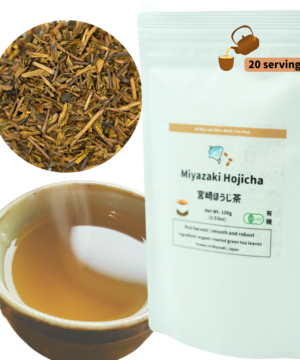
Miyazaki Organic Hojicha Loose Leaf Tea – Roasted Japanese Green Tea (100g)
Original price was: $29.99.$20.99Current price is: $20.99. — or subscribe to save up to 15% -
Subscribe & Save up to 15%
Sale!

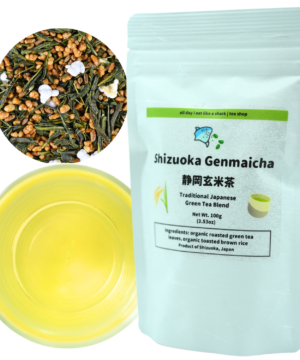
Shizuoka Organic Genmaicha – Japanese Green Tea with Toasted Rice (100g)
Price range: $4.99 through $19.99 — or subscribe to save up to 15%Select options This product has multiple variants. The options may be chosen on the product page -

&url=https://shop.alldayieat.com/product/fukamushi-sencha-deep-steamed-green-tea/&media=https://shop.alldayieat.com/wp-content/uploads/2026/03/fukamushi-sencha-313126-lifestyle.jpg)
&url=https://shop.alldayieat.com/product/miyazakis-finest-organic-hojicha-loose-leaf-tea-roasted-japanese-green-tea-100g-bag/&media=https://shop.alldayieat.com/wp-content/uploads/2024/03/miyazaki-hojicha-trio-1200x1200.png)
&url=https://shop.alldayieat.com/product/shizuokas-finest-organic-genmaicha-tea-roasted-green-tea-and-toasted-rice-100g-bag/&media=https://shop.alldayieat.com/wp-content/uploads/2024/12/genmaicha-100g-bag-angle-view-1200x1200.png)
Reviews
There are no reviews yet.