Tamaryokucha: Japan’s Curled Green Tea Guide
Last updated: April 2026
Most Japanese green tea drinkers know sencha. Some have discovered gyokuro or matcha. Almost nobody knows tamaryokucha — and that's exactly why it's worth knowing. This rare green tea, produced in a few small pockets of Kyushu, accounts for less than 3% of Japan's total tea output. According to the Japan Tea Central Association (2024), Japan produces approximately 70,000 tonnes of tea annually — which means tamaryokucha's entire category amounts to roughly 2,100 tonnes or less nationwide. Get it right and you're drinking something with 600 years of regional history, a flavor profile unlike anything else in Japanese tea, and a cup that's genuinely more forgiving than sencha.
- KEY TAKEAWAYS
- Tamaryokucha is a rare Japanese green tea with curled, comma-shaped leaves, produced almost exclusively in Kyushu and accounting for less than 3% of Japan's total tea output.
- It comes in two distinct styles: mushiguri (steamed, most common, from Ureshino/Sonogi) and kamairi (pan-fired, from Kumamoto/Miyazaki), each with its own flavor identity.
- Its flavor is mellower and significantly less astringent than sencha, with a characteristic berry tartness and long almondy finish — making it more forgiving to brew and accessible to a wider range of drinkers.
- Ureshino in Saga Prefecture is the premier growing region, with over 600 years of recorded tea cultivation history and multiple national competition wins.
- Cold brewing (4–5g in 500ml cold water, 4–8 hours) is one of the best preparation methods, yielding exceptional sweetness and umami with minimal bitterness.
This guide covers everything: where tamaryokucha comes from, why Ureshino produces the best of it, how to brew it properly, and what to look for when you buy.
What Is Tamaryokucha?
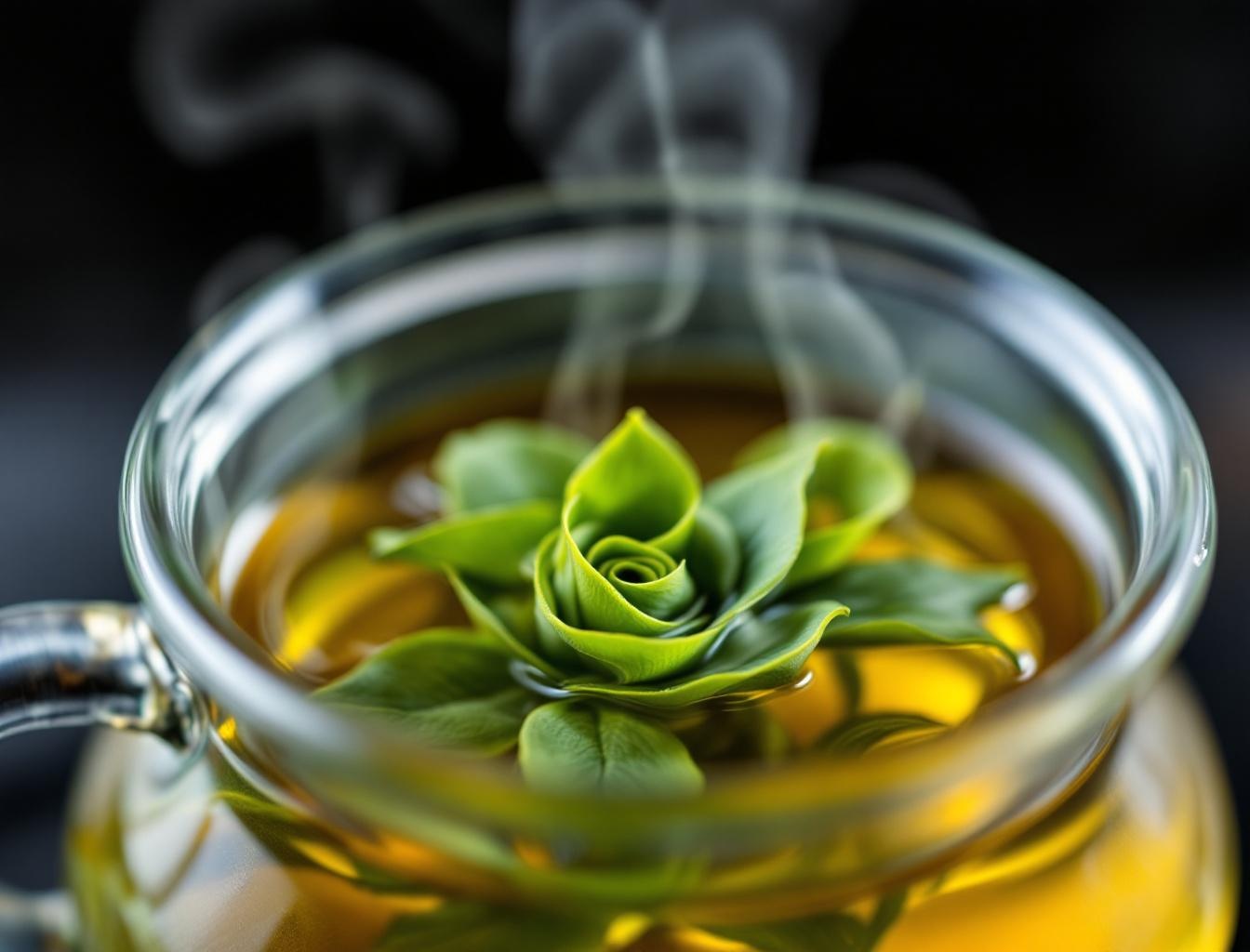
Tamaryokucha (玉緑茶, literally “jewel green tea”) is an unoxidized Japanese green tea — made from Camellia sinensis leaves — distinguished by its coiled, comma-shaped leaves produced almost exclusively in the Kyushu region of Japan. Unlike sencha, whose leaves are rolled into straight needles, tamaryokucha leaves curl as they dry, producing small coiled pellets that unfurl beautifully in hot water.
The tea exists in two distinct production styles:
- Mushiguri (蒸しぐり) — Steamed first like sencha, then dried without the final shaping step that produces needle-shaped leaves. The leaves curl naturally in a revolving drum. This is the dominant method today, primarily produced in Ureshino (Saga Prefecture) and Sonogi (Nagasaki Prefecture).
- Kamairi (釜炒り) — Pan-fired in a hot iron pan or tilted kiln rather than steamed. Produces a different aroma profile — more roasty and floral — and is especially associated with Kumamoto and Miyazaki prefectures. Also called guricha (ぐり茶) in the Kyushu region — guri refers to the classical comma-curl pattern found in traditional lacquerwork, a fitting name for a tea whose leaves coil into that exact shape.
Both styles share the coiled leaf shape but differ significantly in aroma, flavor, and regional identity. If a tea shop sells “tamaryokucha” without specifying, it's almost certainly mushiguri. If it says “kamairi” or “kamairicha,” that's the pan-fired version with its own distinct character.
Where Does the Best Tamaryokucha Come From?
Ureshino, Saga Prefecture — The Heartland
Ureshino (嬉野市), a hot-spring town in western Saga Prefecture, is tamaryokucha's home and produces the most prized expressions of the tea. This region has been cultivating tea for at least 600 years — oral history puts the first tea seeds arriving from Mt. Sefuri around 1440, with formal cultivation established between 1648 and 1651 when tea grower Jinbei Yoshimura systematized production. The region has since earned a reputation that reaches to the top of Japan's competitive tea scene, winning multiple first-place finishes at Japan's National Tea Competition.
A tea bush planted by Yoshimura during that era is said to still stand today — over 350 years old, designated a National Natural Monument and believed to be one of the largest tea bushes in Japan. Ureshino became the official regional tea brand in 2002, and its tamaryokucha is known in particular for being sweet and umami-forward.
What makes Ureshino exceptional:
- Climate — Warm, humid summers with significant temperature swings between day and night. These conditions stress the tea plants in the right way, concentrating flavor compounds.
- Soil — Gently acidic soils ideal for Camellia sinensis cultivation.
- Tradition — Six centuries of accumulated know-how in producing mushiguri-style tamaryokucha specifically. Farmers here have been optimizing this one tea for longer than most countries have had tea culture at all.
When you see “Ureshino tamaryokucha” on a tea label, that's the premium designation. It's worth paying for.
Kumamoto Prefecture — The Pan-Fired Alternative
Kumamoto produces kamairicha using the Aoyagi firing style — flat-oriented iron pots rather than Ureshino's tilted 45-degree kilns. The leaves take on a distinctive blue-green luster and a more elongated curl. The flavor is different too: pan-firing produces Maillard reaction compounds that add roasty, nutty, and lightly floral notes absent from steamed tamaryokucha. Aoyagi-style tamaryokucha also tends toward more intense aroma with slightly less vegetal character. The kamaka (釜香) fragrance that pan-firing produces is genuinely distinctive — a floral, almost perfumed quality that Japanese tea people describe as catching an unexpected scent from unknown flowers while walking through a field.
Kumamoto also carries a historical link to kamairicha through the Bushi no Cha (武士の茶) samurai tea tradition. The prefecture produces roughly 25% of all tamaryokucha in Japan — ranking 8th nationally for tea production overall — and its high-altitude farms (600–700m and up), with sharp swings between day and night temperatures, yield leaves with concentrated flavor and good sweetness.
Neither style is objectively better. They're genuinely different teas for different moods.
Sonogi, Nagasaki Prefecture
The Sonogi area of Nagasaki produces mushiguri-style tamaryokucha that competes closely with Ureshino in quality. Less internationally known, but worth seeking out from specialty importers. The Higashi-Sonogi district alone produces about 60% of Nagasaki's tea and has won national Minister's Awards in the steamed tamaryokucha (guricha) division; Nagasaki tamaryokucha tends to run slightly brighter and more vegetal than Saga's.
Oita Prefecture
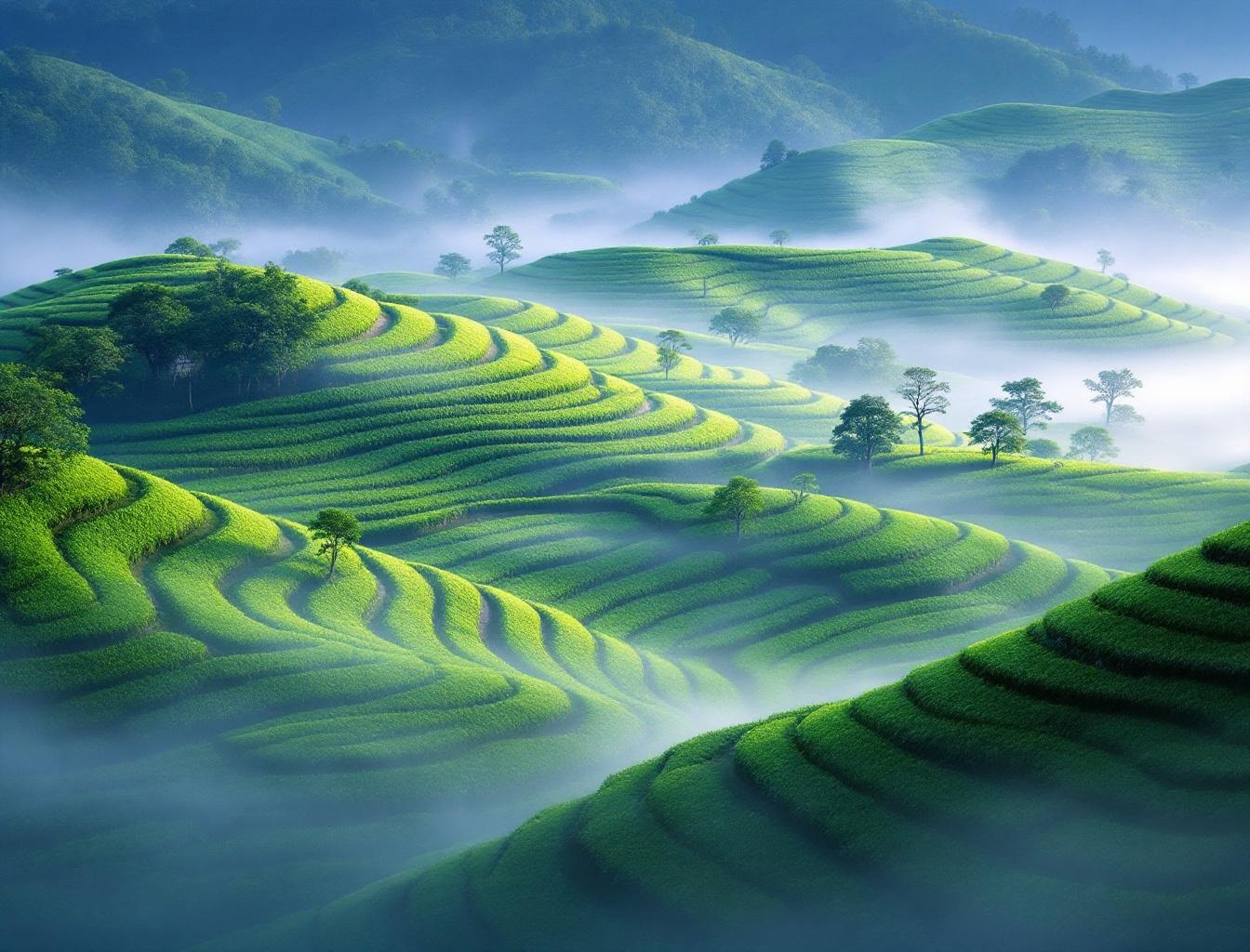
Oita's highland terrain and volcanic soil — a legacy of the Aso-Kuju volcanic chain — create ideal conditions for tea cultivation. Volcanic andosol soils at elevation, cool mountain mist, and sharp swings between day and night temperatures combine to produce leaves with concentrated sweetness and a clean, bright finish. It's a lesser-known growing region than Ureshino, but it's the origin of our own Organic Tamaryokucha.
Yame, Fukuoka Prefecture
Better known for gyokuro, Yame also produces excellent tamaryokucha, with a particularly sweet flavor profile shaped by the fertile, mist-covered valley terrain that defines the district.
What Does Tamaryokucha Taste Like?
Tamaryokucha tastes mellower and more complex than sencha: expect a light berry-like tartness on the mid-palate, a long almondy finish, moderate umami depth, and noticeably lower astringency than most Japanese green teas. The expected flavor notes for Japanese green tea — grassy, vegetal, bright — are present but muted. What comes forward instead:
- Berry-like tartness — A light citrus and berry tang on the mid-palate. Some tasters describe this as reminiscent of white currant or mild gooseberry. It's subtle but distinctive.
- Almondy finish — A long, soft nuttiness in the aftertaste. This is one of tamaryokucha's most consistent flavor signatures across all origins.
- Umami depth — Present but gentler than gyokuro (the shade-grown Japanese green tea known for intense savory flavor). The umami lingers, making each sip feel more complete than typical sencha.
- Low astringency — This is the practical advantage. Tamaryokucha is noticeably less tannic than sencha, which means it's more forgiving on temperature and brew time, and accessible to people who find sencha too sharp.
The aroma is fresh and green with floral nuances — closer to spring air than cut grass. When you pour a cup of quality tamaryokucha, you'll notice the liquor runs slightly more golden-green than sencha's vivid green, with a clarity that signals good extraction.
How Does Tamaryokucha Compare to Sencha?
The single most important difference is brew forgiveness: tamaryokucha is forgiving where sencha is demanding, with lower astringency, a mellower flavor, and coiled leaves versus sencha's straight needles. The table below covers the full comparison.
| Characteristic | Tamaryokucha | Sencha |
|---|---|---|
| Leaf shape | Coiled, comma-like curls | Straight, needle-shaped |
| Processing | Steamed then drum-dried (no shaping step) | Steamed, rolled, shaped into needles |
| Flavor character | Berry-forward, almondy finish, mellow | Grassy, bright, clean |
| Astringency | Low — notably more gentle | Moderate to high depending on grade |
| Umami | Moderate, lingering | Moderate, more fleeting |
| Brew forgiveness | High — less sensitive to temperature | Lower — oversteeping causes bitterness |
| Production volume | ~2–3% of Japan's output | ~60% of Japan's output |
| Primary regions | Saga, Nagasaki, Kumamoto | Shizuoka, Kagoshima, Kyoto |
If you've ever made a cup of sencha with water that was too hot and ended up with something bitter and harsh, tamaryokucha won't punish you the same way. That lower astringency is structurally built into the tea — it's not just a brewing artifact.
Flavor-wise, they're not interchangeable. Sencha is the cleaner, brighter tea. Tamaryokucha is the more complex, mellow one. People who love sencha often love tamaryokucha for different reasons — it occupies a different emotional register.
How to Brew Tamaryokucha
Brew tamaryokucha at 70–80°C (158–176°F) for 60–90 seconds, using approximately 4g of leaf per 60ml of water — it brews similarly to sencha but tolerates a slightly wider temperature range. According to Komes et al. (2010, Food Research International), higher water temperatures increase extraction of catechins and tannins, producing more astringency; keeping temperatures in the 70–80°C range protects tamaryokucha's naturally gentle character. The coiled leaves take a moment longer to fully unfurl and release their compounds, so don't rush the first infusion.
| Parameter | Mushiguri Style | Kamairi Style |
|---|---|---|
| Water temperature | 70–80°C (158–176°F) | 75–85°C (167–185°F) |
| Leaf amount | 4 g per 60 ml (about 1 tsp per 2 oz) | 4–5 g per 60 ml |
| First infusion time | 60–90 seconds | 60–90 seconds |
| Second infusion | 30–45 seconds (slightly hotter water) | 30–45 seconds |
| Third infusion | 60 seconds or cold brew | 60 seconds |
| Vessel | Kyusu or any fine-mesh strainer | Kyusu or gaiwan |
Step-by-step:
- Preheat your kyusu (a traditional Japanese side-handle teapot) and cups with hot water, then discard. This stabilizes temperature so your measured water temperature doesn't drop immediately on contact.
- Add leaves — 4 grams is a good starting point. Scale up if you prefer intensity.
- Pour water at 75°C. Let the leaves settle for 60–90 seconds without agitation.
- Pour completely into the cup — no water left in the pot. This is important: residual hot water on the leaves continues steeping and turns the second infusion bitter.
- For the second infusion, use slightly hotter water (80°C) and steep for only 30 seconds. The leaves are already open and extract faster.
- Good tamaryokucha yields 2–3 infusions. The third is often best taken as a 3-minute cold steep for a sweeter, less astringent cup.
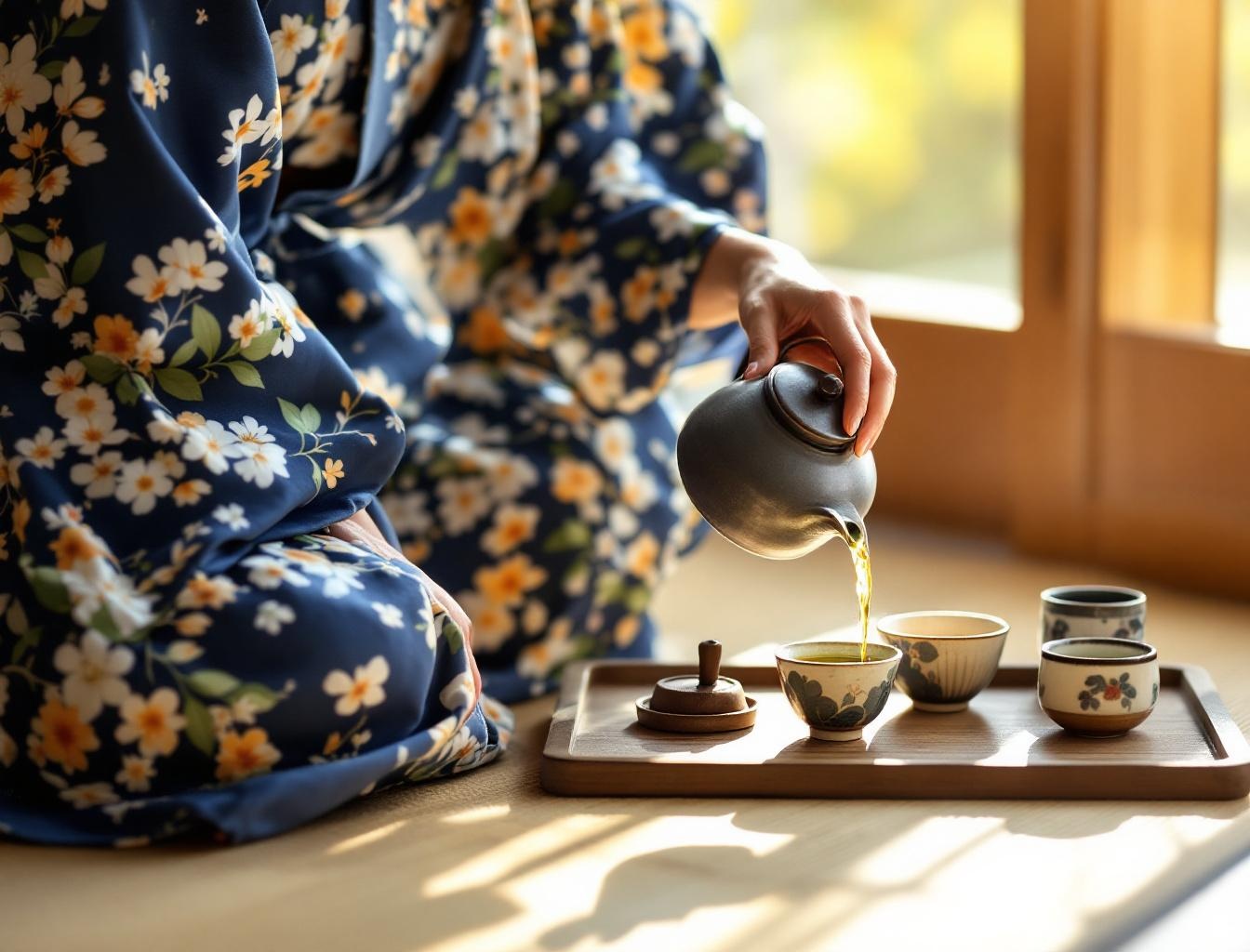
Cold brew option: Add 4–5 grams to 500 ml of cold water. Refrigerate for 4–8 hours. The result is extraordinarily smooth — the cold water pulls out sweetness and umami while leaving the tannins mostly behind. One of the best ways to experience tamaryokucha's berry character.
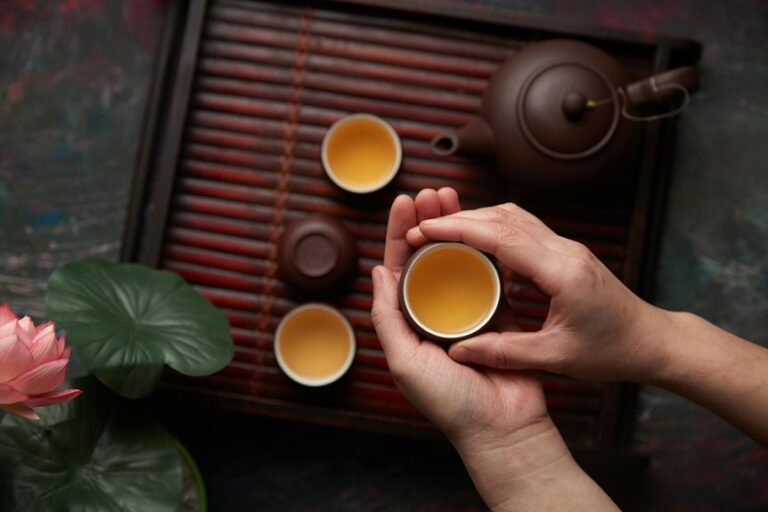
Teaware note: A small Tokoname kyusu teapot (60–120ml) is the traditional vessel for tamaryokucha and works beautifully — its fine mesh strainer handles the small particles that break off the leaves during steeping.
What Gives Tamaryokucha Its Character?
Tamaryokucha's mellow, low-astringency profile is a direct result of how it's processed. As an unoxidized green tea, it's steamed (or pan-fired, for kamairi style) soon after picking, then dried in a revolving drum without the firm rolling step that shapes sencha into needles. That gentler handling, combined with the curled leaf shape, is why the cup tastes softer and tends to be more forgiving to brew.
- Caffeine level — In the cup, tamaryokucha drinks at a level comparable to premium sencha: more lively than hojicha or bancha, gentler than gyokuro or matcha. This places it squarely in the everyday-sencha class of liveliness.
- Coiled leaf, slower unfurl — The comma-shaped leaves open gradually in hot water. Give the first infusion an extra moment so the curls fully relax and release their flavour.
- Berry-almond signature — The light tartness and long nutty finish come through most clearly when you brew on the cooler side and pour the pot out completely between steeps.
How Do You Buy Quality Tamaryokucha?
Buy tamaryokucha from specialty Japanese tea retailers — most grocery stores won't stock it. Prioritize Ureshino or Sonogi origin labeling, vivid green coiled leaves, and a harvest date within the past 12 months. Here's what to evaluate:
Visual Inspection
- Color — Leaves should be a vivid, consistent green. Dull, brownish, or highly variable coloring suggests age or poor storage.
- Shape — Genuine tamaryokucha leaves are clearly coiled and irregular, not needle-straight. If the leaves look like sencha, it's sencha.
- Particle uniformity — High-grade tamaryokucha has relatively consistent leaf sizes. Broken fragments and dust indicate a lower-grade fannings mix.
Origin Information
- Look for specific region labeling: Ureshino (Saga), Sonogi (Nagasaki), or Kumamoto for kamairi style.
- Estate or cultivar information is a quality signal — it means the producer knows and tracks their sourcing.
- Harvest date matters. Tamaryokucha is best within 6–12 months of harvest. Look for “shincha” (新茶, new harvest) versions in late spring for peak freshness.
Pricing Reality
Quality tamaryokucha costs more than everyday sencha — expect $15–35 per 100g for a good loose-leaf version. If you see tamaryokucha priced at sencha levels, it's either very low grade or mislabeled. The rarity premium is real: this tea requires specialized production, comes from a limited growing region, and competes in a market where most buyers have never heard of it.
Storage
Keep tamaryokucha in an airtight, opaque container away from heat, moisture, and strong odors. A sealed tin in a cool cabinet is fine. Refrigerator storage works but requires bringing the tea to room temperature before opening to prevent condensation on the leaves. Consume within 3 months of opening for optimal freshness.
Where Does Tamaryokucha Fit in Your Tea Routine?
Tamaryokucha fits best as an afternoon or evening alternative to sencha — its lower astringency makes it gentler to drink across multiple cups, while its berry-almond complexity offers a genuine change of pace from sencha's bright, grassy profile.
For people who find sencha too sharp or gyokuro too rich, tamaryokucha occupies a useful middle ground — complex enough to be interesting, approachable enough for daily drinking.
It also works exceptionally well as an introduction for friends new to Japanese green tea who find Chinese green teas more approachable. The lower astringency and mellower character bridge the two traditions — fitting, given that tamaryokucha was originally designed as exactly that kind of cultural bridge.
Learn more about how tamaryokucha compares to other Japanese green teas in our complete guide to Japanese green tea, and dig into the sencha comparison in our Sencha Tea guide. For brewing science, see green tea caffeine content and how to avoid bitterness in Japanese tea.
Shop Our Tamaryokucha
We source tamaryokucha directly from organic farms in Japan. Our current selection:
- Organic Tamaryokucha — Rare curly-leaf green tea from Oita with a sweet, distinctive flavor. Certified organic, whole-leaf, ready to steep. Best for: tea drinkers exploring rare Japanese green teas, anyone who finds standard sencha too astringent or bitter, and those seeking a mellow, complex green tea for everyday drinking or cold brew.