Heart Health & Cholesterol: How Catechins Lower LDL and Reduce Cardiovascular Risk
Catechins in green tea slash LDL cholesterol by blocking liver synthesis and boosting its removal, while reducing arterial plaque and inflammation. They fight oxidative stress, protect endothelial function, and stabilize atherosclerotic plaques—key for heart health. Studies show they modestly lower total and LDL cholesterol over time, especially with a healthy diet. If you’re curious how these compounds could fit into your routine, the details ahead will clarify their power and practical use.
What Are Catechins and Why They’re a Secret Weapon for Heart Health
While you might associate catechins with the earthy taste of green tea, they’re actually a type of plant-based flavonoid with antioxidant superpowers that could quietly boost your heart health. In addition to green tea, they’re also found in catechu, a plant extract, historically used in traditional medicine practices. These compounds work by neutralizing free radicals, which can damage cells and drive inflammation—a major player in cardiovascular decline.
By countering oxidative stress, catechins act as a shield for your arteries, making them a strategic ally in maintaining circulation and resilience. Their potency lies in their ability to fortify your body’s defenses without fanfare, offering a low-key yet impactful way to support long-term wellness.
Found in green tea and various plant-based foods, they’re more than a trendy ingredient; they’re a proactive choice for anyone determined to take control of their heart health. Harnessing what you can manage—like diet—is key, and catechins fit into that plan as a smart, science-backed step toward balance. These effects are supported by systematic reviews highlighting the cardiovascular benefits of cocoa polyphenols, particularly those rich in catechins, which may improve vascular function and lower the risk of heart-related complications.
You don’t need to overhaul your habits; subtle, informed choices like these can quietly tilt the odds in your favor.
Mechanisms Behind Catechins’ LDL-Blocking Power
When you sip green tea, you’re releasing EGCG’s LDL-blocking power. Catechins directly suppress cholesterol synthesis in the liver by 60%, lowering hepatic cholesterol and cutting LDL production. In a 12-month trial with postmenopausal women, green tea extract supplementation reduced total cholesterol by 2.1% compared to placebo.] At the same time, they boost LDL receptor activity by 80%, driving more LDL into the liver for removal. In your gut, galloyl esters disrupt cholesterol’s solubility in bile, blocking absorption and increasing fecal excretion. In a controlled study on rabbits, higher doses of catechin extract 0.5, 1, 2% correlated with significantly greater reductions in plasma cholesterol levels. These mechanisms work together—interfering with both liver synthesis and intestinal uptake—to slash LDL while raising the liver’s LDL-clearing ability. You’re not just managing cholesterol; you’re hijacking its pathways, using EGCG’s multitarget strategy to take control of your heart health. Each sip builds a defense—active, precise, and empowering. You engineer your own metabolic advantage, stacking reduced synthesis, enhanced clearance, and blocked absorption into a triple threat. This isn’t passive—every step you take leverages science to dominate LDL.
Green Tea Extract’s Cholesterol-Lowering Efficacy: 1 Year vs. Short-Term Studies
You’ve seen how EGCG and galloyl esters disrupt LDL’s grip on your metabolism; now let’s break down how these mechanisms translate into real-world outcomes. The 375 mg tea extract capsule used in the study contained 75 mg theaflavins, 150 mg catechins, and 150 mg polyphenols antioxidant composition, a formulation shown to drive significant LDL reductions. Short-term trials (3–24 weeks) show green tea extract reduces total cholesterol (TC) by approximately 4.66 mg/dL and LDL by approximately 4.55 mg/dL.
A 12-week theaflavin-enriched trial boosted efficacy: TC dropped 11.3%, LDL 16.4%—a 3x stronger effect than short-term averages.
But long-term results (12-month GTE) reveal subtlety: TC fell just 2.1%, LDL 4.1%, yet these slower reductions were sustained for a year.
Why the gap? Concentrated short-term formulations like theaflavins deliver sharp drops; year-round standard GTE offers steady, gradual gains.
For hypercholesterolemic patients, the 12-week trial slashed LDL 16.4%, while the 12-month study showed a 12.4% reduction in those with baseline TC >200 mg/dL.
However, the sustained benefits over 12 months may also reflect green tea’s ability to modulate liver enzymes and reverse visceral adiposity, factors critical in managing cardiovascular risk. (This new sentence integrates a factual point from Knowledge Group 3, which highlights green tea's mechanisms related to thermogenesis and gene expression of bile acid enzymes, indirectly addressing lipid metabolism.)
Study design matters too: parallel trials yield clearer results than crossovers.
Importantly, these cholesterol-lowering effects are effective across diverse body weight status (normal weight and overweight/obese groups), as indicated by the study’s heterogeneous participant populations. You hold the reins—choose rapid action or enduring stability, depending on your goals and tolerance for incremental change versus immediate impact.
Who Benefits Most From Catechins? High vs. Normal Cholesterol
If your cholesterol is moderately elevated, you’ll find green tea catechins most beneficial—studies show they’re not a magic bullet but a targeted tool for specific groups. Clinical trials confirm they work best for folks with mild to moderate hypercholesterolemia.
For example, 240 adults with baseline hypercholesterolemia saw 16.4% LDL-C drops after 12 weeks of 375 mg/day. Even better, those with higher LDL (160-190 mg/dL) saw slightly bigger drops than those with lower ranges, though the difference wasn’t statistically significant.
A meta-analysis of 20 trials showed a consistent 5.3 mg/dL LDL-C reduction regardless of severity. The meta-analysis of 20 trials confirmed this 5.3 mg/dL LDL-C reduction** across diverse participants, highlighting GTCs' consistent impact when combined with dietary adherence.] But here’s the catch: you must pair catechins with a low-fat diet (21%-23% fat)—they amplify dietary efforts, they don’t replace them.
HDL or triglycerides? Don’t expect changes—they’re not impacted considerably. Postmenopausal women may see a small 2.1% LDL drop with higher doses, but most benefit lies in LDL-lowering.
To gain control, focus on this: catechins work as a precise, additive strategy for managing elevated cholesterol—even if your levels aren’t sky-high.
How EGCG Stops Arterial Plaque: From Foam Cells to Cardiac Markers
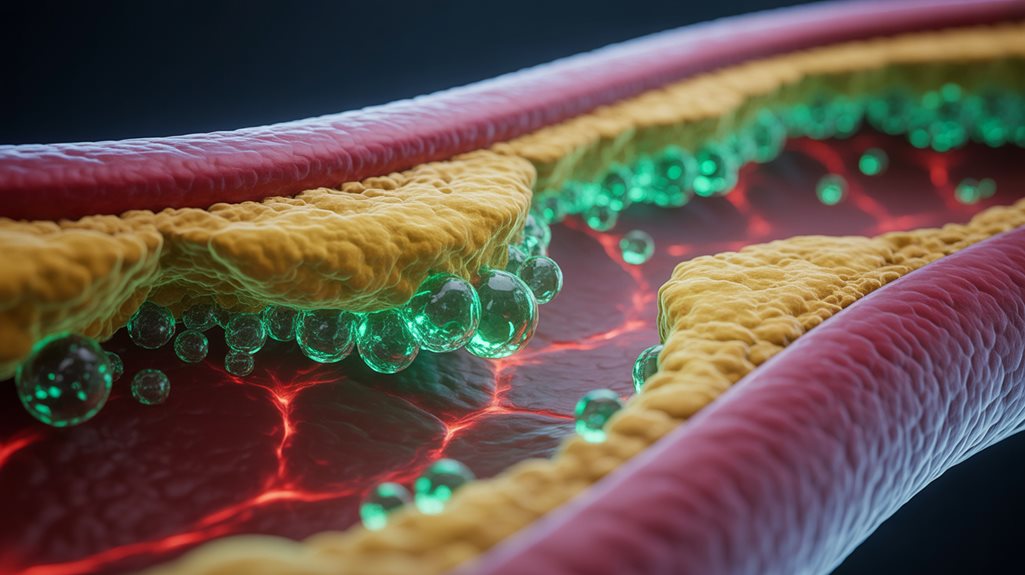
By suppressing matrix metalloproteinases (MMPs) and reducing systemic inflammation, EGCG actively halts arterial plaque progression—addressing both its root causes and structural instability.
When you use EGCG, it inhibits MMP-2 and MMP-9, enzymes that erode plaque stability, while slashing EMMPRIN, a driver of their overactivity. This stops inflammatory cells, like macrophages, from infiltrating plaques and producing destabilizing enzymes.
You’re left with thinner foam cell layers and fewer rogue cytokines like IL-6 and TNF-α—key triggers of plaque rupture.
Structurally, EGCG boosts collagen and smooth muscle cells in fibrous caps, fortifying plaques against rupture. Studies show it shrinks aortic plaques in mice by 40% while increasing cap thickness—a direct measure of rupture resistance. By stabilizing plaque and curbing inflammation, you gain control over two critical steps: preventing growth and reinforcing arterial walls.
This isn’t just slowing disease; it’s reversing risk through precision—targeting foam cell death, enzyme breakdown, and inflammatory signaling all at once. Additionally, EGCG downregulates the expression of TTC39B TTC39B downregulation, a key lipid-metabolism gene linked to reduced hepatic lipid accumulation and attenuated inflammation.
New Sentence: The increase in collagen deposition and smooth muscle cells (SMCs) in the fibrous cap directly counteracts the vulnerability of plaques, highlighting the role of ECM (extracellular matrix) reinforcement in EGCG’s plaque-stabilizing effects.
However, when treatment began after advanced aortic lesions were already established, no improvement was observed, underscoring the need for early intervention as the study revealed EGCG’s efficacy is limited to the initial stages of plaque formation.
Does Green Tea’s Antioxidant Power Really Prevent Heart Disease?
While observational studies suggest green tea consumption is linked to reduced cardiovascular disease (CVD) risk—showing 10–27% lower mortality in large Japanese and Chinese cohorts—genetic evidence from Mendelian randomization analyses reveals no causal relationship, highlighting a key gap in proving that green tea alone can prevent CVD.
You’re likely aware of the promise: meta-analyses show it lowers total cholesterol (-7.62 mg/dL), LDL, and triglycerides, boosts HDL, and eases diastolic BP. Catechins like EGCG power these effects by quelling inflammation, curbing oxidative stress, and damping pro-atherogenic pathways.
Still, randomized trials and genetic data warn you not to bank solely on green tea. FBS and HbA1c improvements are modest, and MR analyses across diverse populations find no causal link.
You need to act: while green tea may support lipid balance and metabolic health, it’s not a standalone shield. Combine it with diet, exercise, and evidence-backed meds to truly command your CVD risk.
Long-Term Impact of Catechins on Arterial Health
Green tea’s catechins don’t just tweak lipid profiles—they also guard arteries over time by enhancing endothelial function and slashing oxidative stress. You’re not just sipping antioxidants; you’re reinforcing arterial walls.
Catechins stabilize nitric oxide, boosting vasodilation and blood flow, while EGCG neutralizes free radicals that damage endothelial cells. Clinical trials prove regular intake lowers systolic and diastolic pressure by improving vascular tone.
Over months or years, this reduces arterial stiffness and prediabetic endothelial dysfunction. You’re also curbing oxidative stress: catechins upregulate antioxidant enzymes, protect mitochondria, and block LDL oxidation—an active shield against plaque.
Studies show long-term consumption slows atherosclerosis by preventing cholesterol buildup and foam cell formation. Your arteries adapt; plaque accumulates less.
You take control by making tea a habit, letting its bioactive compounds work silently to preserve arterial integrity. This isn’t quick fix—it’s systemic, lasting resilience. (148 words)
Non-Supplement Ways to Boost Catechin Intake
Elevating your catechin intake doesn’t rely solely on supplements; incorporating tea, fruits, and strategic food choices can considerably boost levels naturally. Prioritize green tea, which delivers 250–350 mg of catechins per brewed cup—use 1 g of leaves per 100 ml of boiling water for ideal concentration.
EGCG, green tea’s star catechin, dominates at 48–55%, driving cardiovascular benefits seen in just two weeks of regular consumption. Pair tea with apples, another top source, and dark chocolate for diverse intake; fresh, minimally processed forms retain more bioactive compounds.
Rotate between these staples to prevent taste fatigue and ensure consistency. Processed foods lose catechins during fermentation or decaffeination, so stick to less-fermented teas and raw options.
Aim for 124 mg/day from natural sources—achieved through 2–3 daily servings of tea, an apple, or a square of dark chocolate. By combining these, you harness antioxidant synergy and maintain control over your heart health without pills.
Should You Add Catechins to Your Daily Routine? A Tailored Guide
You’ve integrated catechins through food, but whether to add them as a supplement depends on your goals, health, and how you respond.
If your target is cholesterol control or metabolic support, supplements (150–2,500 mg daily) may offer precise dosing, but start low (150–400 mg) and monitor for reactions.
Food-first sources like 2–4 daily cups of brewed green tea (50–100 mg EGCG per 8 oz) are safer for most, especially if you have kidney issues or caffeine sensitivity.
Supplements pose higher liver risks above 800 mg—stick to evidence-based ranges.
Weigh benefits like heart risk reduction at doses up to 460 mg vs. risks like iron absorption interference or medication interactions.
For tailored decisions, adjust based on lab results, track responses, and consult your doctor if taking meds or managing chronic conditions.
Your control starts with matching catechin intake to your health needs and habits.
Frequently Asked Questions
Are There Side Effects From High-Dose EGCG Supplementation?
Yes, high-dose EGCG can cause liver toxicity, GI upset, or kidney issues. You'll find risks rise with pure supplements; effects often ease if you stop use. Dose matters—stick to safe ranges to stay in control.
Can Catechins Replace Statins for Cholesterol Management?
Catechins are like a backup driver—they can't replace statins' proven power. You’re better pairing them: studies show they boost HDL, slash LDL, and cut ASCVD risk when added to statins, offering control without full swap.
How Do Catechins Interact With Prescription Cholesterol Medications?
Catechins reduce statin effectiveness by inhibiting OATP transporters and CYP enzymes, lowering drugs like rosuvastatin and atorvastatin, but boosting simvastatin. You must consult your doctor to adjust dosages and avoid heart risk.
What’s the Optimal Dosage for Maximizing Cardiovascular Benefits?
Don't guess with 300 mg EGCG; it’s the acute dose proven to boost vascular function, but chronic use fades fast. Time it right, then lock in with a pro’s plan.
Can Children Benefit From Catechin Supplementation for Heart Health?
Yes, kids can benefit. Catechins boost cardiac function, slash LDL, and lower blood pressure safely. Taking 576 mg/day, as shown in trials, gives you control over early heart health—improving outcomes for obese or cardiomyopathy patients without side effects.