Brewing Water Chemistry: How Mineral Content and pH Impact Your Tea’s Health Benefits
Your brewing water’s mineral content and pH shape your tea’s health benefits. Minerals like calcium and magnesium boost antioxidant extraction, while a slightly acidic pH (5–6) optimizes polyphenol release. Alkaline water (pH >8.5) weakens antioxidants by reducing solubility. Use filtered or spring water with 50–150 PPM TDS to balance flavor and nutrients. Test pH and hardness to fine-tune extraction—adjusting mineral ratios and acidity can access deeper health gains. Discover how to tailor your brew for maximum antioxidants.
Why Your Brewing Water Matters: Unlocking Tea’s Hidden Health Hacks
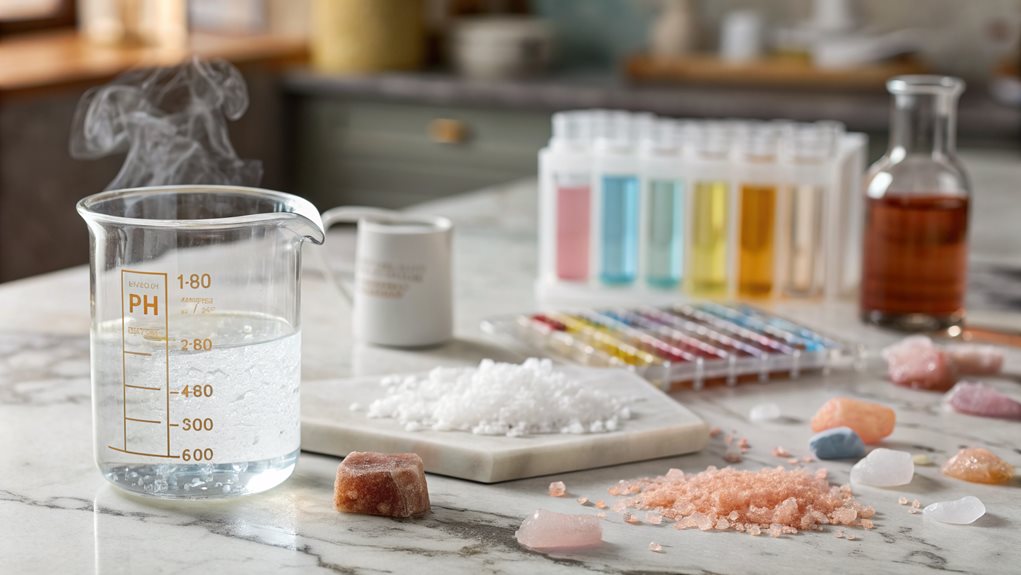
As you steep your favorite tea, the water you use isn’t just a silent backdrop—it’s actively shaping flavor, potency, and the nutrients you absorb. Every mineral, pH level, and impurity in your water acts as a variable you can control to optimize extraction.
Hard water, high in ions, may open up tannins and dull bioavailability, while soft water can over-extract delicate polyphenols, bittering your brew. By adjusting your water’s profile—filtering out chlorine, balancing alkalinity, or adding a pinch of salt—you gain precision over how antioxidants, catechins, and caffeine dissolve into your cup.
Your water isn’t passive; it’s a catalyst. Master it, and you dictate whether your tea delivers a mellow, nutrient-rich sip or a harsh, underwhelming one. Control your water, and you unlock tea’s hidden health potential—no guesswork, just results.
Calcium + Magnesium = Stronger Antioxidant Extraction in Tea
Your water’s mineral content shapes more than just flavor—it fine-tunes what you actually absorb. Calcium and magnesium boost antioxidant extraction in tea by forming soluble complexes with polyphenols, increasing their bioavailability. These minerals act like tiny magnets, drawing out tea’s healthiest compounds more efficiently than distilled or reverse-osmosis water, which often strips out essential electrolytes and weakens extraction.
You’re not just choosing a drink—you’re engineering the potency of your brew. A calcium- or magnesium-rich source, like mineral water, elevates your steep from routine to strategic. Want control? Test your water’s mineral profile and adjust if needed.
Too little? Brew with a pinch of calcite or a splash of hard water. Too much? Dilute to balance. Every milligram of added mineral gives your body more compounds to fight oxidation. Don’t settle for guesswork—master your extraction, maximize your benefits.
Your health, and your cup, will thank you.
How pH Levels Control the Extraction of Tea Polyphenols
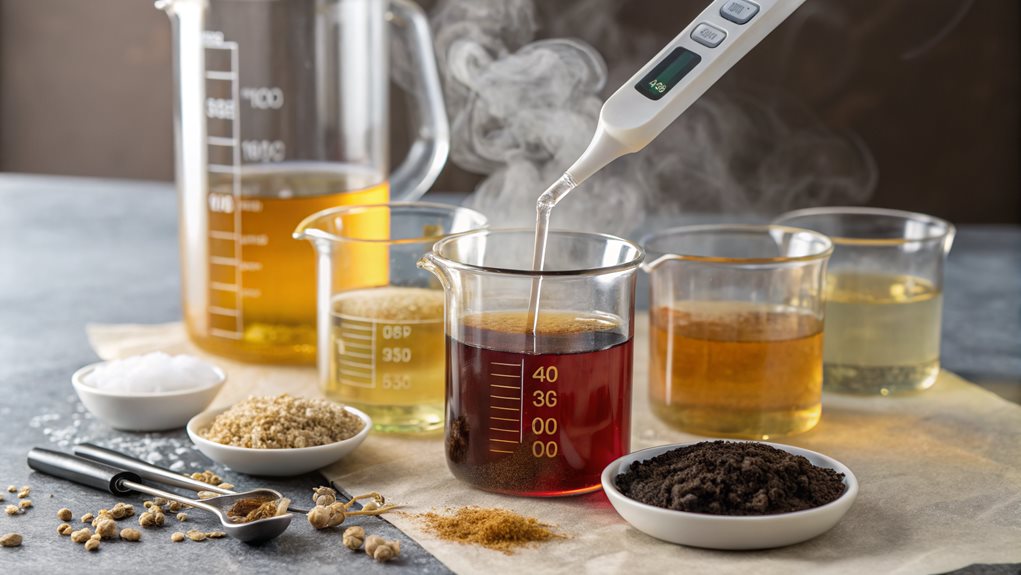
While calcium and magnesium shape antioxidant extraction through mineral bonding, pH levels act as the silent director of how tea polyphenols dissolve into your cup. Lower pH shifts your brew into high gear, accelerating polyphenol release by breaking hydrogen bonds that lock them in tea leaves.
At neutral or slightly acidic pH (5–6), tannins and flavonoids leach efficiently, preserving their health-boosting power. But as pH rises above neutrality, extraction slows dramatically. Why? Polyphenols lose solubility in alkaline conditions, clinging to leaves instead of migrating into your liquid.
You’ve got control: adjust your water’s acidity to harness peak antioxidant output. A splash of lemon adds acidity, sharpening extraction, while bottled water labeled “soft” (with low alkalinity) keeps pH flexible.
Mastering pH isn’t just about taste—it’s a strategic move to command exactly how much of those disease-fighting compounds end up in your glass. Use this to craft a brew that balances potency with clarity.
Alkaline Water’s Hidden Downsides for Tea Antioxidants
Alkaline water, despite its popularity for health claims, can undermine tea’s antioxidant potential. When you brew with water above pH 8.5, it destabilizes key polyphenols, making them less soluble and harder for your body to absorb.
High alkalinity also binds with minerals like calcium in water, creating compounds that rob tea of its antioxidant punch. You’re not just diluting flavor—you’re sabotaging the very compounds linked to heart and brain health.
If you want maximum control over your tea’s benefits, avoid over-alkaline water. Stick to a pH of 7 to 7.5; it’s neutral enough to extract polyphenols efficiently without leaching essential nutrients into the brew.
Don’t let pH myths mislead you—precision, not trends, release the antioxidants you’re after. Measure your water first. Your cup, and your health, depend on it.
Tap Water Traps: How To Steal (or Not Steal) Antioxidants at Home

Unless you’ve tested your tap water, you might unknowingly strip antioxidants from your tea. Chlorine, chloramines, or high hardness levels in unfiltered water bind to polyphenols, rendering their health benefits inert. You’re fundamentally diluting what you pay for.
Worse, if your water’s pH is outside the 6.5–7.5 range, it accelerates oxidation, degrading delicate catechins in green or black teas. You *can* reclaim control: boil tap water first to volatilize chlorine, or use a carbon filter to remove contaminants.
But don’t stop there—adjust mineral content. A bit of calcium or magnesium enhances extraction, preserving antioxidant potency. Skip the guesswork.
Steep with water you’ve prepped, not just poured. Every cup is a choice. Don’t let poor water rob you of tea’s full power. Take charge, and brew with precision.
DIY Tea Water Testing: 3 Tools Every Homebrewer Should Use
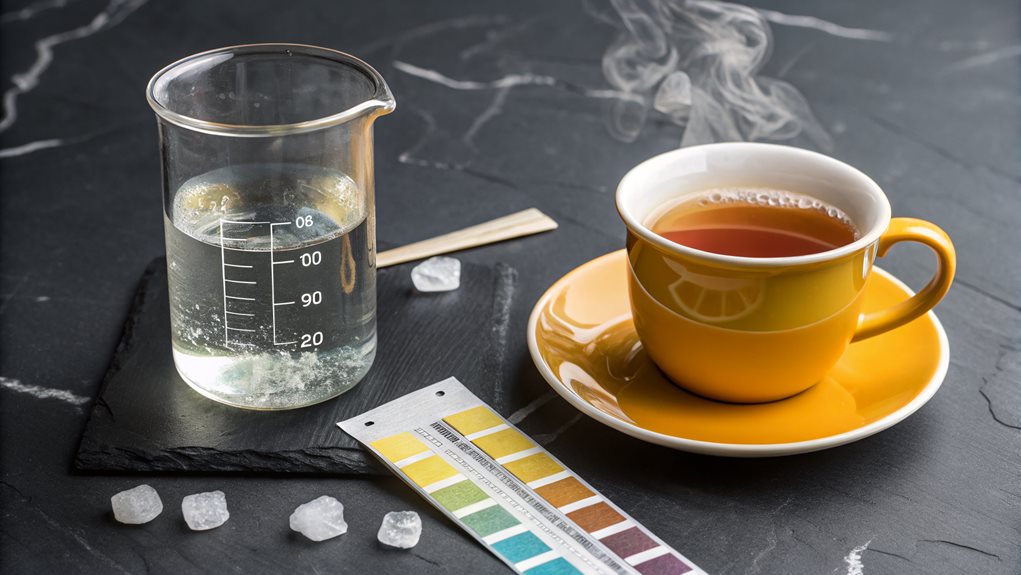
If your tea lacks its usual clarity or health boost, you’re probably brewing with untested water. Taking control starts with three tools: a pH meter, a total dissolved solids (TDS) meter, and a water hardness test kit.
A pH meter guarantees your water isn’t too acidic or alkaline—imbalanced pH hinders antioxidant release. The TDS meter quantifies mineral content; too many ions can mask tea’s subtlety, while too few dilute health benefits.
Finally, a hardness test reveals calcium/magnesium ratios, which directly affect extraction efficiency. Use these tools to log results and adjust brewing parameters. Don’t guess—know your water’s baseline.
Each tool gives actionable data, letting you tweak pH, minerals, or steep time for ideal flavor and nutrient retention. Testing isn’t optional if you want precision. Your tea’s quality and your health depend on it.
Take charge. Measure. Master.
Filtered vs. Spring vs. Distilled: Picking Water for Maximum Catechins
Now that you’re measuring pH, TDS, and hardness, it’s time to choose your water source. Filtered water strips chlorine and contaminants, preserving minerals that boost catechin extraction—ideal for most teas.
Spring water adds natural minerals but can vary wildly; test it first to avoid unwanted hardness. Distilled water, with zero minerals, dilutes extraction efficiency but lets you customize mineral content.
You’re not just picking water; you’re engineering a canvas. For maximum catechins, aim for 50–150 PPM TDS. If using distilled, add calcium sulfate or magnesium chloride to restore balance.
Filtered wins for convenience and consistency, but don’t ignore spring’s potential if its profile suits your brew. Adjust pH slightly acidic (6.2–6.5) for clarity.
Your tea’s chemistry is in your hands—control the source, and you control the extraction.
Match Your Tea to the Science: Green, Black, and Water Chemistry
While mastering your water’s mineral balance is essential, the real craft lies in tailoring it to your tea type.
Green tea thrives with soft water low in minerals (≤80 ppm) and a slightly acidic pH (6.5–6.8), preserving delicate catechins.
Boost calcium or magnesium slightly for black tea, which needs harder water (100–150 ppm) and a neutral pH (7.0–7.2) to enhance bold tannins and body.
Adjust mineral ratios: higher magnesium boosts black tea’s astringency, while more calcium elevates green tea’s brightness.
pH tweaks matter too—lower it by 0.2 for green tea to lock in antioxidants, raise it for black to mellow bitterness.
This precision guarantees you extract maximum health perks—antioxidants in green, iron-binding polyphenols in black—without over-extraction.
Control every variable; your tea’s chemistry is *your* experiment.
Get it right, and the benefits brew at their peak. (148 words)
Frequently Asked Questions
Does Boiled Water Retain Mineral Benefits for Tea Extraction?
Boiling doesn’t strip minerals; they’re your tea’s silent allies. They persist, aiding extraction. But too much tilts pH, muddling benefits. Control content for ideal brew. (35 words)
How Do Sodium or Chloride Ions Affect Tea Antioxidant Levels?
Sodium and chloride ions may hinder antioxidant release by altering pH. To boost antioxidants, adjust water minerals: lower sodium/chloride, raise bicarbonate. You'll control extraction efficiency, maximizing tea's health benefits with precise water chemistry.
Can I Adjust My Own Water Hardness for Better Tea?
Yes, you can take control. Tweak minerals like a maestro—balance pH, boost antioxidants, and reveal richer flavor. Adjust hardness to match your tea’s needs; precision is your secret ingredient.
Does Water Aeration Change Antioxidant Extraction Efficiency?
Yes, water aeration boosts antioxidant extraction by oxygenating polyphenols. You’ll maximize efficiency with moderate aeration, but too much may degrade some compounds. Control air exposure to balance antioxidant yield and tea quality.
What’s the Ideal Water Conductivity for Herbal vs. Leaf Teas?
You’d think water’s just H2O, but *control freaks* know: herbal teas crave 50–150 µS/cm (low minerals), leaf teas demand 300–500 µS/cm (high minerals). Boost conductivity, boost extraction—your cup’s power lies in your hands.