The Maillard Reaction in Hojicha: How Heat Creates Toasted Flavors
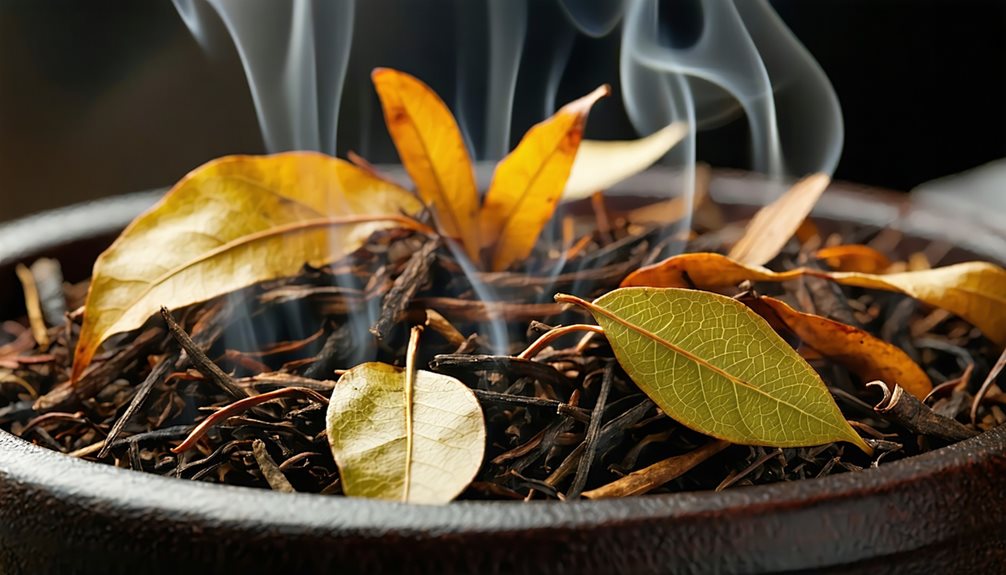
When you roast hojicha, the Maillard reaction kicks in at 140–180°C, blending amino acids and sugars into smoky, nutty notes. Heat creates pyrazines, deepening the tea’s color to reddish-brown and revealing a roasted-malt aroma. Mastering the balance between intensity and timing prevents burning while caramelizing sweetness. Stick around to discover how precision shapes every toast.
The Maillard Reaction: Key to Hojicha’s Flavor
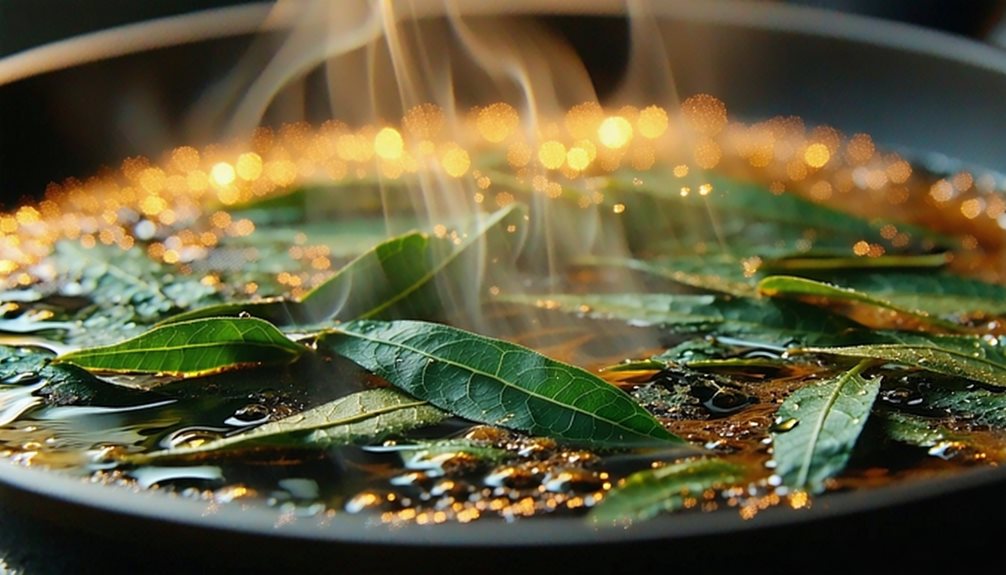
As you heat hojicha through roasting, the Maillard reaction kicks in, transforming amino acids and sugars into the tea’s distinct smoky, nutty flavor. You’re not just baking tea—you’re engineering complexity.
At 140–180°C, you must balance time and heat to avoid burning; this window lets sugars caramelize and amino acids polymerize, releasing pyrazines that define hojicha’s character. You’ve got control here: adjust temperature to amplify toastiness, tweak roast duration to fine-tune sweetness vs. char.
Mastery lies in observing color shifts and aroma cues—when leaves deepen to reddish-brown and release a roasted-malt fragrance, your flavor profile is locked in. This reaction isn’t magic; it’s chemistry you can command, turning precision into the rich, earthy finish hojicha lovers crave. Own it.
How Roasting Activates the Maillard Reaction
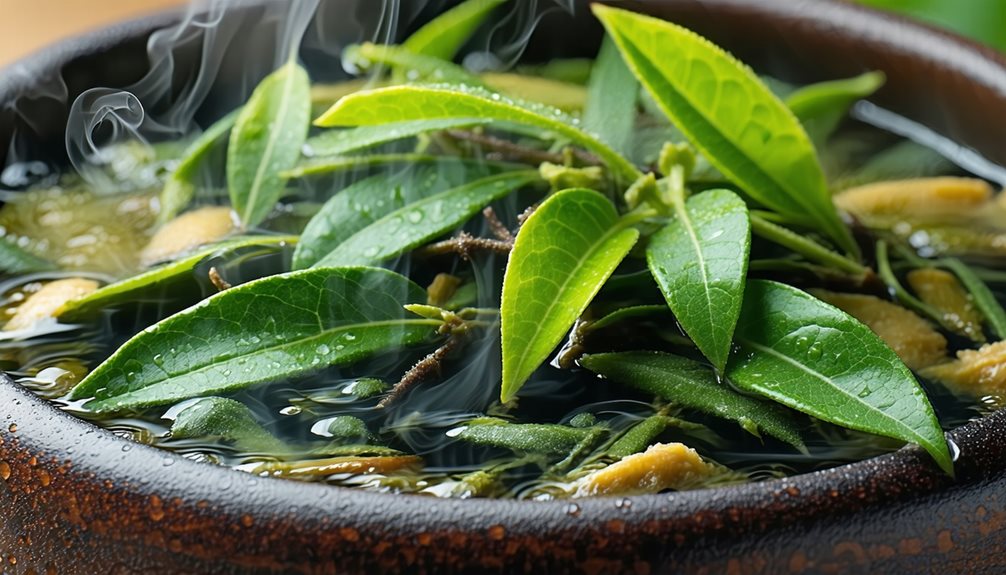
Roasting hojicha kicks off the Maillard reaction by pushing heat past 140°C, where amino acids and sugars collide, creating smoky, nutty notes. You control the degree by adjusting roasting time and intensity—the hotter and longer you roast, the bolder the smokiness becomes. But here’s the catch: too much heat scorches, not enhances. Precision matters.
You harness thermal energy to break green tea’s grassy edges while building toasted complexity. Each degree shift steers the reaction. You decide when to stop—caramelization begins around 170°C, taming bitterness.
Balance is key: slow roasts develop layered depth; fast roasts yield sharper, roasted nuts. By mastering this dance, you shape hojicha’s profile. Your control over heat turns raw leaves into a controlled alchemy, ensuring every cup tastes intentional.
No room for guesswork—just physics and skill.
Inside Hojicha’s Chemistry: Sugars and Amino Acids
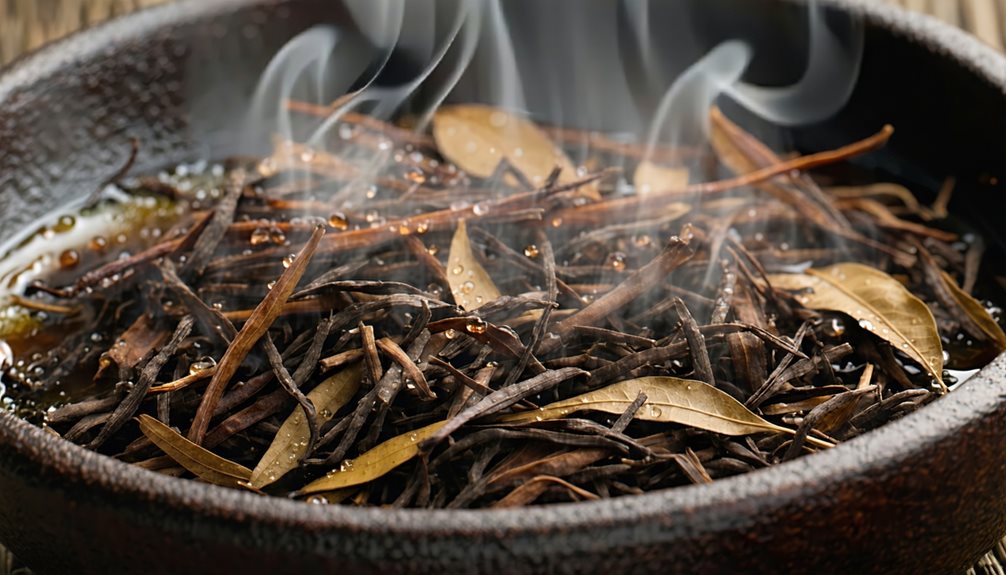
While roasting hojicha triggers the Maillard reaction, the real alchemy begins when you expose its sugars—glucose, fructose, sucrose—and amino acids like theanine to controlled heat. You’re not just heating; you’re orchestrating a dance between reducing sugars and amino compounds.
As temps rise (typically 200–250°C), these molecules complex, forming hundreds of volatile compounds responsible for hojicha’s toasted, nutty, and smoky notes. Precision matters: glucose caramelizes at lower temps, while sucrose breaks down later, adding depth.
Theanine, unique to tea, reacts with amino acids to mellow bitterness and amplify umami. Time and humidity also shape this chemistry—too long, and you’ll risk over-carbonization; too short, and you’ll lack complexity.
You control the balance, ensuring the Maillard reaction turns simple raw elements into a nuanced flavor profile. By mastering this interplay, you dictate hojicha’s character—no guesswork.
Hojicha vs. Matcha: What’s the Difference?
Comparing hojicha to matcha highlights stark contrasts in processing, flavor, and chemistry. Hojicha undergoes high-heat roasting, triggering the Maillard reaction to caramelize sugars and develop roasted, nutty notes.
Matcha, steamed and ground from shade-grown leaves, retains vibrant chlorophyll and amino acids, delivering umami and grassy brightness. The former’s heat-driven transformation reduces astringency while amplifying caramelized compounds; the latter preserves delicate biochemistry for nuanced, high-catechin profiles.
Your control over choice matters: prefer toasted depth or verdant complexity? Hojicha’s caramelized sweetness suits warm, earthy contexts, while matcha’s bright, bitter-sweet balance demands precision in whisking and temperature.
Each method defines a drink’s chemistry—and your power to command its sensory impact.
From Grass to Nut: The Sensory Journey of Roasted Tea
You’ve likely savored the contrast between grassy freshness and roasted depth in a cup of hojicha, but how does heat conjure such a dramatic sensory shift? As you roast the tea, the Maillard reaction kicks in, transforming amino acids and sugars into complex compounds.
Each degree you raise the temperature deepens the aroma, shifting from vegetal notes to toasted nuts. You dictate the journey by controlling contact time and heat—too fast, and you lose subtlety; too slow, and bitterness creeps in.
Perfecting Roasting Time: Sweetness vs. Smoke in Tea
As the Maillard reaction unfolds during roasting, you must navigate a delicate balance between time and heat. Push too hard, and smoky, bitter notes overwhelm the tea; under-roast, and natural sweetness remains underdeveloped.
Your control lies in incremental adjustments: lower temps for floral-sweet profiles, higher heat for bold smokiness. Monitor color and aroma—gold-brown signals sweetness, charcoal hints at overdoing.
Each degree and minute shifts the flavor spectrum. Trust your senses, not guesswork. Use short bursts of heat to test reactions, then lock in the roast when it aligns with your goal.
Precision defines the boundary between a mellow, caramel-kissed hojicha and a charred one. Master this balance, and you command the tea’s fate.
Frequently Asked Questions
Does the Maillard Reaction Occur in Other Teas Besides Hojicha?
You’ve probably noticed it—it does occur in other teas, too. When roasting oolong or black teas, the Maillard reaction creates similar toasted notes. Just like in hojicha, heat transforms amino acids and sugars, giving you bold flavors you crave. Control the roast, control the taste.
Can the Maillard Reaction Affect Caffeine Levels in Hojicha?
No, the Maillard reaction doesn’t lower hojicha’s caffeine levels. Your control lies in roast duration: longer roasts break down caffeine slightly, but flavor changes dominate. Adjust roast time to balance taste and caffeine content.
How Does Storage Impact Hojicha's Maillard-Generated Flavors?
Proper storage keeps Maillard flavors intact; let them fall apart at the seams without it. You must control humidity, light, and air—lock in toasted notes by sealing tightly, staying on top of conditions.
What Role Does Moisture Play in the Maillard Reaction During Roasting?
You control moisture to balance the Maillard reaction: too much delays it by lowering temp; too little risks burning. Ideal moisture boosts toastiness, deepening Hojicha’s flavor by driving amino-sugar bonds at just the right heat.
Are There Risks of Over-Roasting That Suppress the Maillard Reaction?
Yes, over-roasting your high heat breaks down Maillard precursors, reducing toasted notes. Monitor temp/moisture; don’t scorch. Balance time/heat to maximize flavor without overdoing it.