
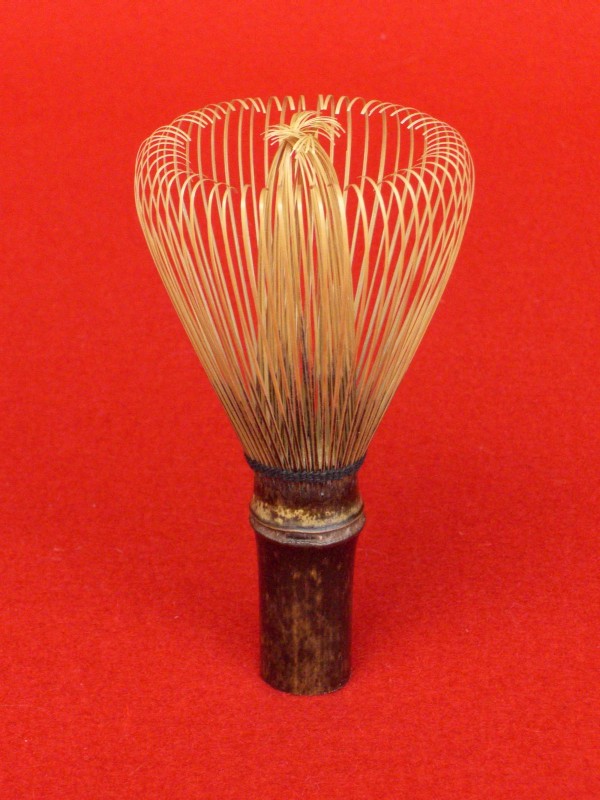
The Takayama Chasen (高山茶筌) is a traditional handmade bamboo whisk produced in the Takayama region of Ikoma City, Nara Prefecture, Japan.
Why is this considered a premium tool? Unlike mass-produced $9.99 whisks often made by machines using green bamboo and bleaching agents, a Takayama Chasen is entirely hand-carved by certified artisans using natural bamboo aged for years.
- Performance: The tines are incredibly fine and flexible, allowing you to create a rich, creamy micro-foam that stiff, industrial whisks simply cannot achieve.
- Safety: It is completely natural and free from the fungicides and chemical bleaches often found in cheaper alternatives.
- Durability: The seasoned bamboo is resistant to warping and cracking, making it a lasting investment for your daily ritual.
To maintain this delicate elasticity for as long as possible, follow these professional handling methods.
1. Preparation Before Use: “Chasen-toshi” with 80°C Water
Bamboo is extremely prone to breaking when dry.
- Temperature Guide: Fill your tea bowl with hot water around 80°C (176°F). This temperature is neither too hot nor too tepid, perfect for loosening the bamboo fibers.
- Chasen-toshi (Whisk Blooming): Lightly soak the whisk tips in the water and gently agitate.
- Effect: This restores flexibility to the bamboo, making it resistant to breaking even during vigorous use. This step is mandatory.
2. Correct Usage: The “One” and “M” Motions
Do not use brute force; rely on the elasticity of the bamboo to whisk the tea.
- Basic Movement: Using a snap of your wrist—and ensuring the tips do not scrape the bottom of the bowl—shake the whisk back and forth vigorously as if drawing the Japanese character for “One” (一) (a straight line).
- Frothing: To create foam, move the whisk quickly in the shape of the letter “M” or “W”.
- Tip: By moving quickly near the surface of the tea, you can create the fine, smooth foam (like a latte) that is characteristic of Takayama Chasen.
3. Washing & Drying: Towels and Hair Dryers are Strictly Forbidden
After use, wash with water or lukewarm water only—never use detergent. What you don't do here determines the whisk's lifespan.
- Strictly Forbidden:
- Wiping with a towel or cloth: The tips will catch on the fibers, causing them to break or lose shape.
- Using a hair dryer: Rapid drying will cause the bamboo to crack.
- Using a dishwasher: The heat and water pressure will destroy the whisk.
- Correct Drying: Shake off excess water and let it air dry naturally in a well-ventilated area with the tips facing up.
4. Protection (Storage): Wrapping in Washi Paper or Cloth
After reshaping the whisk on a “Kuse-naoshi” (whisk holder/shaper), follow these long-term storage rules.
- Do Not Use the Original Plastic Case: Airtight plastic cases are breeding grounds for mold.
- Let it Breathe: Wrap the whisk loosely in breathable Washi (Japanese paper) or a soft cloth. This absorbs excess moisture while protecting it from dust.
- Location: Store in a well-ventilated area with stable temperatures, away from direct sunlight.
PS ever wondered how these are made? Watch below and find out!